Situation Summary
Austria remains a stable, low-threat environment with no significant security incidents reported in the last 24–48 hours. The composite threat score of 9 places Austria at #103 globally, reflecting routine petty crime in major urban centers and an ambient elevated terrorism warning level (4 of 5, in place since 2023) rather than active destabilization or acute violence. Overall trajectory is stable with no indicators of near-term deterioration.
Key Developments
- Austria (national), 14 July 2026 – Multiple public statements and parliamentary/diplomatic rejections were recorded, suggesting ongoing political or diplomatic friction, but no ground-level security incidents, infrastructure failures, or travel disruptions were associated with these events.
- Austria–Russia diplomatic channel, 14 July 2026 – Ambassador-level rejection signals noted; context and operational impact on resident expats or business operations remain unclear from available open-source reporting, but no immediate travel or residency restrictions have been announced.
- Vienna (citywide), 13–14 July 2026 – Routine petty crime (pickpocketing, bag theft) remains the primary street-level concern in tourist areas and public transport; no spike or organized crime surge documented in the last 48 hours.
- Austria–Germany border, 13 July 2026 – Internal border controls remain in effect at the German–Austrian frontier, with document checks and potential delays for cross-border transit, but no new security incidents or unrest reported.
- Styria, 13 July 2026 – Consolidated security monitoring confirms this region as higher-risk relative to other Austrian states, but explicitly documents no acute ground-level incidents (attacks, civil unrest, infrastructure failures) in the last 24–48 hours.
Highest-Risk Areas
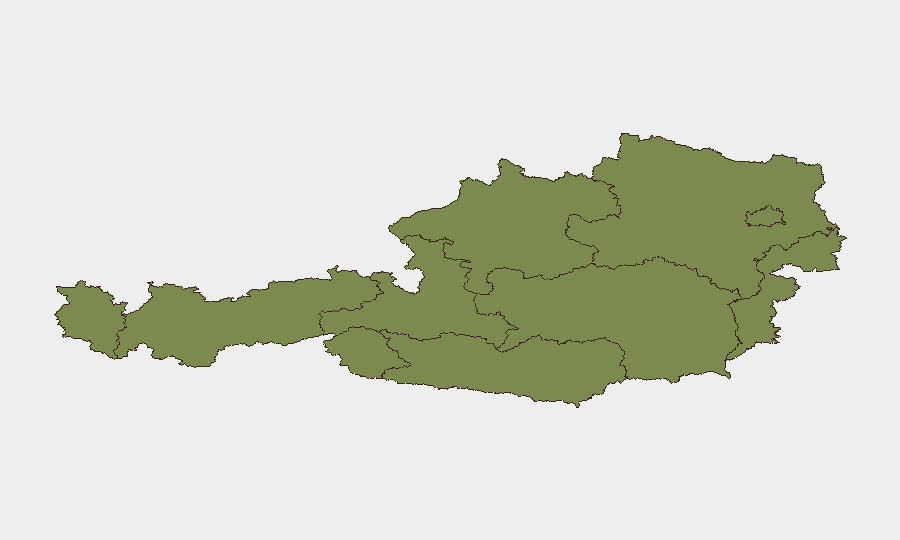
Vienna dominates the sub-national risk profile with a composite score of 31.5, driven by population density, tourism volume, and routine street crime; Salzburg (24) follows as a secondary concern, likely reflecting similar urban and tourist-traffic factors. Carinthia and Burgenland (both 9) show elevated signals but remain below Vienna and Salzburg. The remaining six states (Vorarlberg, Tyrol, Lower Austria, Upper Austria, Styria) cluster at 1.5, indicating low relative risk. Vienna's prominence reflects concentration of potential terrorism targets, diplomatic infrastructure, and petty-crime impact on corporate and expatriate populations rather than active conflict or mass unrest.
How GeoBit Would Assist
Security teams with personnel or assets in Vienna and Salzburg should use AOI Monitoring & Early Warning with persistent watch on transport hubs, business districts, and diplomatic zones to detect shifts in threat posture. Intel Sweep (event feeds, OSINT fusion, multi-language search, and sentiment analysis) provides continuous tracking of political statements, diplomatic friction, and emerging civil-unrest signals—critical given recent parliamentary and ambassador-level rejections. Routing & Network Analysis supports contingency planning for cross-border staff mobility, accounting for documented German–Austrian border delays and regional risk variation.
7-Day Outlook
No indicators suggest imminent escalation. The sequence of political statements and diplomatic rejections on 13–14 July warrants monitoring for downstream policy changes (visa, business, or residency impacts), but current reporting shows no operational security impact. Expect continued routine baseline: low street crime in Vienna and Salzburg, stable border operations, and sustained elevated terrorism awareness posture without new threat intelligence.
Highest-Risk Areas — Ranked
| # | State / Region | Risk |
|---|---|---|
| 1 | Vienna | 31.5 |
| 2 | Salzburg | 24 |
| 3 | Carinthia | 9 |
| 4 | Burgenland | 9 |
| 5 | Vorarlberg | 1.5 |
| 6 | Tyrol | 1.5 |
| 7 | Lower Austria | 1.5 |
| 8 | Upper Austria | 1.5 |
| 9 | Styria | 1.5 |
Sources
Previous Daily Briefs
A new Austria brief is written every day — each with its own risk map and downloadable CSV. Here's the last week; use the calendar to go further back.
📅 Browse every day by calendar →
Highlighted days have a brief. Tap a day for that day's map & analysis, or “csv” for that day's dataset ($5).
Atlas — our AI intelligence desk — emails them this snapshot personally. Nothing else, no list.