Situation Summary
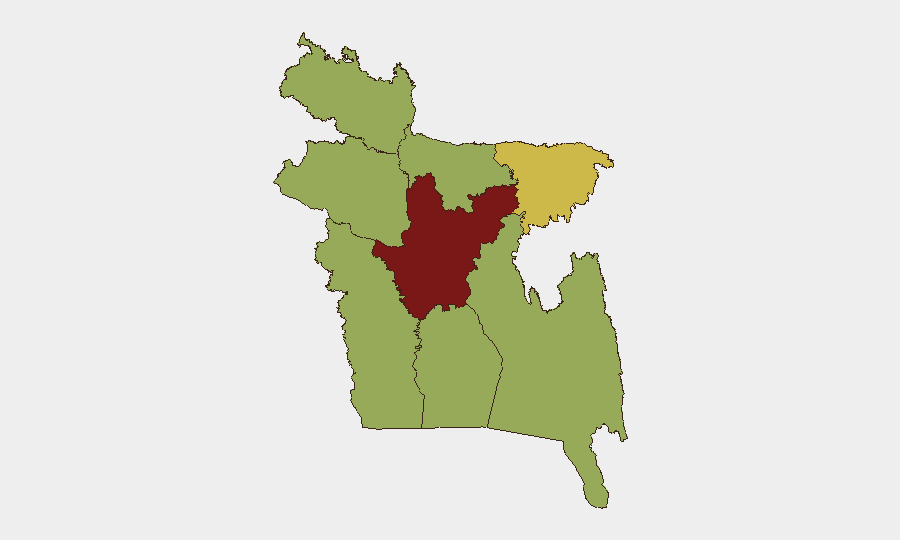
Bangladesh faces a multi-layered security environment characterized by elevated political tensions, active border friction with India, and localized civil unrest. The national composite threat score of 74 ranks Bangladesh at #24 globally, with Dhaka Division driving significantly elevated risk (81.8) due to ongoing law-and-order operations and administrative actions. The past 48 hours have seen a convergence of border confrontations, internal security sweeps, and campus-level gender-based violence incidents, indicating sustained operational activity across multiple threat vectors rather than a single acute crisis.
Key Developments
- Jahangirnagar University, Savar (mid-June, within last 48h): Campus protests over attempted rape and proctor accountability; sit-ins and marches disrupting academic operations. *Risk type: gender-based violence, student activism, campus security friction.*
- India–Bangladesh border, West Bengal sector (this week, highlighted last 24–48h): High-stakes standoff between BSF and BGB at multiple checkpoints (Dinhata, Sakati near Jalpaiguri); linked to deportations and pushback operations. *Risk type: cross-border enforcement tension, potential crossing delays.*
- India–Bangladesh border (within last 48h): Two Bangladeshi nationals killed by BSF; part of ongoing pattern averaging one killing per 3.5 days. *Risk type: lethal force incidents, elevated risk for border-adjacent and undocumented populations.*
- India–Bangladesh international border (within last 48h): Tense pushback incident involving detained individual; additional security personnel mobilized on both sides; no reported casualties but heightened alert status. *Risk type: acute localized confrontation.*
- Bangladesh nationwide (last 48h): State authorities verified and detained 501 Bangladeshi nationals; part of broader immigration verification and deportation processing. *Risk type: identity-verification sweeps, documentation requirements tightening.*
- Bangladesh nationwide (1 May – 10 June, reported last 48h): At least 1,958 arrests of Awami League activists and supporters across Bangladesh documented by rights monitors; crackdown narrative circulating in political discourse. *Risk type: political detention patterns, heightened police presence in urban centers.*
- Bangladesh–India border general (last 48h commentary): BSF tightening border security following West Bengal incidents; broader regional alert affecting Bangladesh border districts. *Risk type: increased border scrutiny, potential cargo and traveler delays.*
Highest-Risk Areas
Dhaka Division's composite risk score of 81.8 significantly exceeds all other divisions and reflects concentrations of political activity, administrative enforcement, and law-and-order operations tied to the ongoing crackdown. Sylhet Division (66.2) remains elevated, likely due to proximity to India–Bangladesh border dynamics and cross-border movement patterns. All remaining divisions cluster at 51.8, indicating a relatively flat secondary-tier risk baseline across Khulna, Barishal, Chittagong, Rangpur, Rajshahi, and Mymensingh. Organizations should weight Dhaka-focused risk assessments and border-district travel security planning accordingly.
How GeoBit Would Assist
Teams managing Bangladesh operations should deploy AOI (Area-of-Interest) Monitoring & Early Warning on Dhaka Division and border checkpoints to detect escalations in arrests, border incidents, or campus unrest in near–real-time. Intel Sweep, OSINT fusion, and multi-language social/Telegram monitoring provide continuous visibility into political arrests, security-force activity, and cross-border tensions without reliance on official sources. Routing & Network Analysis enables alternative journey planning for personnel transiting India–Bangladesh land borders during elevated scrutiny periods.
7-Day Outlook
Border friction is likely to remain elevated through at least early July, with BSF enforcement and pushback operations continuing to create sporadic confrontations and crossing delays. Domestic political arrests are expected to persist as the ruling administration maintains security operations, particularly in Dhaka and major urban centers. Campus unrest at educational institutions may spike if gender-based violence incidents are not transparently addressed; localized protests should be anticipated in Dhaka Division.
Highest-Risk Areas — Ranked
| # | State / Region | Risk |
|---|---|---|
| 1 | Dhaka Division | 81.8 |
| 2 | Sylhet Division | 66.2 |
| 3 | Khulna Division | 51.8 |
| 4 | Barishal Division | 51.8 |
| 5 | Chittagong Division | 51.8 |
| 6 | Rangpur Division | 51.8 |
| 7 | Rajshahi Division | 51.8 |
| 8 | Mymensingh Division | 51.8 |
Sources
Previous Daily Briefs
A new Bangladesh brief is written every day — each with its own risk map and downloadable CSV. Here's the last week; use the calendar to go further back.
📅 Browse every day by calendar →
Highlighted days have a brief. Tap a day for that day's map & analysis, or “csv” for that day's dataset ($5).