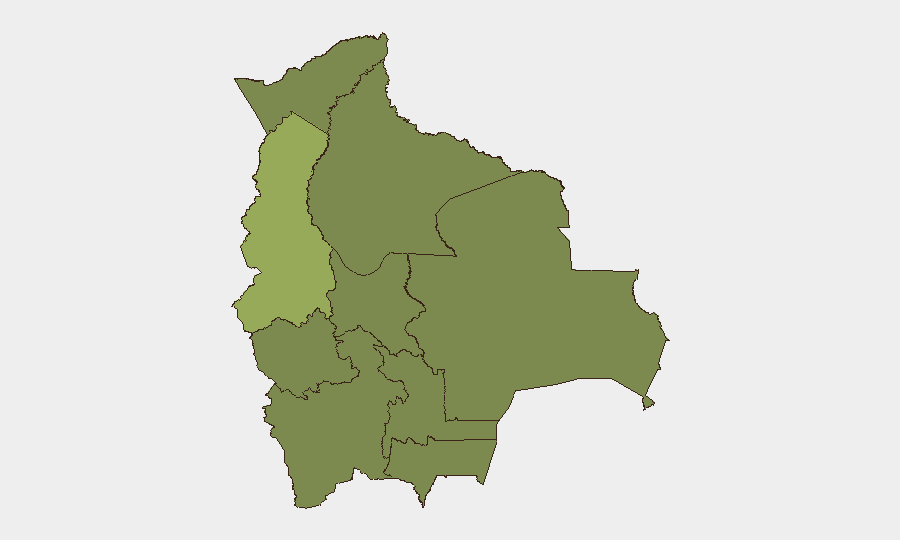
Situation Summary
Bolivia remains in the middle tier of global security threats (rank #41, composite score 39) amid overlapping institutional, labor, and civil tensions. La Paz dominates the risk profile with a composite score of 55.8—more than 1.5 times higher than any other department—driven by military posturing, government-civil society confrontation, and international scrutiny. The past 48 hours show signals of military mobilization, arrest actions, inter-agency investigation, peasant-landlord violence, and a bilateral investigation initiated by Argentina, alongside a public statement from Bolivia directed at the United States. The country is not in acute state collapse but faces a compressed risk environment in the capital and selected provinces.
Key Developments
- 2026-06-12, Bolivia (national): Conventional Military Force event recorded. Context indicates armed forces activity; specific location and operational detail remain under investigation by domestic authorities.
- 2026-06-13, La Paz (inferred): Government demand issued by Bolivian authorities; concurrent arrest/detention action by attorney-general level actors. Signals legal enforcement or institutional confrontation at the apex level.
- 2026-06-13, Argentina–Bolivia border (inferred): Argentina initiated investigation into Bolivian affairs—nature and scope unconfirmed, but signals diplomatic or security concern crossing the southern border.
- 2026-06-13, Education sector (location TBD): Authorities conducting investigation of student activity. Protest or organizing suspected; geographic center likely La Paz or Cochabamba based on historical patterns.
- 2026-06-13, Criminal investigation (national): Law enforcement investigation opened; actor and location not yet disambiguated from available signals.
- 2026-06-14, Rural/agrarian zone (location TBD): Violent protest or riot between peasant and landlord groups recorded. Consistent with land-tenure and agricultural-labor conflicts endemic to Cochabamba, Potosí, and Chuquisaca departments.
- 2026-06-13, University (likely La Paz or Cochabamba): Belarusian actor(s) seized or damaged property at educational institution. Suggests either foreign agitation or ideological organizing; requires immediate clarification on actor intent and connection to civil unrest.
- 2026-06-14, La Paz (inferred): Bolivia issued public statement directed at the United States. Topic and tone unconfirmed; may relate to sanctions, diplomatic tension, or narcotics enforcement.
Highest-Risk Areas
La Paz's risk score (55.8) is driven by concentration of state institutions, protest activity, and military presence. Cochabamba (35.8) remains the secondary flashpoint due to endemic labor organizing, indigenous activism, and agricultural land disputes. The remaining seven departments cluster at 25.8, indicating baseline stability but susceptibility to spillover from the capital or secondary cities. Risk in La Paz is institutional and political; risk in Cochabamba and rural zones is socioeconomic and identity-based. Personnel and supply-chain assets in La Paz face the highest exposure to disruption and confrontation.
How GeoBit Would Assist
Corporate teams should deploy AOI Monitoring & Early Warning on La Paz, Cochabamba, and key transport corridors to detect protest mobilization, military movement, and roadblocks in near-real time. Multi-language OSINT Fusion (X/Twitter, Telegram, local radio, and Spanish-language news feeds) combined with sentiment & temporal analysis will disambiguate the Belarusian property seizure, the military event, and the U.S. statement within 4–6 hours. Alternative route and network analysis will maintain situational awareness of supply chains and staff transit during labor disruptions.
7-Day Outlook
Expect continued institutional tension and localized agrarian conflict over the next week. Military posture and international investigation signals suggest governmental instability or external pressure; monitoring for escalation in arrests, protest response, or supply disruption is warranted. La Paz and Cochabamba should remain under heightened watch; duty-of-care teams should confirm staff location and communication protocols.
Highest-Risk Areas — Ranked
| # | State / Region | Risk |
|---|---|---|
| 1 | La Paz | 55.8 |
| 2 | Cochabamba | 35.8 |
| 3 | Potosí | 25.8 |
| 4 | Tarija | 25.8 |
| 5 | Pando | 25.8 |
| 6 | Beni | 25.8 |
| 7 | Oruro | 25.8 |
| 8 | Chuquisaca | 25.8 |
| 9 | Santa Cruz | 25.8 |
Sources
Previous Daily Briefs
A new Bolivia brief is written every day — each with its own risk map and downloadable CSV. Here's the last week; use the calendar to go further back.
📅 Browse every day by calendar →
Highlighted days have a brief. Tap a day for that day's map & analysis, or “csv” for that day's dataset ($5).