Situation Summary
Bulgaria faces a sharp spike in coordinated institutional threats and elevated political tension over regional security alignments. A nationwide bomb-threat campaign targeting courthouses and government buildings entered its third day on 31 July, disrupting public administration across multiple cities, while domestic political debate intensifies over US military presence at Bezmer Air Base and perceived Iran–US escalation risks. Concurrent reports of anti-corruption enforcement, infrastructure disruptions, and street-level public order incidents reflect a complex threat environment mixing asymmetric pressure, institutional instability, and routine criminal activity.
Key Developments
- Coordinated bomb-threat wave (31 July): Dozens of courthouses, ministries, and public buildings nationwide—including Sofia, Plovdiv, Varna, Burgas, Ruse, and Pleven—received coordinated email threats before noon, triggering evacuations and police sweeps. No explosives confirmed to date, but disruption of judicial and administrative functions persists into a third consecutive day.
- Enhanced security at Bezmer Air Base (31 July): US KC-135 refueling aircraft supporting Middle East operations prompted strengthened measures at the facility near Yambol; local anti-deployment protests and government reassurance visits signal underlying public anxiety linked to Iran–US tensions.
- Political escalation over security posture (31 July): Democratic Bulgaria coalition demanded a National Security Council meeting in response to Iran's criticism of US aircraft deployment, highlighting fractures in domestic consensus on regional alignment and security exposure.
- Anti-corruption raid at Burgas water utility (31 July): General Directorate for Combating Organized Crime (GDBOP) detained more than ten individuals, including the utility director and regional managers, at ViK headquarters on alleged corruption charges—a signal of enforcement actions affecting critical infrastructure.
- Agricultural road blockade (31 July): Vegetable growers briefly blocked the Ruse–Makaza corridor near Konush in protest against low purchase prices and import competition, briefly disrupting a key north–south transit route.
- Street racing arrests (31 July): Interior Ministry detained three individuals for organizing a dangerous high-speed chase in central Sofia, classified as organized traffic crime.
- Flood disruption in Lom (31 July): Heavy rainfall and blocked drainage systems caused flooding in the Danube river town, affecting local streets and requiring municipal intervention.
- Foreign Ministry regional security statement (31 July): Bulgaria condemned drone attacks on Sloviansk and airspace violations over Romania, signaling heightened sensitivity to cross-border military activity and regional instability.
Highest-Risk Areas
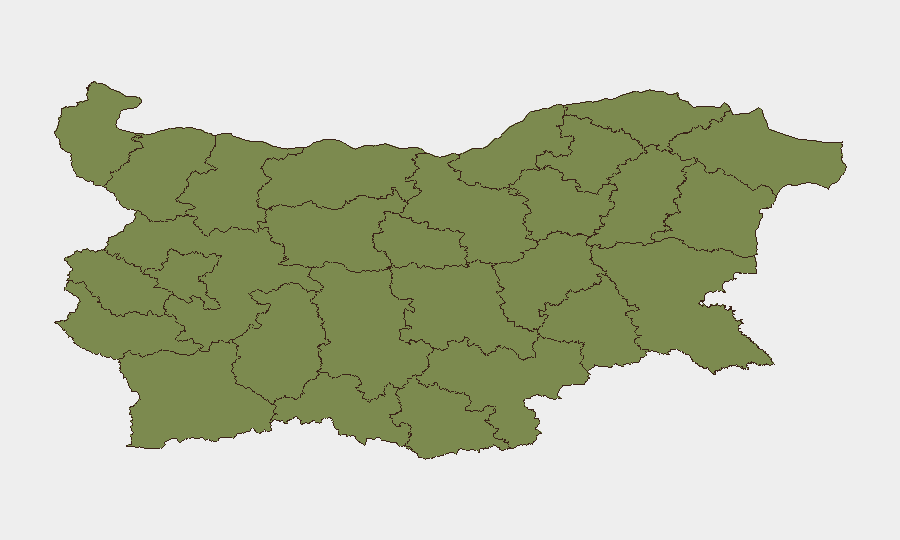
Sofia-City dominates the risk landscape with a composite score of 31.4—approximately five times higher than the second-ranked region—driven by the concentration of bomb threats against government and judicial institutions, capital-level political mobilization, street-level public order incidents, and organized crime enforcement. Yambol ranks second (5.8) primarily due to Bezmer Air Base proximity and associated US military presence, which has triggered local protests and elevated security protocols. The remaining ten regions show substantially lower and clustered risk profiles (1.4–4.2), indicating that threat concentration remains heavily urban and capital-focused rather than dispersed.
How GeoBit Would Assist
Intel Sweep and OSINT fusion would track coordination patterns and intent signals across the bomb-threat campaign via email, social media, and institutional reporting channels. AOI Monitoring & Early Warning with persistent watch on Sofia government districts, Bezmer Air Base, and key transit corridors (Ruse–Makaza) would provide continuous alerting on protest activity, security deployments, and infrastructure disruption. Network & Actor Analysis would map relationships between protest organizers, anti-corruption targets, and political actors to identify further escalation vectors and systemic vulnerabilities.
7-Day Outlook
The bomb-threat campaign is likely to persist or mutate over the near term given lack of confirmed devices and sustained political debate over security alignment; authorities will sustain heightened screening and evacuation protocols at public institutions. Bezmer Air Base and surrounding areas merit continued monitoring for protest escalation. Agricultural and organized-crime enforcement actions may generate further disruptions to commerce and infrastructure if political pressure mounts around anti-corruption visibility.
Highest-Risk Areas — Ranked
| # | State / Region | Risk |
|---|---|---|
| 1 | Sofia-City | 31.4 |
| 2 | Yambol | 5.8 |
| 3 | Dobrich | 4.2 |
| 4 | Kardzhali | 1.4 |
| 5 | Haskovo | 1.4 |
| 6 | Burgas | 1.4 |
| 7 | Vidin | 1.4 |
| 8 | Pernik | 1.4 |
| 9 | Kyustendil | 1.4 |
| 10 | Montana | 1.4 |
| 11 | Vratsa | 1.4 |
| 12 | Pleven | 1.4 |
Sources
Previous Daily Briefs
A new Bulgaria brief is written every day — each with its own risk map and downloadable CSV. Here's the last week; use the calendar to go further back.
📅 Browse every day by calendar →
Highlighted days have a brief. Tap a day for that day's map & analysis, or “csv” for that day's dataset ($5).
Atlas — our AI intelligence desk — emails them this snapshot personally. Nothing else, no list.