Situation Summary
Cape Verde remains a low-threat environment (rank #143 globally) with no credible security incidents, civil unrest, crime spikes, or infrastructure disruptions reported within the country over the past 24–48 hours. The only security-relevant event in the reporting window is an administrative measure in Brockton, Massachusetts (USA), where city officials imposed a curfew following violence tied to Cape Verdean World Cup celebrations in the diaspora community. Overall trajectory for in-country security remains stable.
Key Developments
- Brockton, Massachusetts, USA – July 4–5, 2026: City officials announced a 10 p.m. curfew ahead of Cape Verde's Round of 32 match versus Argentina, citing prior incidents of shooting, fireworks, and assault on police during World Cup watch parties. This reflects diaspora-level disorder, not in-country instability, but carries reputational and consular relevance for Cape Verdean nationals and organizations in the US.
- No new in-country security incidents reported: Web and social-media monitoring (last 24–48 hours) yielded no credible reports of violence, arrests, political unrest, infrastructure failure, or travel-risk events within Cape Verde itself.
- Background context (for reference): Prior diaspora violence on June 15, 2026 (post-World Cup draw) resulted in nine arrests in Brockton and was cited as justification for the July 4–5 curfew; this does not constitute a current event but explains the escalating enforcement response.
Highest-Risk Areas
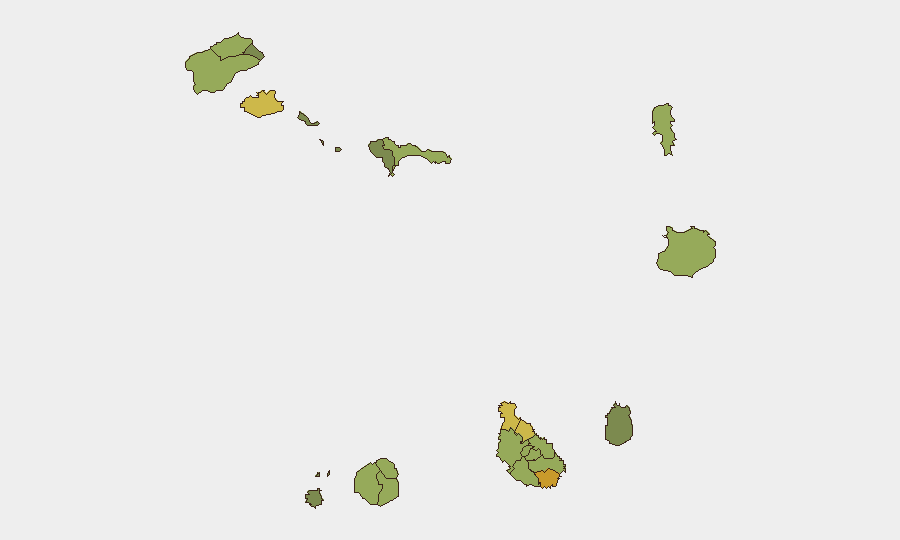
Praia (capital, risk 72) and São Miguel (risk 68) present the highest composite threat scores, followed by São Vicente (65) and Tarrafal (62). These rankings likely reflect population density, economic activity, and tourist/expatriate concentration rather than acute security crises; Praia's status as the administrative and commercial hub amplifies visibility and reporting. The absence of new incidents in the past 48 hours suggests these rankings reflect structural vulnerabilities (unemployment, informal settlements, petty crime) rather than emerging hotspots. Organizations should apply standard urban-area due diligence in these municipalities but need not escalate alert levels at this time.
How GeoBit Would Assist
Security teams with staff or assets in Cape Verde should deploy AOI Monitoring & Early Warning on Praia and São Miguel to detect civil unrest, labor actions, or crime-pattern shifts in real time. Intel Sweep and multi-language OSINT (covering Portuguese, Creole, and diaspora social channels) will surface emerging threats hours ahead of mainstream reporting. Risk & Threat Assessment and sentiment analysis can track political stability and social cohesion, particularly around World Cup events that may trigger diaspora-linked reputational or consular strain.
7-Day Outlook
No material security escalation is anticipated in Cape Verde over the next seven days. The World Cup Round of 32 match (Cape Verde vs. Argentina) may trigger minor diaspora unrest in North America and Europe but poses negligible in-country risk. Duty-of-care protocols (staff check-ins, communication redundancy, local liaison contact refresh) remain routine; no heightened travel restrictions or personnel relocations are warranted at this time.
Highest-Risk Areas — Ranked
| # | State / Region | Risk |
|---|---|---|
| 1 | Praia | 72 |
| 2 | São Miguel | 68 |
| 3 | São Vicente | 65 |
| 4 | Tarrafal | 62 |
| 5 | São Filipe | 58 |
| 6 | Santa Catarina | 58 |
| 7 | Santa Cruz | 55 |
| 8 | Mosteiros | 52 |
| 9 | São Salvador do Mundo | 52 |
| 10 | Ribeira Grande | 50 |
| 11 | Porto Novo | 48 |
| 12 | Sal | 48 |
Sources
Previous Daily Briefs
A new Cape Verde brief is written every day — each with its own risk map and downloadable CSV. Here's the last week; use the calendar to go further back.
📅 Browse every day by calendar →
Highlighted days have a brief. Tap a day for that day's map & analysis, or “csv” for that day's dataset ($5).
Atlas — our AI intelligence desk — emails them this snapshot personally. Nothing else, no list.