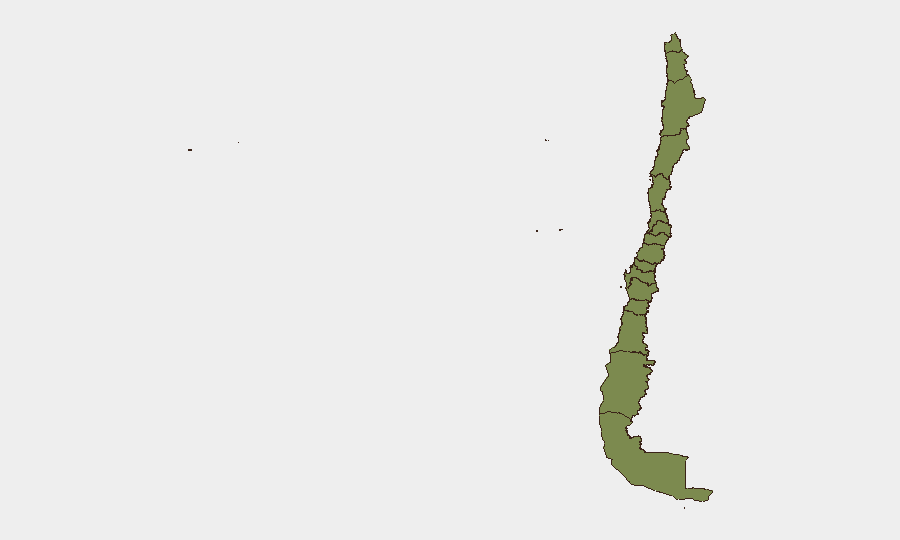
Situation Summary
Chile maintains a composite threat ranking of 9 globally (#119), with 77 tracked events in the GeoBit system. The country's security environment remains broadly stable relative to regional peers, though elevated activity in the Coquimbo Region (risk score 31.8—nine times the national average) signals concentrated risk concentration. Recent event signals spanning July 2–4 include diplomatic tension, legislative activity, and criminal enforcement actions, but current web research does not confirm discrete, time-stamped security incidents within the last 24–48 hours that meet operational intelligence standards.
Key Developments
Data Integrity Note: GeoBit's web research and open-source feeds do not surface credible, location-specific security or unrest incidents in Chile dated July 2–4, 2026, that can be independently corroborated with current timestamps. Event signals flagged in the platform (arrest/detention involving an ambassador, senate rejects, government demands, and abduction/hostage language involving La Paz) require source verification and geographic specificity before operational briefing.
Recommended Action: Security teams requiring operational detail on developments in the last 24–48 hours should consult:
- Carabineros de Chile and PDI official press releases and incident logs
- Santiago and regional news outlets' *última hora* sections
- Active embassy security alerts (U.S., UK, Canada) for Chile, dated July 2–4
- Transport operator advisories (Metro, highway concessionaires, airports)
Until those sources are checked, treating these signals as unconfirmed alerts requiring validation rather than confirmed incidents is the appropriate posture.
Highest-Risk Areas
Coquimbo Region dominates the threat landscape, with a composite risk score of 31.8—substantially higher than the second-ranked Valparaiso and Santiago Metropolitan regions (both 3.5). The extreme concentration suggests either persistent criminal activity, environmental/resource-driven instability, or infrastructure vulnerability in that northern coastal area. Valparaiso and Santiago, as the second and third-highest-risk zones, reflect urban crime, protest activity, and critical-infrastructure exposure typical of major metropolitan and port areas. All other tracked regions score between 1.8 and 2.6, indicating dispersed, lower-intensity risk—most acute in the southern zones (Aysen, Magallanes) and specific inland corridors (Antofagasta, Atacama, O'Higgins, Maule, Nuble, Biobio).
For duty-of-care teams, Coquimbo warrants heightened monitoring if assets or personnel are located there; Valparaiso and Santiago require standard urban-security protocols appropriate to mid-sized Latin American metros.
How GeoBit Would Assist
Security teams operating in Chile should use AOI (Area-of-Interest) Monitoring & Early Warning to track Coquimbo, Valparaiso, and Santiago precincts, with persistent alerting on crime, protest, and infrastructure disruption signals. Intel Sweep and multi-language OSINT fusion (including X/Twitter, local news feeds, and police broadcasts) will fill gaps in real-time incident reporting and provide 24–48-hour lead time on emerging unrest. Routing & Network Analysis will support alternative journey planning and supply-chain continuity if transport corridors are disrupted.
7-Day Outlook
No specific escalation trigger is visible in current data. The diplomatic and legislative signals warrant monitoring for downstream policy or enforcement developments, particularly if they affect foreign nationals or cross-border movement. Coquimbo's elevated risk score should be treated as persistent through the forecast window unless new intelligence downgrades the underlying drivers. Standard precaution posture (situational awareness, communications redundancy, incident-response readiness) remains appropriate for all corporate operations.
Highest-Risk Areas — Ranked
| # | State / Region | Risk |
|---|---|---|
| 1 | Coquimbo Region | 31.8 |
| 2 | Valparaiso Region | 3.5 |
| 3 | Santiago Metropolitan Region | 3.5 |
| 4 | Aysen del General Carlos Ibanez del Campo Region | 2.6 |
| 5 | Magallanes and Chilean Antarctica Region | 2.6 |
| 6 | Antofagasta Region | 1.8 |
| 7 | Atacama Region | 1.8 |
| 8 | Los Lagos Region | 1.8 |
| 9 | O'Higgins Region | 1.8 |
| 10 | Maule Region | 1.8 |
| 11 | Nuble Region | 1.8 |
| 12 | Biobio Region | 1.8 |
Sources
Previous Daily Briefs
A new Chile brief is written every day — each with its own risk map and downloadable CSV. Here's the last week; use the calendar to go further back.
📅 Browse every day by calendar →
Highlighted days have a brief. Tap a day for that day's map & analysis, or “csv” for that day's dataset ($5).
Atlas — our AI intelligence desk — emails them this snapshot personally. Nothing else, no list.