Situation Summary
China's security environment remains stable at the national level, with no verified large-scale unrest, terrorism, or infrastructure disruption in the past 48 hours. However, a cluster of targeted detention actions, regulatory enforcement in trade and technology sectors, and intensified digital-security policing indicate elevated governmental scrutiny across political, academic, and commercial domains. The trajectory reflects administrative tightening rather than systemic instability, though compliance and movement friction for foreign nationals and businesses continues to increase.
Key Developments
- Beijing, 13–14 June: Two separate arrest/detention events involving a scholar and a citizen documented as part of heightened political and academic security scrutiny; consistent with elevated enforcement posture but no associated civil unrest reported.
- Nationwide, 13–14 June: China formally protested U.S. addition of 37 Chinese entities to national security trade restriction lists; creates regulatory and compliance exposure for multinational firms with supply-chain or technology partnerships in China.
- Beijing, 12–13 June: Cluster of administrative sanctions and regulatory signaling actions in trade and technology sectors documented; reflects intensified enforcement environment affecting foreign researchers, NGOs, and corporate operations.
- Shanghai, mid-June (recent): Authorities conducting spot checks on public transit with digital-device searches targeting VPNs, social media platforms, and cryptocurrency applications; indicates heightened surveillance posture affecting traveler privacy and device security.
- Coastal and inland economic hubs, as of 14 June: Shanghai, Jiangsu, Guangdong, and Yunnan remain under moderate-to-elevated compliance and inspection pressure; no violence or demonstrations reported in preceding 48 hours, but cross-border movement controls and regulatory scrutiny remain elevated.
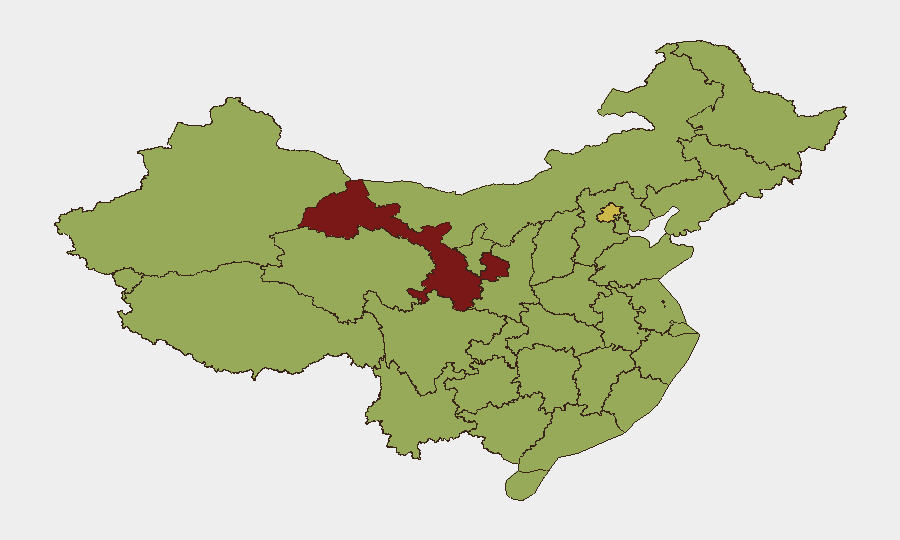
- Northwestern regions (Gansu, Qinghai), baseline risk: Highest national risk scores maintained due to border sensitivities and structural vulnerabilities; no newly verified incidents in the past 48 hours, but persistent underlying threat environment.
- Cyber exposure (secondary alert): Educational institutions with China-based campuses remain at ongoing fraud risk following confirmed ShinyHunters breach of Oracle PeopleSoft (10–11 June), affecting 40+ GB of student and staff data; impacts continue to unfold globally.
Highest-Risk Areas
Gansu (81.1), Beijing (67), and Shanghai (55.9) anchor the highest-risk tier, with Gansu driven by border-proximity vulnerabilities and Beijing reflecting concentrated political/enforcement activity and diplomatic friction. Shanghai's elevation reflects both regulatory scrutiny and digital-policing intensity targeting foreign travelers. The middle tier—Yunnan, Guangdong, Zhejiang, Jiangxi, and Fujian—registers elevated risk primarily from trade exposure, cross-border movement controls, and technology-sector enforcement rather than physical instability. Risk is administrative and regulatory rather than kinetic.
How GeoBit Would Assist
Security teams should deploy Intel Sweep and entity-extraction capabilities to monitor ongoing detention patterns and regulatory actions affecting staff and suppliers in Beijing, Shanghai, and coastal hubs. AOI Monitoring & Early Warning on Beijing, Gansu, and economic corridors would provide persistent alerting on enforcement clusters, movement restrictions, or escalation signals. Economic & Trade search and network analysis would help map exposure to newly sanctioned entities and track compliance obligations as U.S.–China trade friction evolves.
7-Day Outlook
Administrative enforcement and regulatory scrutiny will likely remain elevated across political, academic, and technology sectors; no imminent escalation to mass unrest is indicated. Travelers and remote workers should expect continued digital-device checks and compliance friction on public transit in major cities. Watch for secondary effects of U.S. entity sanctions as Chinese authorities implement retaliatory regulatory measures.
Highest-Risk Areas — Ranked
| # | State / Region | Risk |
|---|---|---|
| 1 | Gansu | 81.1 |
| 2 | Beijing | 67 |
| 3 | Shanghai | 55.9 |
| 4 | Yunnan | 53.7 |
| 5 | Guangdong Province | 52.3 |
| 6 | Zhejiang | 52.3 |
| 7 | Jiangxi | 51.8 |
| 8 | Fujian | 51.8 |
| 9 | Henan | 51.4 |
| 10 | Guizhou | 51.4 |
| 11 | Heilongjiang | 51.3 |
| 12 | Liaoning | 51.3 |
Sources
Previous Daily Briefs
A new China brief is written every day — each with its own risk map and downloadable CSV. Here's the last week; use the calendar to go further back.
📅 Browse every day by calendar →
Highlighted days have a brief. Tap a day for that day's map & analysis, or “csv” for that day's dataset ($5).