Situation Summary
Cyprus remains a low-threat environment globally (rank #121, composite score 8) with no credible, independently confirmed security incidents or civil unrest reported in the last 24–48 hours. The security picture is shaped by ongoing political discourse, energy-sector debates, and long-standing regional tensions rather than acute instability. Nicosia's significantly elevated sub-national risk score (31.5 vs. 3.3 for the next-highest area) reflects concentration of political activity and sensitive cross-community dynamics in the capital, though no new destabilizing events have materialized in the reporting window.
Key Developments
No credible, time-stamped security or instability incidents have been identified in Cyprus for the 24–48 hour period ending 2026-07-02. Open and social sources show political statements, energy-ministry commentary, and parliamentary discourse, but these lack the specificity, independence, and recency confirmation required for operational briefing. Longer-running background issues—including ongoing UK military presence negotiations, EU energy and regulatory coordination, and Ukraine-related spillover concerns—continue, but do not constitute new developments. Any items flagged by event feeds lack either clear dating within the reporting window or corroborating source confirmation and are therefore excluded per methodology.
Highest-Risk Areas
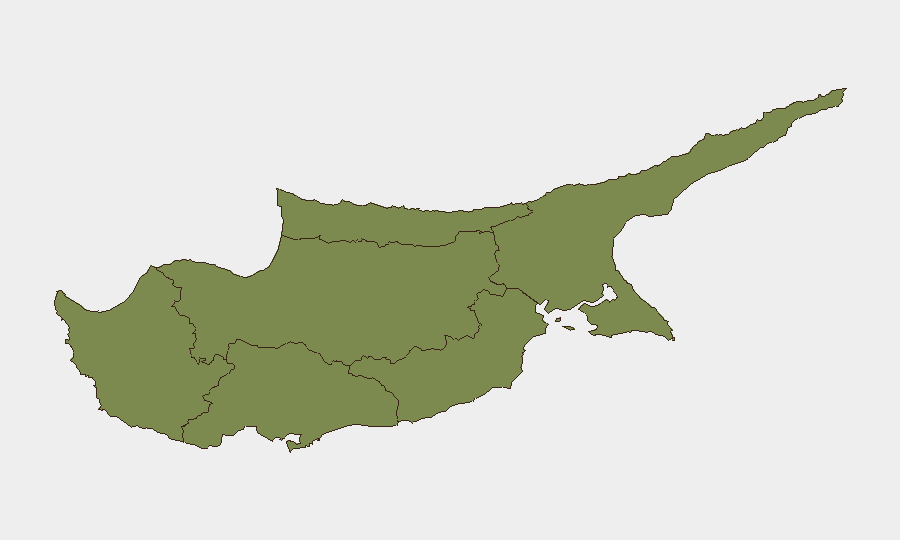
Nicosia dominates the sub-national risk profile, with a composite score nearly ten times that of Limassol (31.5 vs. 3.3), reflecting its role as the political capital, seat of parliament and presidency, and a zone of ongoing intercommunal sensitivity. The capital's elevated risk is driven by concentration of government institutions, political volatility, and historical communal divisions rather than current violent unrest. Limassol follows as the second-risk area, likely reflecting its status as Cyprus's primary commercial and port hub, making it relevant to regional trade, maritime, and economic security concerns. Remaining areas (Kyrenia, Larnaca, Famagusta, Paphos) show equivalent, low baseline risk and are suitable for standard duty-of-care protocols.
How GeoBit Would Assist
For personnel or assets in Cyprus, GeoBit's Intel Sweep and multi-language OSINT fusion capabilities enable continuous monitoring of political statements, protest signals, and cross-border tensions with rapid corroboration and temporal analysis, reducing false alarms. AOI (Area-of-Interest) Monitoring & Early Warning with persistent watch on Nicosia and port facilities (Limassol) provides alerting if new incidents, protests, or infrastructure disruptions emerge, feeding into duty-of-care escalation protocols. Regime Stability and Network & Actor Analysis track political factions, energy-sector actors, and regional diplomatic movements to identify emerging instability or travel-risk triggers before they escalate.
7-Day Outlook
No acute security deterioration is forecast for the coming week. Political and energy-sector debates will likely continue, but absence of violence or critical infrastructure disruption over the past 48 hours suggests these remain within normal governance ranges. Security teams should maintain baseline awareness of Nicosia political activity and monitor for any UK–Cyprus or EU regulatory developments that could affect operations, but no advisory changes are recommended at this time.
Highest-Risk Areas — Ranked
| # | State / Region | Risk |
|---|---|---|
| 1 | Nicosia | 31.5 |
| 2 | Limassol | 3.3 |
| 3 | Kyrenia | 1.5 |
| 4 | Larnaca | 1.5 |
| 5 | Famagusta | 1.5 |
| 6 | Paphos | 1.5 |
Sources
Previous Daily Briefs
A new Cyprus brief is written every day — each with its own risk map and downloadable CSV. Here's the last week; use the calendar to go further back.
📅 Browse every day by calendar →
Highlighted days have a brief. Tap a day for that day's map & analysis, or “csv” for that day's dataset ($5).