Situation Summary
Djibouti remains a low-threat environment (global rank #112, composite score 8) with no confirmed security incidents, civil unrest, or infrastructure disruptions reported in the last 24–48 hours. Regional tensions involving Yemen, Saudi Arabia, Iran, and Gulf states continue to generate diplomatic and military signals, but these do not currently translate to direct threats within Djibouti's borders or airspace. The country's cyber-defence capability is strengthening, evidenced by recent regional exercise participation, and critical infrastructure (airports, internet backbone) is operating normally.
Key Developments
- Djibouti City – Infrastructure status (14 July 2026)
Monitoring indicates 100% uptime for key internet and data-centre infrastructure over the past 30 days; no outages or disruptions affecting connectivity or essential services reported.
- National cyber domain (14 July 2026)
The Autorité Nationale de Cybersécurité (DJ-CERT) participated in an IGAD regional cybersecurity exercise in Addis Ababa, reflecting improved national cyber-defence posture; no active cyber incidents or attacks within Djibouti reported.
- Regional military activity (14 July 2026)
Conventional military exercises or force movements involving Djibouti and regional actors (Saudi Arabia, Bahrain, Jordan, Iran, UAE) are being monitored; no escalation or direct impact on Djibouti's territory or civilian population documented.
- Diplomatic signalling (14 July 2026)
Iran has issued threats toward Yemen and regional actors; Yemen has issued threats toward Djibouti; neither has resulted in kinetic action or operational impact within Djibouti's jurisdiction.
- Absence of acute incidents
No terrorist attacks, cross-border clashes, mass-casualty events, kidnappings, or large-scale civil unrest confirmed in Djibouti or its capital in the last 48 hours across indexed news, wire services, and regional security digests.
Highest-Risk Areas
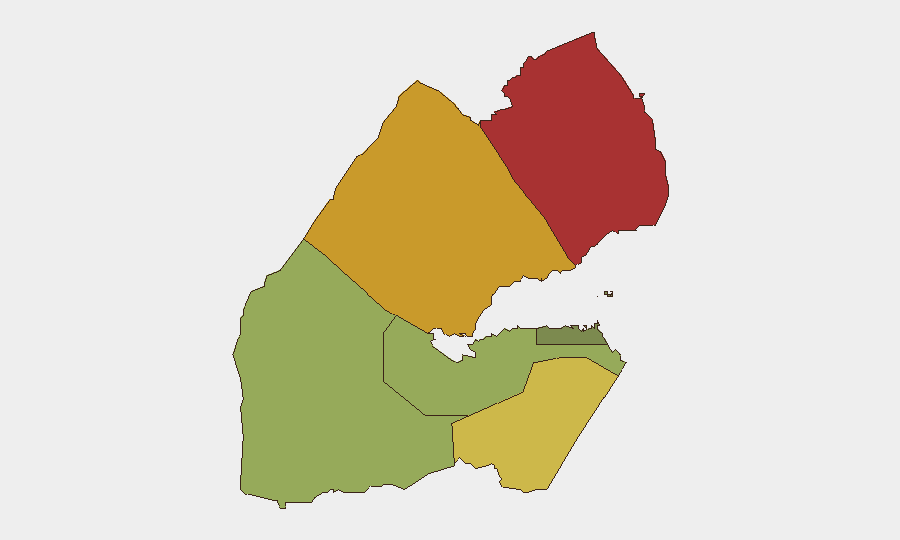
Obock (risk 78) and Tadjourah (risk 72) remain the highest-risk sub-national zones, reflecting proximity to Yemen, cross-border smuggling routes, and weak state capacity in remote border regions. Ali Sabieh (risk 65) faces similar vulnerabilities along the Ethiopia–Djibouti frontier. By contrast, Djibouti City and the capital region (risk 35) maintain tighter security presence and lower incident frequency, making it the safest operational area for personnel and assets. Risk in peripheral regions is chronic rather than acute and primarily reflects structural governance and smuggling rather than imminent incident probability.
How GeoBit Would Assist
Teams with personnel or assets in Djibouti should leverage AOI Monitoring & Early Warning to establish persistent watch on high-risk zones (Obock, Tadjourah, border crossings) with automated alerting for security events, conflict activity, or cross-border movements. Intel Sweep and multi-language OSINT (including X/Twitter, Telegram, and regional media) provide continuous situational awareness and early detection of emerging unrest, protest activity, or military posturing. Network & Actor Analysis and Routing & Network Analysis support contingency planning, alternative supply-chain routing, and staff evacuation pathway assessment should regional tensions escalate or local conditions deteriorate.
7-Day Outlook
Djibouti's internal security environment is expected to remain stable over the next seven days, with no indicators of imminent civil unrest, terrorism, or major infrastructure disruption. Regional military and diplomatic activity will continue but is unlikely to directly impact Djibouti unless cross-border spillover from Yemen escalates significantly. Standard duty-of-care monitoring and staff communication protocols are sufficient; escalation to higher alert status is not warranted at this time.
Highest-Risk Areas — Ranked
| # | State / Region | Risk |
|---|---|---|
| 1 | Obock | 78 |
| 2 | Tadjourah | 72 |
| 3 | Ali Sabieh | 65 |
| 4 | Arta | 48 |
| 5 | Dikhil | 42 |
| 6 | Djibouti | 35 |
Sources
Previous Daily Briefs
A new Djibouti brief is written every day — each with its own risk map and downloadable CSV. Here's the last week; use the calendar to go further back.
📅 Browse every day by calendar →
Highlighted days have a brief. Tap a day for that day's map & analysis, or “csv” for that day's dataset ($5).
Atlas — our AI intelligence desk — emails them this snapshot personally. Nothing else, no list.