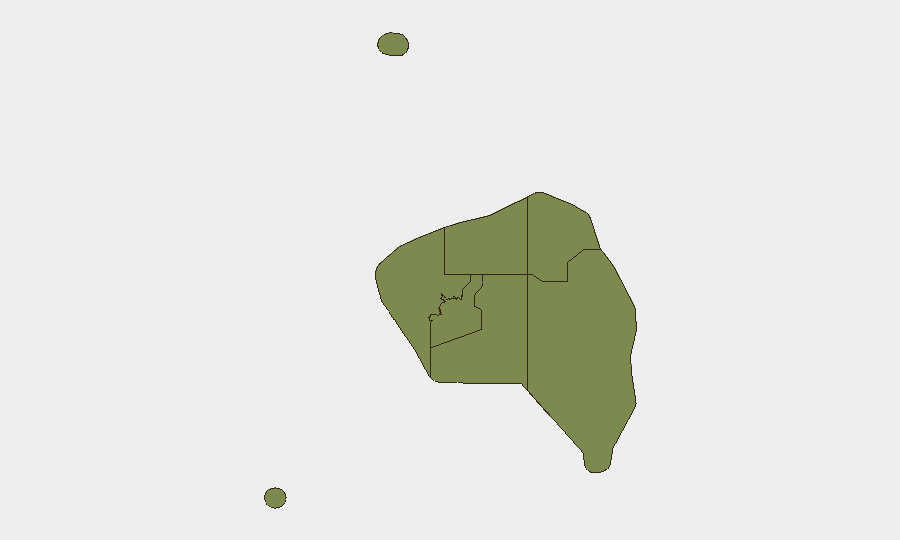
Situation Summary
Fiji remains a low-threat environment (global rank #177, composite score 3) with no credible security incidents confirmed in the last 24–48 hours. Recent signal activity reflects routine governance interactions and natural seismic activity (three M 4.5 earthquakes in the region) rather than acute conflict or instability. The security posture remains stable, though Western Division continues to concentrate measurably higher risk than other regions.
Key Developments
- 2026-07-05 · Western Division (implied) – Business-sector demand signal against government; no corroborated incident reports or escalation noted in open-source channels.
- 2026-07-05 · National – Public statement issued by Fiji authorities; content and implications not yet detailed in available corroborated reporting.
- 2026-07-03 · National – Public statement referencing Savenaca Narube; no associated security event confirmed.
- 2026-07-03 · National – Commander public statement regarding unspecified actor; no escalation or incident corroboration available.
- 2026-07-05 · Healthcare sector – Disapproval signal linked to nursing workforce; no service disruption or security impact confirmed.
- Recent · South of Fiji Islands – M 4.5 earthquake recorded south of the archipelago; no tsunami warning or damage reports received.
*Note: No discrete civil unrest, crime spike, political instability, infrastructure failure, or travel-risk incident has been independently verified in Fiji during the 24–48-hour review window.*
Highest-Risk Areas
Western Division (composite risk 31.4) is Fiji's primary risk concentration and warrants priority monitoring—it accounts for the majority of tracked events and conflict signals. Central Division (risk 21.4) ranks second but at significantly lower exposure. Eastern, Northern, and Rotuma divisions remain low-risk. The gap between Western and all other regions suggests either higher baseline activity, greater population density, or specific governance/economic friction in the western urban and commercial corridors; security teams with personnel or assets in Suva or Nadi should maintain proportionate situational awareness of Western Division developments.
How GeoBit Would Assist
Teams should employ AOI Monitoring & Early Warning to establish persistent watch on Western Division and Suva, with alert thresholds set for civil unrest, labor action, or political statement escalation. Intel Sweep and OSINT Fusion capabilities—including multi-language social media and news monitoring—will corroborate or clarify the governance and healthcare signals currently in the data. Routing & Network Analysis supports duty-of-care planning for personnel movement, and Seismic & Environmental tracking will flag any natural-hazard developments that could disrupt operations or travel.
7-Day Outlook
No acute deterioration is forecast. The recent signal activity (governance dialogue, healthcare workforce concerns, seismic activity) appears routine and not indicative of instability escalation. Continued low-frequency monitoring of Western Division and routine environmental watch remain sufficient; a material shift in civil unrest, crime, or political rhetoric would trigger elevated alert status.
Highest-Risk Areas — Ranked
| # | State / Region | Risk |
|---|---|---|
| 1 | Western | 31.4 |
| 2 | Central | 21.4 |
| 3 | Eastern | 11.4 |
| 4 | Northern | 1.4 |
| 5 | Rotuma | 1.4 |
Sources
Previous Daily Briefs
A new Fiji brief is written every day — each with its own risk map and downloadable CSV. Here's the last week; use the calendar to go further back.
📅 Browse every day by calendar →
Highlighted days have a brief. Tap a day for that day's map & analysis, or “csv” for that day's dataset ($5).
Atlas — our AI intelligence desk — emails them this snapshot personally. Nothing else, no list.