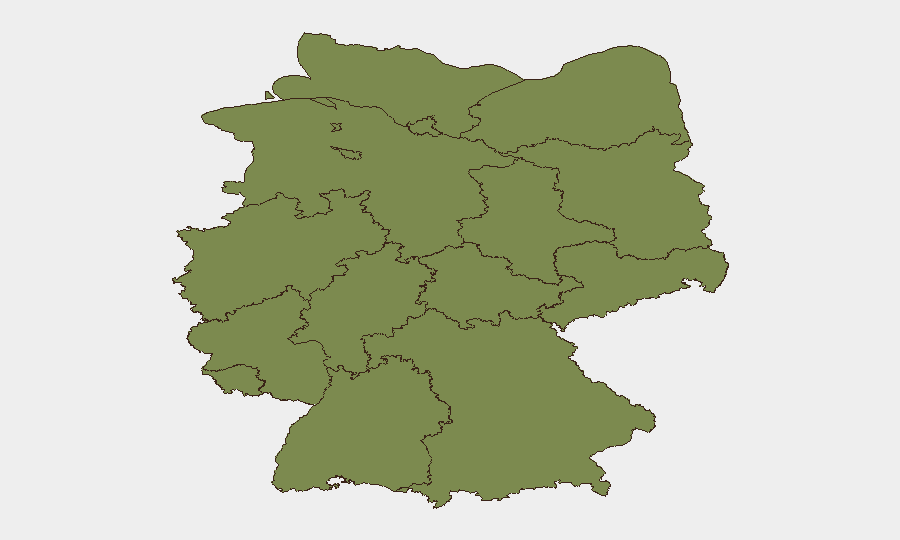
Situation Summary
Germany remains at composite threat rank #114 globally with 210 tracked events, reflecting a complex security environment driven by elevated foreign-intelligence activity, domestic extremism, and isolated violent incidents. The past 48 hours have surfaced a mass-casualty shooting in Lower Saxony and official reinforcement of Russian hybrid-threat warnings, both of which underscore elevated risk of violence—whether targeted/personal or state-sponsored. Threat trajectory is upward in domains of espionage, disinformation, and right-wing extremism, though the national threat level remains moderate relative to global comparables.
Key Developments
- Stade, Lower Saxony – 30 June 2026: A mass shooting at a youth welfare facility (Dankersstraße) resulted in six employee fatalities; a 45-year-old male suspect and 65-year-old female driver were arrested. Police cordoned the area and initiated forensic investigation, with preliminary indication of a custody-dispute motive.
- Stade, Lower Saxony – 1 July 2026: Victim identification remained incomplete; authorities reiterated the incident as an isolated act of violence and maintained investigative presence, with no indication of broader threat.
- Germany (national) – 30 June 2026: The BfV (domestic intelligence agency) released its annual security report, formally warning of elevated threats from Russian espionage, sabotage, disinformation, and potential "disposable" agent deployment; report also flagged rising right-wing extremism, Iran-linked targeting of exiled opposition and Jewish/Israeli interests.
- Germany (national) – 30 June–1 July 2026: Senior government officials publicly amplified BfV findings, emphasizing Russian hybrid-operation risk to critical infrastructure and political processes, and signaled intent to expand intelligence powers; rhetoric consistent with elevated alert posture.
- Russia–Germany travel/connectivity – 1 July 2026: Germany's Foreign Office expanded its Russia travel advisory to warn against all-country travel due to war-related security risks and potential arbitrary detention of EU citizens, creating indirect operational friction for Germany-based firms with Russia exposure.
Highest-Risk Areas
Thuringia dominates the sub-national ranking (risk score 32), followed by Berlin (18.8) and Hamburg (13.5); these three account for the plurality of tracked events. Thuringia's elevated risk reflects historical right-wing extremist concentration; Berlin combines diplomatic-espionage risk, large protest activity, and minority-community vulnerability; Hamburg reflects port-infrastructure exposure and transit-node status. Together they warrant priority monitoring for public-order incidents, extremist activity, and foreign-intelligence operations. Lower Saxony (rank 5, score 6.9) has now surfaced acute incident risk via the Stade shooting, warranting temporary elevation of situational awareness.
How GeoBit Would Assist
Security teams operating in Germany should employ Intel Sweep and OSINT fusion (X/Twitter, Telegram, open-source reporting) to monitor extremist narratives and threat signaling in real time, particularly in Thuringia and Berlin. AOI Monitoring & Early Warning configured for high-risk sub-national regions (Thuringia, Berlin, Hamburg) and critical sites (government, transport, minority institutions) provides persistent alerting on emerging violence indicators, protest activity, or sabotage precursors. Network & Actor Analysis supports identification of foreign-intelligence and extremist networks operating in-country, enabling targeted counterintelligence and duty-of-care risk mitigation.
7-Day Outlook
The Stade incident is expected to close investigatively within 48–72 hours pending victim identification and suspect interviews; no secondary-threat indicators currently assessed. Official Russian-threat messaging will likely persist and may drive heightened police/intelligence visibility at critical sites, creating minor operational friction. Right-wing extremist activity and protest-activity risk remain elevated; no imminent large-scale incident is signaled, but situational awareness in Thuringia, Berlin, and Hamburg should remain at heightened level through early July.
Highest-Risk Areas — Ranked
| # | State / Region | Risk |
|---|---|---|
| 1 | Thuringia | 32 |
| 2 | Berlin | 18.8 |
| 3 | Hamburg | 13.5 |
| 4 | Bavaria | 10.7 |
| 5 | Lower Saxony | 6.9 |
| 6 | Saxony | 6 |
| 7 | Saxony-Anhalt | 5.8 |
| 8 | Schleswig-Holstein | 3.7 |
| 9 | Mecklenburg-Vorpommern | 3.7 |
| 10 | Baden-Württemberg | 2.2 |
| 11 | Brandenburg | 2.2 |
| 12 | Rhineland-Palatinate | 2 |
Sources
Previous Daily Briefs
A new Germany brief is written every day — each with its own risk map and downloadable CSV. Here's the last week; use the calendar to go further back.
📅 Browse every day by calendar →
Highlighted days have a brief. Tap a day for that day's map & analysis, or “csv” for that day's dataset ($5).