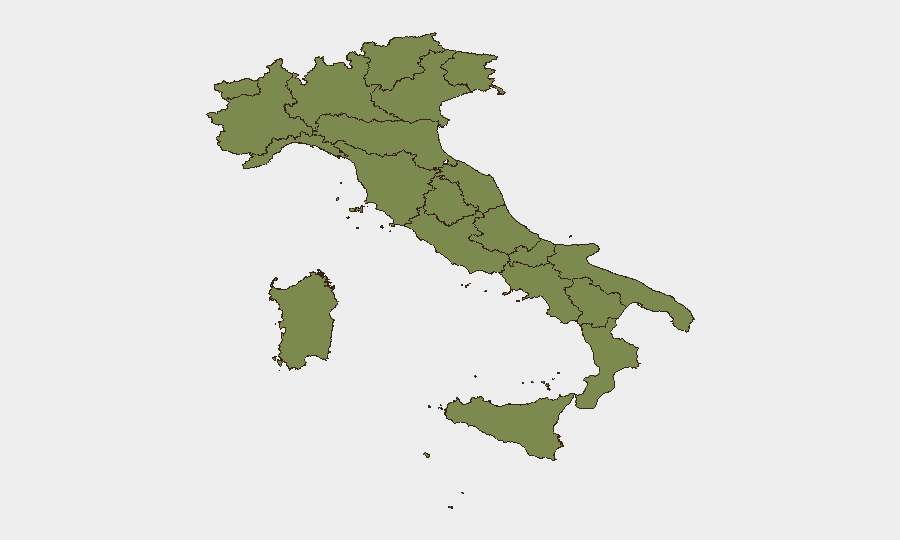
Situation Summary
Italy remains a relatively low-threat environment globally (rank #98, composite score 10), but risk is heavily concentrated in central regions—particularly Umbria, which scores more than 1.5× higher than Lazio, the second-ranked area. Recent activity signals span governance challenges, agricultural grievances, and unconfirmed labor disruptions affecting transport. The security posture is stable but warrants close monitoring of central Italy flashpoints and potential cascading industrial action.
Key Developments
- 2026-07-05 · Farmer disapproval action vs. Piedmont — Agricultural sector dissent reported; scope and specific demands remain unclear from available signals.
- 2026-07-05 · Premier public statement — National leadership address issued; content and policy direction not yet detailed in accessible summaries.
- 2026-07-04 · Military threat signal vs. Rome — Institutional tension flagged in event feeds; no confirmed escalation or operational activity reported.
- 2026-07-04 · Police investigation initiated — Law enforcement action commenced; subject matter and jurisdiction unconfirmed.
- 2026-07-04 · Bishop threat signal — Religious institutional communication flagged; context unclear.
- Unverified strike/disruption notices (last 24–48h) — Travel advisories cite possible nationwide ground-handling strikes, 8-hour Rome airport security-staff action, and 24-hour Milan ATC strike; dates and confirmed scope require corroboration. If confirmed, these would affect inbound/outbound logistics and supply-chain timing.
Highest-Risk Areas
Umbria's composite risk score (33.6) is substantially elevated relative to all other regions and warrants priority monitoring. Lazio (19.8) remains the second concern, likely reflecting Rome-centered governance, institutional, and law-enforcement activity. Lombardy (7.6) and Piedmont (4.7) follow at lower absolute risk but are flagged by recent agricultural and regional administrative signals. All other regions score below 4.0, indicating dispersed but manageable baseline threat levels. Central Italy (Umbria–Lazio corridor) should be the focus of duty-of-care itinerary reviews and asset-location risk updates.
How GeoBit Would Assist
Intel Sweep & OSINT Fusion would corroborate the unverified strike notices and clarify governance/institutional signals within 4–6 hours, closing gaps in current research. AOI Monitoring & Early Warning would establish persistent watch over Umbria and Lazio, triggering alerts on institutional disputes, labor action, or security incidents before they cascade to supply chains or travel. Routing & Network Analysis would provide real-time alternative journey planning if airport or transport strikes crystallize, enabling duty-of-care teams to pre-position contingency travel and logistics schedules.
7-Day Outlook
If the reported labor actions materialize as confirmed, expect 48–72 hour friction on Milan and Rome air corridors and ground handling, with knock-on effects for personnel mobility and cargo timing through mid-week. Agricultural and governance tensions are unlikely to escalate to security-relevant incidents but warrant daily monitoring for policy announcements or escalatory rhetoric. No indicators of imminent terrorism, organized crime, or civil unrest are present; overall threat trajectory remains stable unless central Italy signals shift sharply.
Highest-Risk Areas — Ranked
| # | State / Region | Risk |
|---|---|---|
| 1 | Umbria | 33.6 |
| 2 | Lazio | 19.8 |
| 3 | Lombardy | 7.6 |
| 4 | Piedmont | 4.7 |
| 5 | Veneto | 3.9 |
| 6 | Marche | 3.9 |
| 7 | Liguria | 3.9 |
| 8 | Sardinia | 3.6 |
| 9 | Emilia-Romagna | 3.6 |
| 10 | Tuscany | 3.6 |
| 11 | Trentino – Alto Adige/Südtirol | 3.6 |
| 12 | Friuli – Venezia Giulia | 3.6 |
Sources
Previous Daily Briefs
A new Italy brief is written every day — each with its own risk map and downloadable CSV. Here's the last week; use the calendar to go further back.
📅 Browse every day by calendar →
Highlighted days have a brief. Tap a day for that day's map & analysis, or “csv” for that day's dataset ($5).
Atlas — our AI intelligence desk — emails them this snapshot personally. Nothing else, no list.