Situation Summary
Lesotho remains at composite threat level #104 globally with a score of 9, reflecting structurally elevated crime—particularly in urban centers—and latent risk of spontaneous civil unrest, but without confirmed new security incidents in the last 24–48 hours. The country's security posture is stable at the political level; however, indirect pressures from South African anti-immigration enforcement and deportations are driving large-scale returns of Basotho nationals, creating economic strain and potential social friction. Recent event signals flagged anti-immigrant and South African–immigrant tensions, though these appear to be regional phenomena with downstream labor-market and social effects in Lesotho rather than acute incidents within the country itself.
Key Developments
- No confirmed new security, crime, civil-unrest, or infrastructure incidents in Lesotho during the last 24–48 hours based on open-source news, government announcements, and regional reporting.
- South Africa–driven migration pressures (mid-July 2026). Anti-immigration protests and deportations in South Africa are accelerating the return of Basotho nationals, creating an urgent domestic job crisis and heightening social tension within Lesotho's labor market; this is a structural economic pressure rather than a discrete security event.
- Ramarothole Solar Power Project Phase II launched around 10 July 2026 in Mafeteng District (50 MW addition to existing 30 MW capacity). No security incidents or sabotage reported in connection with the project.
Highest-Risk Areas
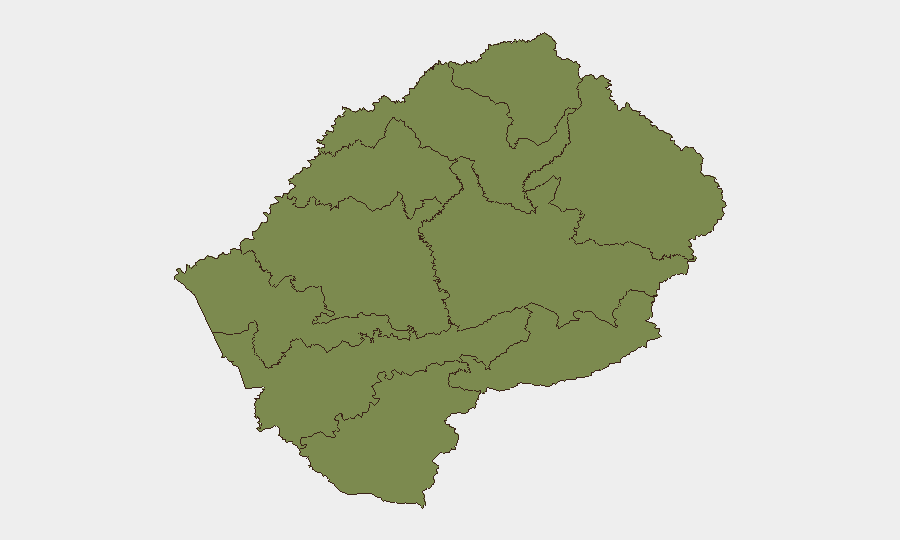
Thaba-Tseka District stands apart with a composite risk score of 31.8—approximately 17 times higher than all other districts (each at 1.8)—and represents the primary geographical driver of national threat. The remaining nine districts (Berea, Mafeteng, Maseru, Mohale's Hoek, Quthing, Butha-Buthe, Leribe, Mokhotlong, and Qacha's Nek) cluster at equivalent, lower-tier risk levels. While Maseru, as the capital, experiences the highest absolute crime burden (violent robbery, burglary, sexual assault), the outsized risk score for Thaba-Tseka suggests localized instability—potentially linked to geographic isolation, limited state capacity, or historical conflict dynamics—that warrants targeted monitoring and contingency planning for any personnel or assets in that district.
How GeoBit Would Assist
GeoBit's AOI Monitoring & Early Warning capability would enable persistent watch on Thaba-Tseka and other high-sensitivity zones, with automated alerting on demonstrations, security force activity, or crime clusters. Intel Sweep and multi-language OSINT fusion across regional media, government statements, and social platforms (X, Telegram) would provide early detection of spontaneous civil unrest or cross-border tensions before they escalate. Routing & Network Analysis would support duty-of-care teams in planning safe transit corridors and alternative logistics routes around Maseru and high-crime pockets, while GIS & Spatial Analysis layered with economic/labor data would help contextualize the downstream effects of South African deportations on social cohesion in-country.
7-Day Outlook
No acute incident triggers are visible on the near-term horizon; however, the accumulating return of deportees from South Africa and tightening labor-market conditions will likely increase social tension and the statistical likelihood of spontaneous demonstrations or localized unrest over the next 7–14 days. Thaba-Tseka District remains a priority watch zone. Corporate security teams should maintain elevated baseline vigilance in Maseru and monitor local labor-market reporting and social media sentiment for early signals of civil unrest.
Highest-Risk Areas — Ranked
| # | State / Region | Risk |
|---|---|---|
| 1 | Thaba-Tseka District | 31.8 |
| 2 | Berea District | 1.8 |
| 3 | Mafeteng District | 1.8 |
| 4 | Maseru District | 1.8 |
| 5 | Mohale's Hoek District | 1.8 |
| 6 | Quthing District | 1.8 |
| 7 | Butha-Buthe District | 1.8 |
| 8 | Leribe District | 1.8 |
| 9 | Mokhotlong District | 1.8 |
| 10 | Qacha's Nek District | 1.8 |
Sources
Previous Daily Briefs
A new Lesotho brief is written every day — each with its own risk map and downloadable CSV. Here's the last week; use the calendar to go further back.
📅 Browse every day by calendar →
Highlighted days have a brief. Tap a day for that day's map & analysis, or “csv” for that day's dataset ($5).
Atlas — our AI intelligence desk — emails them this snapshot personally. Nothing else, no list.