Situation Summary
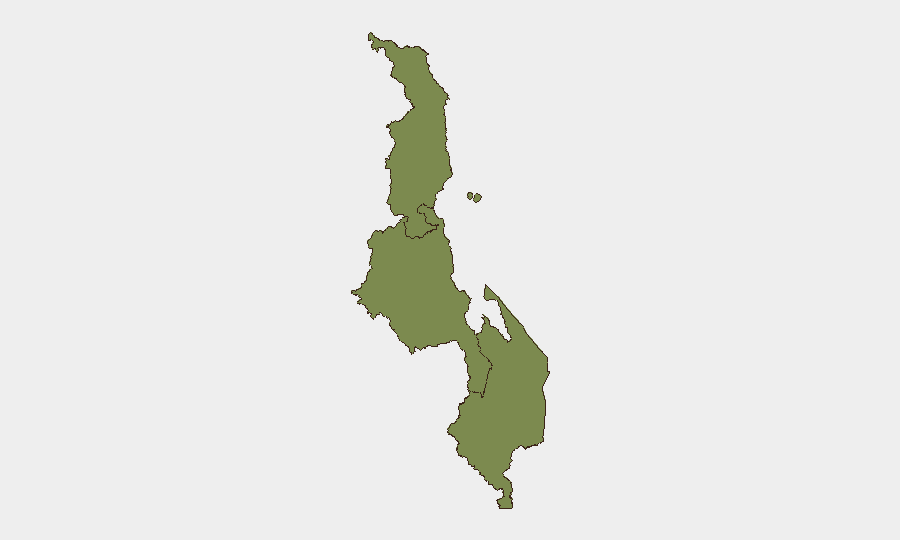
Malawi remains a low-threat environment globally (ranked #144) with a composite threat score of 5, but sub-national risk is highly concentrated in the Central Region (score 31.6), which accounts for the majority of the country's 480 tracked security events. No acute security incidents, civil unrest, or infrastructure disruptions have been documented in the last 24–48 hours; recent activity in the public domain centers on economic policy discussions (IMF engagement on macroeconomic stabilization) and food security initiatives rather than violence or political instability. The security posture remains stable, though underlying economic stress and governance challenges persist from earlier in the year.
Key Developments
- No major security or unrest incidents reported in Malawi during the last 24–48 hours. Web research, institutional reporting, and social media monitoring have identified no credible, time-stamped reports of protests, civil unrest, armed conflict, terrorism, infrastructure failure, or sudden travel-risk escalation within this window.
- IMF engagement continues on macroeconomic recovery (8–10 July 2026). High-level talks between IMF officials and Malawi's Ministry of Finance and Reserve Bank are ongoing, reflecting sustained international focus on economic stabilization but no acute security trigger.
- Catholic Church household food-security program launched (10 July 2026). The Malawi Conference of Catholic Bishops publicized an Integrated Homestead Farming initiative, indicating continued attention to food insecurity as a driver of social stability but no new security event.
- Central Region remains the primary risk vector. GeoBit's sub-national ranking places Central Region at 31.6 (risk index), approximately 3.2 times higher than Southern Region (9.8) and nearly 20 times higher than Northern Region (1.6), concentrating duty-of-care attention on Lilongwe, surrounding districts, and corridors within the central belt.
Highest-Risk Areas
Central Region dominates Malawi's overall threat profile, accounting for the majority of tracked security events and reflecting historical patterns of political protest, administrative disputes, and urban crime concentration around the capital and administrative centers. Southern Region presents secondary concern (risk 9.8), driven by localized disputes and criminal activity. Northern Region remains minimal-risk (1.6). Organizations with personnel or assets in Lilongwe and central districts should apply heightened awareness protocols; Southern Region operations warrant standard commercial-sector precautions; Northern Region requires only baseline monitoring.
How GeoBit Would Assist
Corporate security teams in Malawi should deploy Area-of-Interest (AOI) Monitoring & Early Warning on Lilongwe and Central Region urban centers to detect emerging protest activity, political dissent, or crime-pattern shifts in real time. Intel Sweep and OSINT Fusion capabilities (X/Twitter, Telegram, local media, and multi-language social feeds) provide persistent visibility into political rhetoric, labor unrest, and community sentiment before incidents escalate to violence. Risk & Threat Assessment with temporal and sentiment analysis allows duty-of-care teams to distinguish between noise and credible threats, enabling proportionate response and route-planning adjustments via Routing & Network Analysis during periods of heightened tension.
7-Day Outlook
Economic policy discussions are expected to continue without disruption; no major political events, elections, or commemorations are scheduled in the near term that would trigger mass mobilization. Security conditions are likely to remain stable, with risk concentrated in Central Region pockets rather than nationwide escalation. Teams should maintain standard monitoring cadence while watching for any acceleration in food-price inflation or unemployment announcements that could trigger renewed protest activity.
Highest-Risk Areas — Ranked
| # | State / Region | Risk |
|---|---|---|
| 1 | Central Region, Malawi | 31.6 |
| 2 | Southern Region, Malawi | 9.8 |
| 3 | Northern Region, Malawi | 1.6 |
Sources
Previous Daily Briefs
A new Malawi brief is written every day — each with its own risk map and downloadable CSV. Here's the last week; use the calendar to go further back.
📅 Browse every day by calendar →
Highlighted days have a brief. Tap a day for that day's map & analysis, or “csv” for that day's dataset ($5).
Atlas — our AI intelligence desk — emails them this snapshot personally. Nothing else, no list.