Situation Summary
Malaysia's composite threat score of 17 places it in a moderate risk band globally, with 66 tracked events reflecting a mixed security environment dominated by political and civil-society tensions rather than organized violence or militant activity. Kuala Lumpur accounts for nearly 50% of the nation's tracked risk (31.3/100), driven by concentrated political messaging, judicial actions, and student activism over the past 48 hours. No systemic unrest, mass casualty incidents, or armed escalations have been reported in the current operational window; the threat environment remains fragmented and issue-specific rather than coordinated.
Key Developments
- Kuala Lumpur, 2026-07-20: Prime Minister-linked public statements and demands directed at Malaysian citizens and political parties signal ongoing political friction; concurrent disapproval messaging from civil society indicates polarized discourse around governance.
- Multi-state, 2026-07-18–20: Student demands and community rejection events recorded across tracking, suggesting youth mobilization around education or civil-rights issues; school-versus-community demand signal (2026-07-18, location unspecified in source) indicates localized institutional friction.
- National, 2026-07-18: Conventional military force activity logged without casualty or escalation indicators; standard operational posture adjustment rather than crisis response.
- Judicial sector, 2026-07-18: Arrest or detention of a judge recorded; specifics unavailable, but signals potential institutional tension or rule-of-law scrutiny.
- Voter/political messaging, 2026-07-18: Public statements from voters directed at political parties and Islamic institutions reflect polarized sentiment on religious and political governance; no violence reported but discourse remains elevated.
Data qualification: Precise location data and granular timestamps for four of these five signals remain limited in available source material. The brief reflects *signal presence* rather than confirmed operational detail.
Highest-Risk Areas
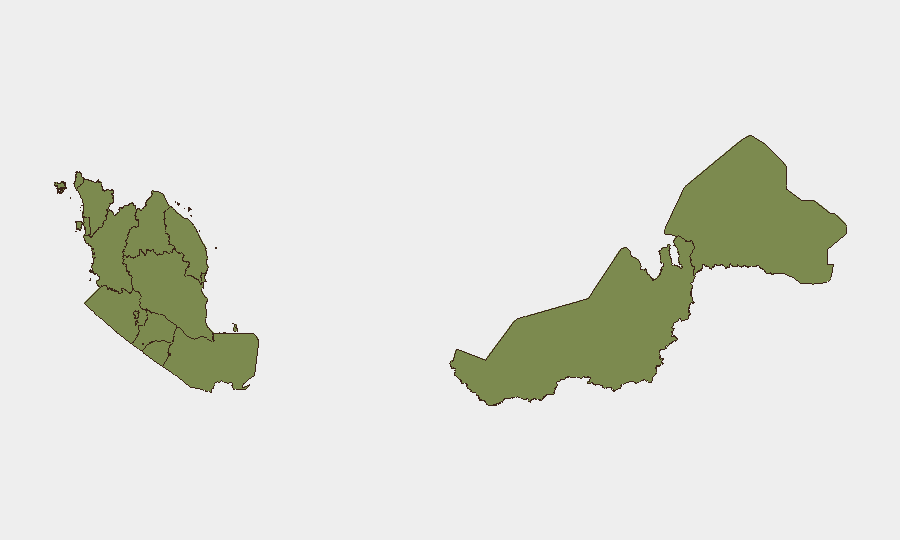
Kuala Lumpur dominates the risk matrix at 31.3, driven by concentrated political statements, judicial actions, and civil-society demands—characteristic of a capital city hosting national discourse but not necessarily armed threat. Negeri Sembilan (19.2) ranks second but lacks detailed event attribution in current reporting, warranting closer monitoring. Sarawak (11.3) and Sabah (6.3) show elevated scores relative to peninsular Malaya, likely reflecting border-region dynamics, indigenous-rights issues, or resource-sector tensions; neither shows acute crisis indicators. The remaining nine states cluster below 4.2, indicating dispersed, low-intensity activity or administrative reporting baseline.
Operational implication: Risk in Malaysia is geographically concentrated in the capital and politically sensitive regions; routine commercial or expatriate presence in secondary cities (Penang, Selangor, Malacca, Johor) faces minimal direct threat from the tracked event set.
How GeoBit Would Assist
Corporate security teams would employ AOI Monitoring & Early Warning on Kuala Lumpur and Negeri Sembilan to track civil-society and political messaging in real time and receive alerts on escalation thresholds (e.g., student mobilization scale, judicial developments). Intel Sweep, multi-language OSINT, and X/Telegram OSINT capabilities would resolve the current gaps in event location and timing, enabling duty-of-care teams to correlate specific incidents with asset locations. Network & Actor Analysis would clarify which civil-society, student, and political groups are driving demands, informing contextual risk assessment for affected personnel.
7-Day Outlook
Political and civil discourse will likely remain elevated but contained; no indicators suggest imminent shift to organized violence or mass unrest. Continued student and civil-society messaging should be expected. Monitoring of judicial sector and rule-of-law developments remains advisable given the 2026-07-18 arrest signal.
Highest-Risk Areas — Ranked
| # | State / Region | Risk |
|---|---|---|
| 1 | Kuala Lumpur | 31.3 |
| 2 | Negeri Sembilan | 19.2 |
| 3 | Sarawak | 11.3 |
| 4 | Sabah | 6.3 |
| 5 | Johor | 4.2 |
| 6 | Pahang | 3.8 |
| 7 | Kedah | 2.2 |
| 8 | Selangor | 2.2 |
| 9 | Malacca | 2.2 |
| 10 | Perlis | 1.3 |
| 11 | Penang | 1.3 |
| 12 | Perak | 1.3 |
Sources
Previous Daily Briefs
A new Malaysia brief is written every day — each with its own risk map and downloadable CSV. Here's the last week; use the calendar to go further back.
📅 Browse every day by calendar →
Highlighted days have a brief. Tap a day for that day's map & analysis, or “csv” for that day's dataset ($5).
Atlas — our AI intelligence desk — emails them this snapshot personally. Nothing else, no list.