Situation Summary
Maldives remains a low-threat environment globally (composite score 21), with no confirmed security incidents or civil unrest reported in the past 24–48 hours (21–23 July 2026). Four tracked events on 20 July—involving the Central Election Commission and small-arms incidents—remain under investigation and have not escalated into broader instability. The security posture is stable, though Malé and surrounding atolls maintain elevated residual risk profiles typical of the capital region.
Key Developments
No confirmed security, conflict, or civil unrest incidents meeting verification criteria have been reported in Maldives during 21–23 July 2026. Open-source monitoring (news outlets, security feeds, social media) has not validated any new developments in the 48-hour window. The four events flagged on 20 July (Central Election Commission investigation; three small-arms incidents involving bloggers and Maldivian parties) remain under assessment and do not yet indicate a shift in the broader threat trajectory.
Highest-Risk Areas
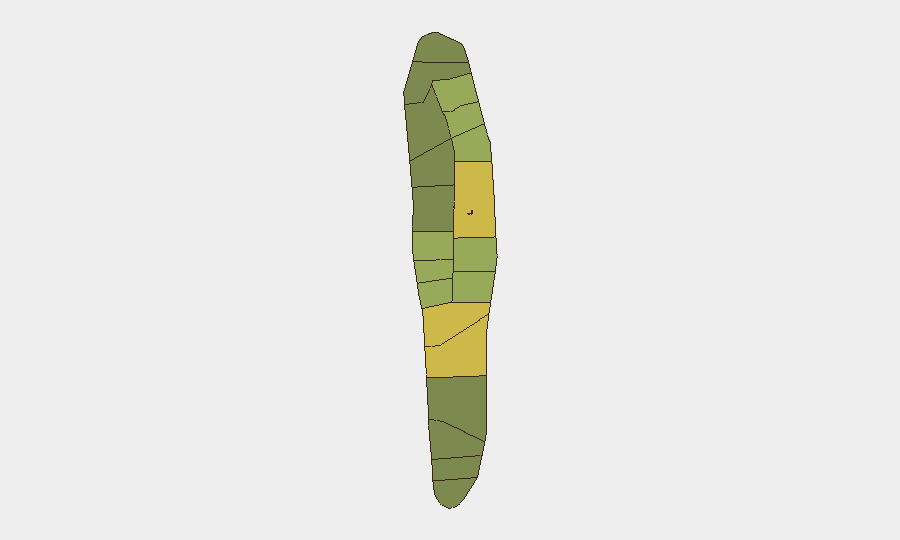
Malé (risk 85) and Malé Atoll (risk 68) dominate the sub-national risk ranking, reflecting concentrated population density, political activity, and historical clustering of crime and civil unrest in the capital. Hadhdhunmathi (65) and Kolhumadulu (60) follow, likely driven by similar urban or administrative concentrations. Peripheral and southern atolls (North Nilandhe, South Ari, South Miladhunmadulu) register significantly lower scores, indicating that security risks are sharply localized to the Greater Malé region and do not affect outer-atoll or resort zones materially.
How GeoBit Would Assist
Security teams with personnel or assets in Maldives should employ AOI Monitoring & Early Warning on Malé and adjacent atolls to detect emerging unrest, civil disturbances, or crime spikes in near-real time. Multi-language OSINT fusion—combining Dhivehi social media, news feeds, and radio SIGINT—provides rapid detection of political messaging or grassroots mobilization ahead of visible incidents. Election monitoring capabilities are particularly relevant given the 20 July Central Election Commission investigation; sustained watch on polling cycles, party activity, and compliance signaling will flag early indicators of tension before they manifest as conflict or large-scale protest.
7-Day Outlook
No acute escalation is anticipated in the next seven days absent new triggering events. The four flagged incidents on 20 July should be monitored for legal outcomes and party response; if investigations conclude without inflammatory findings, residual risk will likely revert to baseline. Routine monitoring of Malé-area political and social media channels is advisable to detect any secondary reactions or coordinated messaging that might precede renewed civil unrest.
Highest-Risk Areas — Ranked
| # | State / Region | Risk |
|---|---|---|
| 1 | Malé | 85 |
| 2 | Malé Atoll | 68 |
| 3 | Hadhdhunmathi | 65 |
| 4 | Kolhumadulu | 60 |
| 5 | Felidhu Atoll | 58 |
| 6 | Mulaku Atoll | 55 |
| 7 | Faadhippolhu | 52 |
| 8 | South Miladhunmadulu | 48 |
| 9 | North Miladhunmadulu | 45 |
| 10 | South Nilandhe Atoll | 44 |
| 11 | North Nilandhe Atoll | 42 |
| 12 | South Ari Atoll | 40 |
Sources
Previous Daily Briefs
A new Maldives brief is written every day — each with its own risk map and downloadable CSV. Here's the last week; use the calendar to go further back.
📅 Browse every day by calendar →
Highlighted days have a brief. Tap a day for that day's map & analysis, or “csv” for that day's dataset ($5).
Atlas — our AI intelligence desk — emails them this snapshot personally. Nothing else, no list.