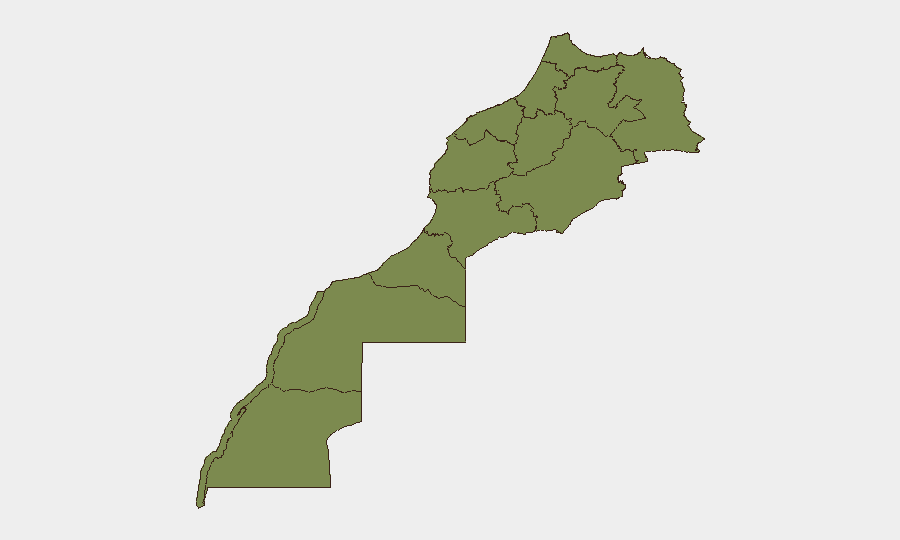
Situation Summary
Morocco remains a low-to-moderate security environment (global rank #106, composite threat score 8), but faces a significant acute disruption in its northern border region as of late July 2026. A major migrant surge toward Spanish enclaves Ceuta and Melilla has triggered escalated police and military responses on both sides of the Morocco–Spain border, with clashes, infrastructure strain, and travel delays concentrated in Tangier-Tetouan-Al Hoceima. Underlying tensions with Spain and ongoing cyber activity present secondary risks; the situation is actively evolving.
Key Developments
- Ceuta border crossing, 30–31 July 2026 – Clashes erupted for a second consecutive day near the Morocco–Spain border fence; vehicles were set on fire and police engaged large migrant groups attempting unauthorized crossings. An estimated 49,000–50,000 migrants crossed into Ceuta within approximately 24 hours before most were returned.
- Northern Morocco transport corridors (Tetouan–Fnideq–Tangier axis), 31 July 2026 – The U.S. Embassy in Rabat issued a Security Alert warning of significant disruptions across northern Morocco, citing roadblocks, transit delays, violent clashes between police and migrants, and advising travelers to avoid crowds and allow extra time for movement.
- Ceuta perimeter (Moroccan side), 31 July 2026 – Moroccan authorities deployed water cannons and additional security forces along the border fence to prevent further unauthorized crossings. Social media confirmed multiple trucks carrying riot police and water-cannon vehicles moving toward the crossing zone.
- Spanish border reinforcement, 30–31 July 2026 – Spanish authorities deployed additional military units and police on the Ceuta side, establishing enhanced checkpoints and maritime patrols around the enclave in response to the sustained influx.
- Travel infrastructure impact, 31 July 2026 – Trains, buses, ferries, and major roads serving northern Morocco (including routes to Tangier Med port and border crossings) are experiencing documented delays and congestion due to police checkpoints and migrant-related congestion.
- Cyber activity, ongoing (late July) – Intelligence reporting indicates continuing cyberattacks targeting Moroccan government and infrastructure networks, with activity described as likely to intensify amid Morocco–Algeria tensions; specific incidents within the last 48 hours are not clearly dated in open sources.
- Morocco–Spain diplomatic tension, 31 July 2026 – Morocco reduced relations with Madrid and issued administrative sanctions against Spain in parallel with the border surge, signaling political friction alongside operational strain.
Highest-Risk Areas
Tangier-Tetouan-Al Hoceima dominates the current risk profile with a composite score of 31.5—nearly four times higher than any other region—driven entirely by the ongoing migrant surge and border enforcement operations. Casablanca-Settat (8.1) and Rabat-Salé-Kénitra (6.8) carry baseline urbanization and transactional risk but are not currently experiencing acute disruption. The concentration of threat signals in the northernmost tier reflects the geography of migrant transit routes and Spanish enclave proximity; southern and central regions remain comparatively stable.
How GeoBit Would Assist
Security teams would deploy AOI Monitoring & Early Warning to track migrant and police movements along the Ceuta–Melilla corridors with persistent alerting, Routing & Network Analysis to identify passable alternative routes for personnel and supply chains bypassing disrupted transport nodes, and Intel Sweep with X/Telegram OSINT and sentiment analysis to monitor real-time escalation signals and official border-status updates. GIS & Spatial Analysis would map checkpoint and congestion zones to inform duty-of-care assessments for field teams.
7-Day Outlook
The migrant surge appears to be the primary driver of near-term disruption and is likely to persist for 5–10 days absent a major policy shift or weather change that deters crossings. Expect continued elevated police presence, periodic clashes, and intermittent transport delays in northern Morocco, with secondary diplomatic friction between Morocco and Spain. Cyber threats remain a background risk but are unlikely to produce immediate operational impact on most corporate operations.
Highest-Risk Areas — Ranked
| # | State / Region | Risk |
|---|---|---|
| 1 | Tangier-Tetouan-Al Hoceima | 31.5 |
| 2 | Casablanca-Settat | 8.1 |
| 3 | Rabat-Salé-Kénitra | 6.8 |
| 4 | Drâa-Tafilalet | 1.8 |
| 5 | Western Sahara | 1.5 |
| 6 | Laâyoune-Sakia El Hamra | 1.5 |
| 7 | Guelmim-Oued Noun | 1.5 |
| 8 | Dakhla-Oued Ed-Dahab | 1.5 |
| 9 | Béni Mellal-Khénifra | 1.5 |
| 10 | Fez-Meknes | 1.5 |
| 11 | Oriental | 1.5 |
| 12 | Marrakech-Safi | 1.5 |
Sources
Previous Daily Briefs
A new Morocco brief is written every day — each with its own risk map and downloadable CSV. Here's the last week; use the calendar to go further back.
📅 Browse every day by calendar →
Highlighted days have a brief. Tap a day for that day's map & analysis, or “csv” for that day's dataset ($5).
Atlas — our AI intelligence desk — emails them this snapshot personally. Nothing else, no list.