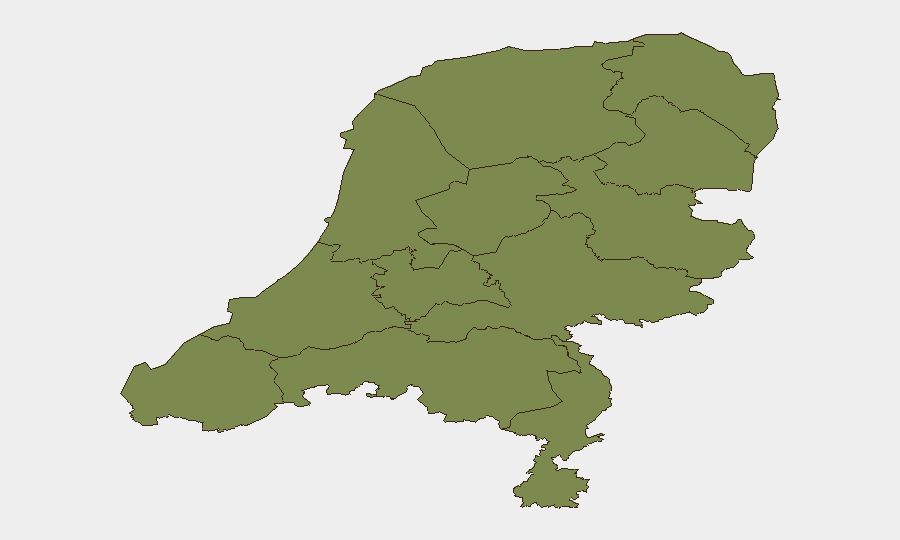
Situation Summary
The Netherlands remains a stable, low-threat operating environment with a composite threat score of 28 and no significant physical security incidents, civil unrest, or infrastructure failures in the past 24–48 hours. However, two concurrent concerns—a confirmed cyber data breach affecting multiple government ministries and ongoing digital threats from pro-Russian actors targeting public-sector websites—indicate elevated cyber-risk requiring active monitoring. Sub-national risk is heavily concentrated in North Holland (31.3), driven by localized law-enforcement activity in Amsterdam, while routine crime and extremism-monitoring operations continue across other regions without escalation.
Key Developments
- Amsterdam–Osdorp (1 Aug): Police cordoned a BMW involved in a cross-border ram-raid in Fürth, Germany, after German authorities warned the vehicle might carry explosives. No detonation or injury reported; scene cleared after assessment.
- Ammerzoden, Gelderland (2 Aug): Local police arrested a man impersonating a police officer after attempting to approach a private residence under false pretenses. Incident resolved quickly with no escalation.
- National cybersecurity (1–2 Aug, ongoing): Dutch Interior Ministry confirmed a data breach affecting Economic Affairs & Climate and Green Growth ministries, triggering formal data-leak procedures. Scope, targeted data, and attributed actors remain under investigation.
- Driebergen, Utrecht (2 Aug): Authorities reported interventions in online radicalisation of youth, with emphasis on counter-extremism operations and breaking perceived anonymity in extremist forums. No specific plot or imminent attack identified.
- Venlo, Limburg (2 Aug): Police arrested two individuals in an ongoing narcotics investigation linked to drug distribution. Routine law-enforcement action with no broader public-safety impact.
- National cyber threat (late July–2 Aug, ongoing): Dutch Cyber Security Centre reported rising digital threats following pro-Russian hacker group probing of local government websites. Activity limited to DDoS and reconnaissance; no confirmed critical-service disruption in past 24–48 hours.
Highest-Risk Areas
North Holland dominates sub-national risk (31.3), reflecting concentrated law-enforcement and counter-crime operations in Amsterdam and surrounding areas, including the cross-border explosives incident and fake-officer arrest. All other provinces cluster at 1.3–2.2, indicating risk is geographically acute rather than distributed. The spike in North Holland is driven by tactical incidents and cross-border crime linkage rather than systemic unrest or infrastructure failure. Utrecht shows modest elevation (1.3) due to radicalisation-monitoring activity, but no imminent threat escalation.
How GeoBit Would Assist
Intel Sweep, OSINT fusion, and multi-language social-media monitoring would track pro-Russian cyber-actor messaging, forum activity, and DDoS targeting of Dutch public-sector infrastructure in real time, enabling early warning before attacks materialize. Network & Actor Analysis combined with AOI Monitoring on Amsterdam, Utrecht, and Limburg would identify emerging organised-crime, radicalisation, and cross-border smuggling networks, supporting duty-of-care operations for personnel and assets. Cyber risk assessment feeds would aggregate ministry breach indicators, data-exfiltration signals, and threat-actor attribution, allowing corporate security teams to assess downstream supply-chain and regulatory risk.
7-Day Outlook
The cyber incident affecting ministries will likely drive heightened Dutch government disclosure over the next week, potentially revealing targeted data categories and sector exposure. Pro-Russian digital-threat activity is expected to persist at current levels (DDoS, probing) without escalation absent a geopolitical trigger. Routine law-enforcement operations (narcotics, extremism monitoring) will continue; no significant physical-security deterioration is forecast for the Netherlands over the next 7 days.
Highest-Risk Areas — Ranked
| # | State / Region | Risk |
|---|---|---|
| 1 | North Holland | 31.3 |
| 2 | North Brabant | 2.2 |
| 3 | Flevoland | 1.3 |
| 4 | Zeeland | 1.3 |
| 5 | South Holland | 1.3 |
| 6 | Utrecht | 1.3 |
| 7 | Frisia | 1.3 |
| 8 | Groningen | 1.3 |
| 9 | Drenthe | 1.3 |
| 10 | Gelderland | 1.3 |
| 11 | Overijssel | 1.3 |
| 12 | Limburg | 1.3 |
Sources
Previous Daily Briefs
A new Netherlands brief is written every day — each with its own risk map and downloadable CSV. Here's the last week; use the calendar to go further back.
📅 Browse every day by calendar →
Highlighted days have a brief. Tap a day for that day's map & analysis, or “csv” for that day's dataset ($5).
Atlas — our AI intelligence desk — emails them this snapshot personally. Nothing else, no list.