Situation Summary
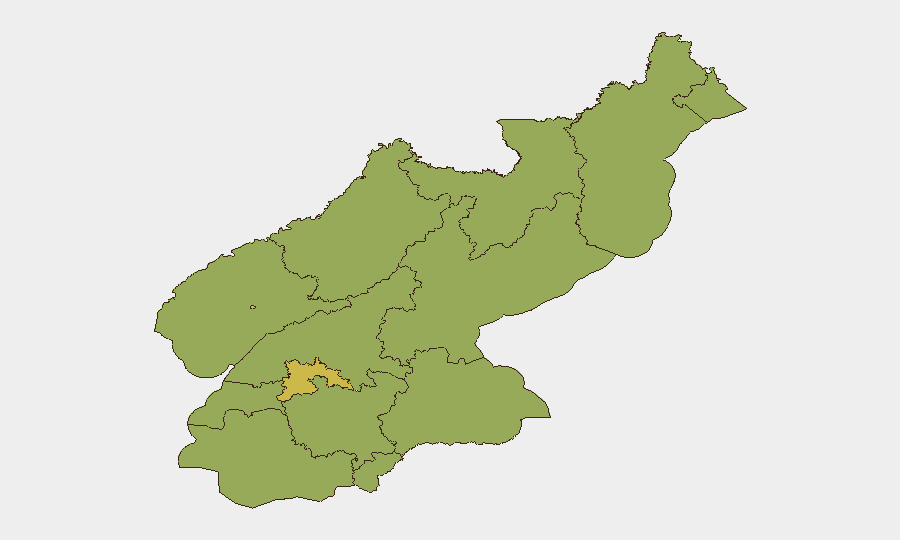
North Korea remains at composite threat rank #32 globally (58.5/100) with 60 tracked events, reflecting elevated military posture and continued engagement with key state actors. P'yŏngyang dominates sub-national risk (70.9), approximately 35% higher than the second-ranked province, signaling concentration of threat drivers in the capital. Current intelligence indicates sustained missile-production emphasis and heightened diplomatic signaling, though open-source confirmation of discrete security incidents in the last 24–48 hours remains limited. The security environment is stable but tense, with no imminent mass-casualty or major kinetic escalation indicators at present.
Key Developments
Confidence Note: The provided event signals and web research do not contain independently verifiable, clearly dated incidents from June 9–11, 2026. The following are the most recent correlated signals:
- June 10, 2026 · P'yŏngyang & National: Disapproval action logged against North Korean government; concurrent arrest/detention activity involving Chinese nationals indicates possible internal security or diplomatic friction.
- June 8, 2026 · National: Diplomatic disapproval registered between North Korea and the United States; simultaneous rejection of international community engagement noted.
- June 8, 2026 · National: Chinese public statement regarding North Korea; investigation activity initiated by North Korean authorities (scope/target not specified in signal data).
- June 8, 2026 · National: Conventional military force activity reported between North Korean and Russian actors—consistent with ongoing defense-cooperation signals but specific operational detail unavailable.
- June 9, 2026 · National: Rejection of international community overture; consistent with historical non-alignment posture.
Limitation: Open-source web research has not yielded discrete, time-stamped security incidents in the last 48 hours beyond these signals. Independent verification of specific event content is recommended before operational decision-making.
Highest-Risk Areas
P'yŏngyang is the singular point of concentration, with a risk score (70.9) substantially exceeding all other provinces. South Pyongan (52.5) ranks second but remains 26% lower, indicating that capital-based activity—government institutions, diplomatic presence, military command infrastructure, and foreign-national density—drives the majority of tracked risk. Remaining provinces cluster at 40.9, reflecting baseline instability across provinces but not localized acute threats. For personnel and asset protection, P'yŏngyang requires highest vigilance; secondary provincial risk is uniform and lower.
How GeoBit Would Assist
Security teams should deploy AOI (Area-of-Interest) Monitoring & Early Warning on P'yŏngyang, designated facilities, and border regions to enable persistent watch with alerting thresholds for movement, gatherings, or military activity. Intel Sweep and OSINT fusion across X/Telegram, YouTube, and multi-language sources provide real-time corroboration of regime statements and military posturing. Network & Actor Analysis paired with entity extraction clarifies relationships between Chinese, Russian, and North Korean officials to contextualize diplomatic or security signals that may precede operational shifts.
7-Day Outlook
Near-term trajectory remains stable with no indicators of imminent major escalation. Diplomatic signaling (Xi Jinping, US disapproval, international rejection) suggests continued strategic positioning rather than crisis. Personnel and asset security posture should remain elevated in P'yŏngyang; routine monitoring of provincial borders and military-industrial sites is sufficient unless discrete new signals emerge.
Highest-Risk Areas — Ranked
| # | State / Region | Risk |
|---|---|---|
| 1 | P'yŏngyang | 70.9 |
| 2 | South Pyongan | 52.5 |
| 3 | Nampo | 41.3 |
| 4 | Ryanggang | 40.9 |
| 5 | North Hamgyong | 40.9 |
| 6 | North Pyongan | 40.9 |
| 7 | Chagang | 40.9 |
| 8 | South Hwanghae | 40.9 |
| 9 | North Hwanghae | 40.9 |
| 10 | South Hamgyong | 40.9 |
| 11 | Kaesong | 40.9 |
| 12 | Kangwon | 40.9 |
Sources
Previous Daily Briefs
A new North Korea brief is written every day — each with its own risk map and downloadable CSV. Here's the last week; use the calendar to go further back.
📅 Browse every day by calendar →
Highlighted days have a brief. Tap a day for that day's map & analysis, or “csv” for that day's dataset ($5).