Situation Summary
Oman remains a low-risk destination overall (global rank #95, composite threat score 13), with no confirmed civil unrest, terrorism, or major crime incidents reported inside Omani territory in the last 24–48 hours. The primary security dynamic affecting the country is maritime risk in the Strait of Hormuz, where vessel strikes on 25 and 27 June have prompted significant shipping-route changes and reduced traffic volumes. Diplomatic engagement between Oman and Iran in Muscat on 29 June indicates active governmental management of strait navigation, but near-term volatility in regional maritime corridors remains elevated.
Key Developments
- Strait of Hormuz vessel strike – Saturday, 27 June 2026
A commercial vessel was struck while transiting the Omani southern corridor, prompting immediate sharp reduction in traffic through that route over the following 48 hours and operator diversion to alternative channels.
- Vessel targeted by projectile – Thursday, 25 June 2026
A commercial vessel was struck by a projectile in the Strait of Hormuz during escalated US–Iran exchange, breaching preliminary ceasefire arrangements and triggering heightened maritime alertness.
- Second projectile strike – Saturday, 27 June 2026
A second vessel was targeted in the Strait of Hormuz, further underscoring volatility in the shipping lanes adjacent to Oman's coast.
- Route diversion from Omani corridor – Sunday 28 June–Monday 29 June 2026
Vessel traffic shifted markedly from the Omani southern transit route toward Iran-approved channels; the Omani corridor saw only a handful of transits by Monday afternoon, indicating operator perception of elevated risk on the Oman-side route.
- Strait outbound traffic decline – Weekend of 28–29 June 2026
Commodity vessel crossings fell from wartime averages to 29 vessels on Saturday and 12 on Sunday; outbound traffic showed the sharpest decline, signaling operator caution and potential logistics delays for exports via Oman-adjacent corridors.
- Oman–Iran Joint Committee on Strait of Hormuz – Monday, 29 June 2026, Muscat
Oman and Iran held their first Joint Committee meeting (chaired by foreign ministries) to coordinate navigation management and maritime-services provision in the strait, reflecting diplomatic prioritization of de-escalation and safe passage.
Highest-Risk Areas
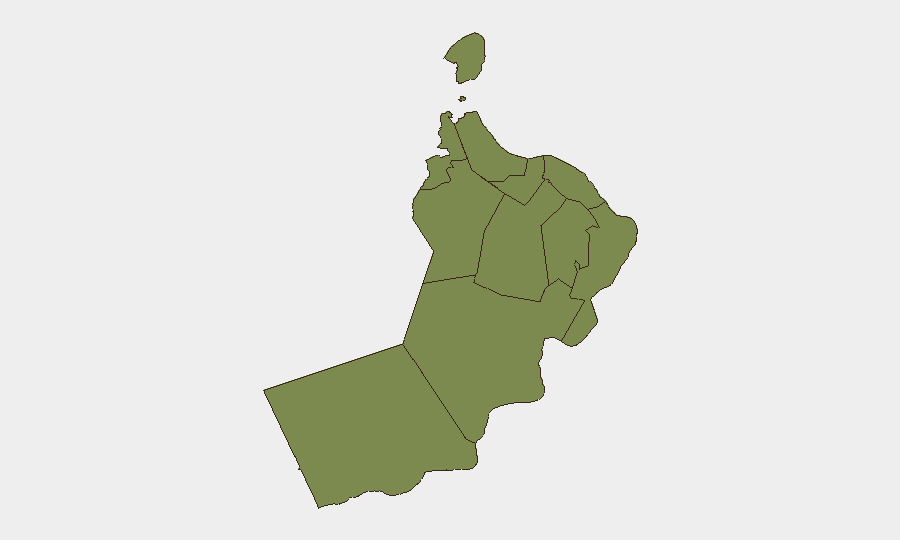
Al Wusta Governorate (interior, risk score 31.4) significantly outranks all other regions and drives the country's composite threat score; however, this reflects historical incident density rather than active current events. All coastal and urban governorates—including Muscat (1.4), Musandam (2.4), and Dhofar (1.4)—report minimal internal risk. The disparity suggests that inland Al Wusta carries legacy or latent risk factors (possibly related to historical militant activity or remote-area governance), while maritime risk off Oman's coast is now the primary operational concern for corporate personnel and supply chains.
How GeoBit Would Assist
Security teams should deploy AOI Monitoring & Early Warning on the Strait of Hormuz and Omani coastal zones to capture vessel-strike incidents and route-diversion patterns in real time. Maritime & Aviation tracking combined with multi-language OSINT and X/Twitter monitoring enables early detection of shipping-corridor disruptions, regional escalation, or diplomatic shifts affecting transit safety. Routing & Network Analysis capabilities support alternative-route planning for energy, supply-chain, and personnel movements dependent on strait passage.
7-Day Outlook
Vessel traffic through Omani corridors is likely to remain subdued for 7–10 days as operators assess risk appetite and await further diplomatic or military developments in the strait. Oman's hosting of the Joint Committee signals willingness to act as a stabilizing intermediary; however, tactical risk to shipping remains contingent on broader US–Iran posturing. Overland security within Oman itself is expected to remain stable absent cascading regional escalation.
Highest-Risk Areas — Ranked
| # | State / Region | Risk |
|---|---|---|
| 1 | Al Wusta Governorate | 31.4 |
| 2 | Musandam Governorate | 2.4 |
| 3 | Muscat Governorate | 1.4 |
| 4 | Al Buraymi Governorate | 1.4 |
| 5 | Ad Dhahirah Governorate | 1.4 |
| 6 | Al Batinah North Governorate | 1.4 |
| 7 | Al Batinah South Governorate | 1.4 |
| 8 | Ad Dakhiliyah Governorate | 1.4 |
| 9 | Ash Sharqiyah North Governorate | 1.4 |
| 10 | Ash Sharqiyah South Governorate | 1.4 |
| 11 | Dhofar Governorate | 1.4 |
Sources
Previous Daily Briefs
A new Oman brief is written every day — each with its own risk map and downloadable CSV. Here's the last week; use the calendar to go further back.
📅 Browse every day by calendar →
Highlighted days have a brief. Tap a day for that day's map & analysis, or “csv” for that day's dataset ($5).