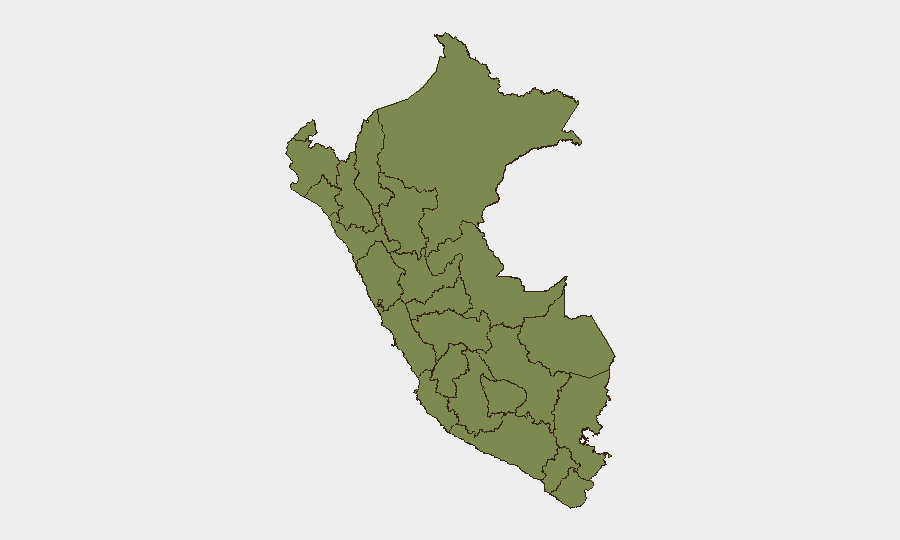
Situation Summary
Peru remains at moderate, stable risk (global rank #65) with no verifiable acute security incidents reported in the last 24–48 hours. Underlying vulnerabilities persist in Huánuco, Lima, and the Cusco tourism corridor, driven by fragmented political instability, localized organized-crime activity, and routine law-enforcement tensions. The current trajectory suggests episodic, low-scale disruptions rather than mass-casualty or infrastructure-targeting events, though early-warning monitoring remains warranted.
Key Developments
No verified incidents meeting operational-security reporting criteria occurred in Peru during the 24–48 hours ending 2026-07-03. Recent signal activity (administrative statements, investigations involving security personnel, and property-related disputes logged 2026-07-01 to 2026-07-03) remains unconfirmed across independent news outlets, wire services, and official Peruvian authorities and should be treated as monitoring items only, not as discrete incidents.
Open-source aggregation covering more than 100 live feeds (wire services, social platforms, and official channels) for the period 2026-06-29 to 2026-07-03 found no corroborated reports with sufficient time, place, and independent verification to warrant duty-of-care incident reporting.
Highest-Risk Areas
Huánuco (risk 28.6) and Lima (risk 28.6) drive the national risk profile and warrant priority monitoring. Huánuco faces endemic gang and narcotics-trafficking pressures; Lima concentrates political volatility, commercial-crime exposure, and large expatriate and foreign-asset populations. Cusco (risk 21.4) presents secondary risk, primarily linked to tourism-corridor vulnerabilities and protest activity. Together, these three regions account for the majority of Peru's tracked security events; assets, personnel, and operations in these areas should be subject to heightened situational awareness and 12–24 hour incident-alert protocols.
How GeoBit Would Assist
Intel Sweep & OSINT Fusion would aggregate Peruvian National Police channels, Lima municipal authorities, and multi-language social-media streams to catch emerging incidents within 2–4 hours of occurrence. AOI Monitoring & Early Warning would establish persistent geographic watches over Huánuco, Lima, and Cusco to trigger alerts on protest activity, civil unrest, or security-force operations affecting corporate assets or personnel movement. Routing & Network Analysis would support alternative route planning and journey risk assessment for personnel transiting high-risk zones, while Conflict & Military mapping would track any uptick in organized-crime activity or gang-related violence near corporate facilities.
7-Day Outlook
No escalation in Peru's overall threat posture is forecast for the next seven days. Episodic, localized incidents (protests, property crime, gang violence in peripheral neighborhoods) remain likely in Huánuco and Lima, but no indicators point to coordinated action, infrastructure targeting, or mass mobilization. Security teams should maintain baseline monitoring and be prepared for routine disruptions to transport and commerce in high-risk zones; re-escalation triggers would include political or judicial developments affecting organized-crime prosecutions or significant shifts in gang territorial control.
Highest-Risk Areas — Ranked
| # | State / Region | Risk |
|---|---|---|
| 1 | Huánuco | 31.8 |
| 2 | Lima | 28.6 |
| 3 | Cusco | 21.4 |
| 4 | Madre de Dios | 8.5 |
| 5 | Cajamarca | 5.9 |
| 6 | Apurímac | 3.3 |
| 7 | Junín | 2.5 |
| 8 | Loreto | 2.3 |
| 9 | Ucayali | 2.3 |
| 10 | Tumbes | 1.8 |
| 11 | Piura | 1.8 |
| 12 | Lambayeque | 1.8 |
Sources
Previous Daily Briefs
A new Peru brief is written every day — each with its own risk map and downloadable CSV. Here's the last week; use the calendar to go further back.
📅 Browse every day by calendar →
Highlighted days have a brief. Tap a day for that day's map & analysis, or “csv” for that day's dataset ($5).