Situation Summary
Poland faces an elevated and multi-layered security threat environment as of 8 July 2026, driven by renewed Russian military activity against Ukraine, US intelligence warnings of potential Russian or Belarusian provocations against NATO's eastern flank, and the recent disclosure of a domestic terrorist cell. The threat level remains below formal alert escalation but has prompted active defensive posturing by Polish authorities, including air-defence reinforcement and critical infrastructure hardening. Risk is concentrated in Masovian Voivodeship (Warsaw and the capital region) but extends across the eastern and northern border zones.
Key Developments
- Olsztyn, Warmian-Masurian Voivodeship – 6–7 July 2026:
Polish Internal Security Agency (ABW) arrested several citizens accused of preparing terrorist attacks targeting religious sites, schools, and minority-frequented venues. Investigation followed online forum monitoring and seizure of devices containing IED and incendiary-device instructions.
- Warsaw (Prime Minister statement) – 7 July 2026:
PM Donald Tusk publicly confirmed Poland is "preparing very intensively" for security scenarios following fresh US intelligence warnings of possible Russian actions, including drone/missile strikes on critical infrastructure and border incidents.
- National air-defence posture – 7 July 2026:
Polish authorities confirmed deployment of Patriot air-defence systems to Ukraine and adjustment of Poland's own air-defence coverage in response to Russian ballistic missile campaigns against Ukrainian targets.
- Border and incursion risk – 7 July 2026:
US-sourced intelligence, circulated by Polish media and security channels, warned of heightened risk of limited Russian or Belarusian border incursions or provocations, including small-unit crossings under pretext of navigation error or "rescue operations," and possible strikes on power stations.
- Critical infrastructure threat assessment – 6–7 July 2026:
Polish security services and allied intelligence highlighted drone and missile attacks on energy facilities and power plants as among the most likely near-term scenarios; guidance issued to promote heightened vigilance across urban centres and border regions.
- Public security messaging – 7 July 2026:
Polish state media and officials issued updated guidance advising awareness and preparedness, without formal travel restrictions or curfews.
Highest-Risk Areas
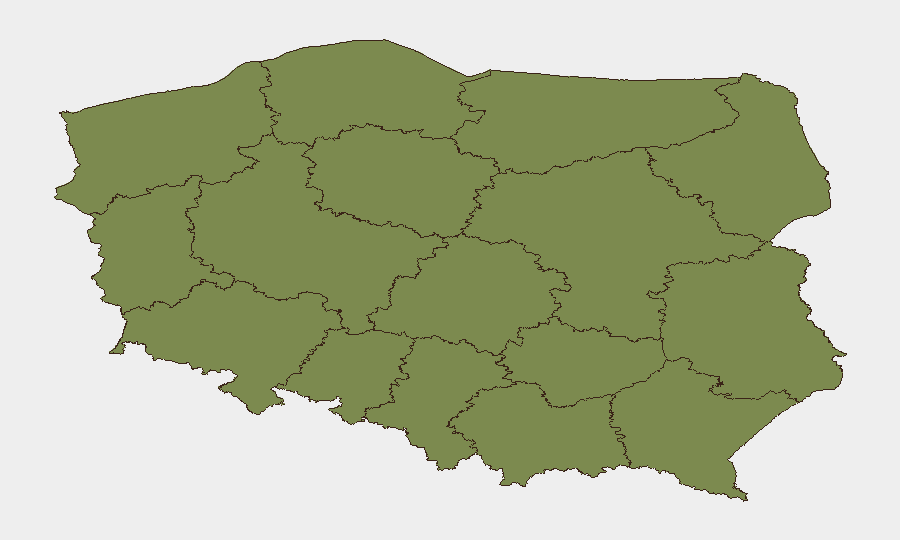
Masovian Voivodeship (Warsaw and surrounding districts) accounts for approximately 45% of Poland's tracked composite risk score, reflecting concentration of national government, military command, critical infrastructure, and population density. Kuyavian-Pomeranian and Łódź Voivodeships represent secondary concentrations, likely reflecting energy and transport hubs. The disparity reflects both target density and historical event clustering; eastern and northern border voivodeships (Warmian-Masurian, Podlaskie, Lublin) show lower aggregate scores but remain operationally sensitive given proximity to Belarus and Russia and recent domestic terrorist activity in Olsztyn.
How GeoBit Would Assist
Security teams would employ AOI Monitoring & Early Warning to maintain persistent watch on critical infrastructure sites, border crossing points, and high-density urban centres, with automated alerting on activity anomalies or hostile indicators. OSINT fusion and corroboration (X/Twitter, Telegram, Polish-language media, and official channels) would triangulate credibility of threat intelligence and differentiate operational signals from noise. GIS & Spatial Analysis combined with Conflict & Military force-tracking capabilities would enable real-time mapping of air-defence postures, incursion routes, and asset vulnerability.
7-Day Outlook
Polish alert posture will likely remain elevated through mid-July, with continued reinforcement of air defences and border monitoring. Further Russian missile activity against Ukraine or any border incident will accelerate defensive measures and public messaging. Domestic security operations against extremist networks are expected to continue; additional arrests or device seizures would reinforce the current elevated-vigilance narrative.
Highest-Risk Areas — Ranked
| # | State / Region | Risk |
|---|---|---|
| 1 | Masovian Voivodeship | 31.4 |
| 2 | Kuyavian-Pomeranian Voivodeship | 21.4 |
| 3 | Łódź Voivodeship | 20.7 |
| 4 | West Pomeranian Voivodeship | 3.2 |
| 5 | Subcarpathian Voivodeship | 2.5 |
| 6 | Lower Silesian Voivodeship | 2.1 |
| 7 | Warmian-Masurian Voivodeship | 1.8 |
| 8 | Podlaskie Voivodeship | 1.8 |
| 9 | Lublin Voivodeship | 1.4 |
| 10 | Lubusz Voivodeship | 1.4 |
| 11 | Pomeranian Voivodeship | 1.4 |
| 12 | Greater Poland Voivodeship | 1.4 |
Sources
Previous Daily Briefs
A new Poland brief is written every day — each with its own risk map and downloadable CSV. Here's the last week; use the calendar to go further back.
📅 Browse every day by calendar →
Highlighted days have a brief. Tap a day for that day's map & analysis, or “csv” for that day's dataset ($5).
Atlas — our AI intelligence desk — emails them this snapshot personally. Nothing else, no list.