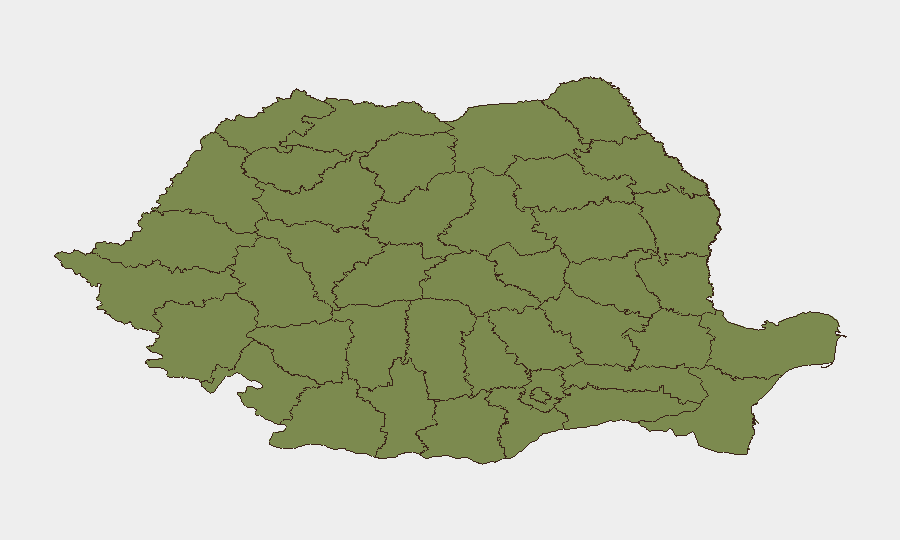
Situation Summary
Romania remains a low-to-moderate threat environment (global rank #166, composite score 4) with 36 tracked events, but faces concentrated maritime and border security challenges tied to cross-border drone activity and critical infrastructure vulnerability. Recent diplomatic engagement at NATO level and bilateral protocol negotiations with Ukraine signal elevated concern over Black Sea port operations and energy/telecom infrastructure. Domestic political volatility is present (recent disapproval statements, court–mayor tensions, ministry investigations) but does not yet constitute a systemic internal security crisis. The threat profile is regionally asymmetric, with Brașov registering disproportionately high risk (31.8), while most other regions remain below 5.
Key Developments
- Black Sea / Romanian coastal zone – 8 July 2026 – Romania, Bulgaria, and Turkey expanded a joint NATO demining mission to include protection of energy facilities, telecom networks, and undersea pipelines, explicitly framed as response to "rising challenges to societal and maritime security," signaling heightened concern over sabotage risks to critical offshore infrastructure.
- Bucharest (Foreign Ministry) – early July 2026 (disclosed via TVR) – Foreign Minister Oana Toiu confirmed bilateral protocol negotiations with Ukraine to prevent drone incidents near Constanța port, including Ukraine early notification of drone loss-of-control and self-destruct programming before Romanian territorial entry.
- Constanța port / Black Sea – recent days (referenced in protocol talks) – A drone-related explosion at Constanța port triggered urgent defense-level talks and is driving the proposed early-warning mechanism between Romania and Ukraine; authorities treat it as an ongoing operational security risk for port and maritime operations.
- Romanian eastern border / Black Sea coast – days around 8 July NATO Ankara summit – Romania is reinforcing air-defense posture against low-flying drone incursions, including integration of ground-based sensor and interceptor-drone systems (MAROPS) to support air policing along the Ukrainian border flank in anticipation of further cross-border activity.
- Bucharest – diplomatic level, week of 8 July 2026 – Canada's foreign minister publicly noted discussions in Bucharest on "Russia's drone incursions near Romania," confirming that drone-related cross-border security remains a current high-level diplomatic priority and signaling active coordination on regional stability among NATO allies.
- Domestic political signal – 7–9 July 2026 – Government disapproval statements (7 July), Supreme Court–mayor rejection (8 July), community disapproval (8 July), and ministry investigations of Bihor province signal internal administrative and governance tensions; one unconventional violence event (8 July, Romania vs. journalist) is noted but remains unspecified in detail.
Highest-Risk Areas
Brașov county dominates the sub-national ranking at 31.8, a gap of 6+ points above Bucharest (5.2), suggesting either a localized security incident or sustained event density not yet fully detailed in open sources. Bucharest remains the secondary focus (5.2), consistent with capital-city administrative and political activity. The remaining ten ranked counties cluster below 4.4, indicating that risk is heavily concentrated in Brașov and to a lesser degree Bucharest, while the majority of Romania's territory presents minimal tracked threat. Corporate assets and personnel in Brașov warrant heightened monitoring and contingency review.
How GeoBit Would Assist
Security teams should deploy AOI Monitoring & Early Warning on Brașov, Bucharest, and Constanța port to track real-time event clusters and incoming cross-border drone activity. Intel Sweep and X/Twitter & Telegram OSINT with multi-language processing would provide early detection of policy changes, port closures, or administrative disruptions. Maritime & Aviation tracking coupled with Network & Actor Analysis would enable monitoring of Romanian–Ukraine protocol implementation and NATO demining operations, supporting duty-of-care communication with stakeholders in coastal and energy-sector operations.
7-Day Outlook
Drone-related maritime and border incidents are likely to remain elevated through implementation of the Romania–Ukraine protocol, with no immediate resolution expected. Domestic political tensions (government disapproval, ministry investigations) may produce further administrative announcements but are unlikely to escalate to mass unrest in the near term. Brașov risk concentration warrants close watch; if the 31.8 ranking reflects a sustained incident or emerging protest, escalation could follow within 7–10 days.
Highest-Risk Areas — Ranked
| # | State / Region | Risk |
|---|---|---|
| 1 | Brașov | 31.8 |
| 2 | Bucharest | 5.2 |
| 3 | Brăila | 4.4 |
| 4 | Bihor | 3.3 |
| 5 | Bistrița-Năsăud | 2.6 |
| 6 | Mureș | 2.6 |
| 7 | Botoșani | 2.6 |
| 8 | Vâlcea | 1.8 |
| 9 | Timiș | 1.8 |
| 10 | Caraș-Severin | 1.8 |
| 11 | Satu Mare | 1.8 |
| 12 | Sălaj | 1.8 |
Sources
Previous Daily Briefs
A new Romania brief is written every day — each with its own risk map and downloadable CSV. Here's the last week; use the calendar to go further back.
📅 Browse every day by calendar →
Highlighted days have a brief. Tap a day for that day's map & analysis, or “csv” for that day's dataset ($5).
Atlas — our AI intelligence desk — emails them this snapshot personally. Nothing else, no list.