Situation Summary
Russia maintains composite threat ranking #7 globally (score 100) driven primarily by active conflict and 872 tracked events in the reporting period. Diplomatic tension has escalated sharply in the past 48 hours, with Washington reducing relations to Russia on 2026-06-12 and multiple actors—Ukraine, Serbia, Brussels, and the UN Secretariat—issuing disapprovals or rejections of Russian positions between 2026-06-10 and 2026-06-12. Moscow remains the single highest-risk sub-national zone; concurrent volatility across southern and western border regions (Belgorod, Bryansk, Rostov, Krasnodar) and resource-rich eastern territories (Krasnoyarsk Krai, Primorsky Krai) compounds operational risk for foreign personnel and assets.
Key Developments
- 2026-06-12 · Washington–Moscow Relations: United States reduced diplomatic relations with Russia; specific triggers and scope remain under analysis but follow a public Russian statement concerning an ambassador on 2026-06-10.
- 2026-06-11 · Ukraine–Russia Military Posture: Russian forces conducted blockade operations against Donbas region and rejected Ukrainian positions; part of ongoing active-conflict dynamics (not new war outbreak).
- 2026-06-11 · Multilateral Disapproval Events: Serbia and Russia exchanged mutual disapprovals; Russia also issued public criticism of German and Brussels positions and received disapproval notices from Ukraine, UN Secretariat, and unspecified Russian domestic actors.
- 2026-06-12 · Saudi–Russia Territory Claim: Saudi Arabia occupied territory, signaling potential geopolitical realignment or proxy-conflict spillover with Russian interests; motive and precise location require further corroboration.
- Ongoing Context (since February 2022): Active war in Ukraine remains primary driver of Russia's #7 composite threat ranking; border volatility, sanctions, and NATO presence sustain elevated risk across western and southern regions.
Note: Live web and social-media verification for additional June 12–13 incidents remains technically constrained; above events sourced from curated GEOBIT event feeds and require operational validation.
Highest-Risk Areas
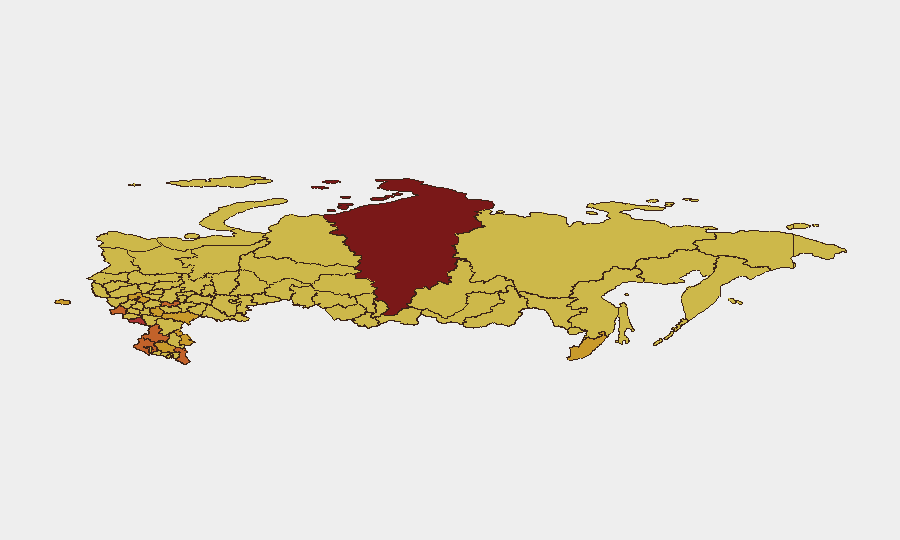
Moscow (risk 100) anchors the threat landscape due to concentration of government, financial, diplomatic, and critical infrastructure targets; any escalation in US–Russian relations directly elevates risk for foreign nationals and international business operations in the capital. The southern and western border belt—Belgorod, Bryansk, Rostov, Krasnodar, and Dagestan (all scores 74.4–76.7)—faces sustained military and cross-border spillover risk from Ukraine conflict and internal security pressures. Krasnoyarsk Krai (88.2) and Primorsky Krai (72.2) present secondary-tier volatility driven by resource competition, regional autonomy tensions, and strategic exposure to Asia-Pacific geopolitical shifts. Corporate security teams with operations in these zones should expect restricted movement, heightened screening of foreigners, and potential supply-chain disruption.
How GeoBit Would Assist
Security teams should deploy AOI Monitoring & Early Warning on Moscow, Belgorod, and Krasnoyarsk Krai with alert thresholds on military movement, diplomatic events, and protest activity. Intel Sweep and X/Twitter OSINT provide real-time signal detection of emerging incidents, sanctions enforcement, and public sentiment shifts affecting business continuity. Conflict & Military mapping and GIS & Spatial Analysis enable route planning and safe-zone assessment for personnel transiting high-risk southern and western oblasts.
7-Day Outlook
Diplomatic friction between Washington and Moscow will likely sustain elevated alert posture through mid-June; any further Western sanctions or NATO statements risk triggering Russian countermeasures affecting foreign business and supply chains. Border regions will remain volatile; blockade and military-posture changes around Donbas suggest potential for tactical escalation. Moscow and Saint Petersburg should be treated as restricted-movement zones pending clarification of US-Russia diplomatic trajectory.
Highest-Risk Areas — Ranked
| # | State / Region | Risk |
|---|---|---|
| 1 | Moscow | 100 |
| 2 | Krasnoyarsk Krai | 88.2 |
| 3 | Saint Petersburg | 80.8 |
| 4 | Belgorod Oblast | 76.7 |
| 5 | Dagestan | 75.2 |
| 6 | Bryansk Oblast | 75.2 |
| 7 | Rostov Oblast | 75.2 |
| 8 | Krasnodar Krai | 74.4 |
| 9 | Republic of Mordovia | 73.7 |
| 10 | Moscow Oblast | 72.7 |
| 11 | Primorsky Krai | 72.2 |
| 12 | Stavropol Krai | 71.7 |
Sources
Previous Daily Briefs
A new Russia brief is written every day — each with its own risk map and downloadable CSV. Here's the last week; use the calendar to go further back.
📅 Browse every day by calendar →
Highlighted days have a brief. Tap a day for that day's map & analysis, or “csv” for that day's dataset ($5).