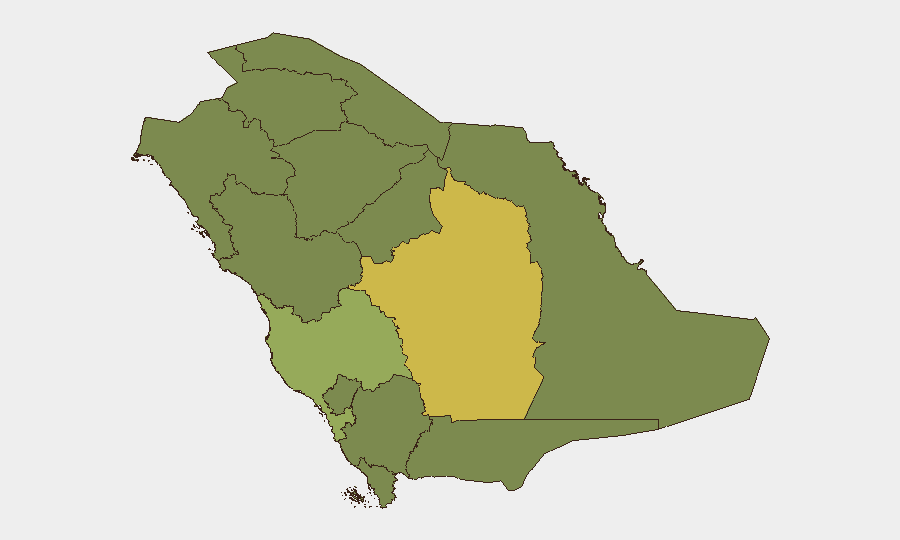
Situation Summary
Saudi Arabia remains at composite threat rank #39 globally (51/100), with Riyadh Region driving elevated risk (65.8). The primary current concern is escalating Iran–Gulf regional tension, with Saudi Arabia's Ministry of Foreign Affairs condemning Iranian missile and drone attacks on Kuwait and Bahrain within the last 48 hours. A reported incident of fires and explosions at Jubail industrial port (Eastern Province, July 9–10) adds uncertainty regarding critical infrastructure; cause and scope remain unconfirmed. Overall trajectory is one of heightened diplomatic tension and potential for spillover incidents affecting asset security and personnel safety in high-density urban and industrial zones.
Key Developments
- Jubail, Eastern Province – Industrial Fires/Explosions (July 9–10, 2026)
Arab News reported fires and explosions at major industrial port facilities in Jubail within the past 24 hours. Cause (industrial accident, sabotage, or conflict-related) has not been independently confirmed; operational status of affected infrastructure unknown.
- Saudi Foreign Ministry Statement on Iranian Attacks (July 9, 2026)
Saudi Arabia's Ministry of Foreign Affairs issued formal condemnation of Iranian missile and drone strikes on Kuwait and Bahrain, characterizing them as violations of state sovereignty and warning of consequences for regional stability. Statement signals active diplomatic response and heightened alert posture across Gulf assets.
- UK FCDO Travel Advisory Update (July 6–7, 2026)
UK Foreign Office reiterated warnings of missile and drone threat along Saudi–Yemen border and within airspace, reflecting sustained cross-border risk perception. Advisory does not detail specific new incidents but confirms ongoing threat assessment by allied intelligence.
- Regional Diplomatic Posturing on Iranian Nuclear/Military Activity (Last 48 hours, context)
Ongoing multilateral commentary on Iranian military capability (referenced via Tokyo, Bangkok, Singapore, Istanbul, Kuala Lumpur statements, July 8) reflects international concern over escalation. While not Saudi-specific incidents, these statements influence threat environment for multinational personnel and supply chains in Saudi Arabia.
- Riyadh Region Elevated Risk Posture
Riyadh Region's composite risk score (65.8) significantly outpaces other Saudi sub-national zones, driven by concentration of government, financial, and foreign personnel. No single discrete incident has been isolated in open sources within 24 hours, but cumulative diplomatic and infrastructure signals warrant heightened vigilance.
Highest-Risk Areas
Riyadh Region dominates the risk profile at 65.8, reflecting its status as the capital, seat of government, and hub for international business and diplomatic presence. Makkah Region (40.2) presents secondary concern due to pilgrimage volumes and religious/political sensitivity. The uniform elevation of remaining 10 provinces (35.8 each)—spanning Northern Borders, eastern industrial zones (Jubail cluster), and southern border areas (Jazan, Najran)—suggests systemic cross-border tension rather than localized instability, consistent with Iranian regional activity and Yemen-adjacent risk factors.
How GeoBit Would Assist
Security teams should deploy AOI Monitoring & Early Warning on Riyadh's government/financial districts, Jubail industrial zone, and Eastern Province port facilities to detect emerging incidents in real time. Intel Sweep and multi-language OSINT fusion (X, Telegram, Arabic media) would corroborate open-source incident reports and distinguish sabotage from industrial accident within hours. GIS & Spatial Analysis combined with alternative routing and network analysis would enable rapid re-routing of personnel and supply-chain assets away from confirmed threat zones.
7-Day Outlook
Iranian regional military posturing (evidenced by recent attacks on Kuwait and Bahrain) is likely to sustain Saudi Arabia's heightened alert over the next 7 days, with particular risk to energy infrastructure, ports, and airspace. No imminent direct attack on Saudi territory is currently signaled, but cumulative regional escalation warrants continued monitoring of diplomatic statements, military communications, and industrial facility status. Business continuity contingencies should remain active in Riyadh and Eastern Province.
Highest-Risk Areas — Ranked
| # | State / Region | Risk |
|---|---|---|
| 1 | Riyadh Region | 65.8 |
| 2 | Makkah Region | 40.2 |
| 3 | Northern Borders Province | 35.8 |
| 4 | Al-Bahah Province | 35.8 |
| 5 | 'Asir Province | 35.8 |
| 6 | Jazan Province | 35.8 |
| 7 | Najran Region | 35.8 |
| 8 | Tabuk Province | 35.8 |
| 9 | Al Jawf Region | 35.8 |
| 10 | Ḥa'il Province | 35.8 |
| 11 | Medina Province | 35.8 |
| 12 | Al-Qassim Province | 35.8 |
Sources
Previous Daily Briefs
A new Saudi Arabia brief is written every day — each with its own risk map and downloadable CSV. Here's the last week; use the calendar to go further back.
📅 Browse every day by calendar →
Highlighted days have a brief. Tap a day for that day's map & analysis, or “csv” for that day's dataset ($5).
Atlas — our AI intelligence desk — emails them this snapshot personally. Nothing else, no list.