Situation Summary
Slovenia maintains a low and stable security posture, ranking #159 globally with a composite threat score of 5. No verified security incidents, civil unrest, infrastructure disruptions, or travel risks have been reported within the past 24–48 hours. The one tracked event signal (a military exercise coordination notice from Copenhagen on 2026-07-10) carries no direct operational implications for Slovenia's internal security environment.
Key Developments
No verified security incidents reported in the past 24–48 hours. Open-source research identified no independently confirmed reports of conflict, crime, political instability, border incidents, or infrastructure disruption within Slovenia during this window. A Facebook post attributed to political commentary referenced migrant apprehensions along unspecified border areas, but the post was undated and lacks corroboration from news outlets or official sources, making it unsuitable for operational alerting. All other web-accessible content from the past 48 hours focused on tourism, technology commentary, and general travel experiences—not security events.
Highest-Risk Areas
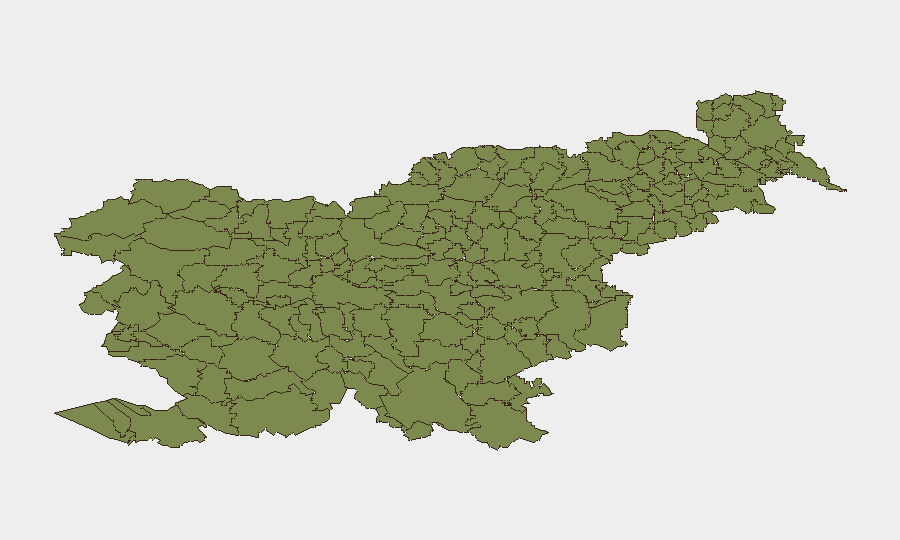
All tracked sub-national areas in Slovenia carry a composite risk score of 0, indicating negligible localized security threats. The ranking reflects municipalities across Slovenia's Alpine northwest (Bovec, Kobarid, Kranjska Gora, Tolmin, Bohinj) and border regions (Brda, Šempeter-Vrtojba, Miren-Kostanjevica) with equal minimal risk profiles. This uniform low-risk distribution underscores Slovenia's overall stability; no single region requires elevated operational vigilance relative to the others.
How GeoBit Would Assist
Security teams with personnel or assets in Slovenia should activate AOI (Area-of-Interest) Monitoring & Early Warning on key municipalities and cross-border transit corridors to detect any deviation from the current stable baseline—particularly around Schengen borders where migrant flows and irregular-entry attempts occasionally surface. Complementary OSINT Fusion & Corroboration on Slovenian police channels, interior ministry statements, and verified local media accounts via X/Twitter and Telegram will provide near-real-time incident confirmation, bypassing the lag in general web indexing. Routing & Network Analysis can support contingency planning for personnel movements if any localized disruption emerges.
7-Day Outlook
No significant security events are anticipated in the next seven days. Routine border-management activity (migrant interdiction, vehicle checks) and standard infrastructure maintenance will likely continue without escalation. Duty-of-care teams should maintain baseline monitoring posture and update travel policies only if open-source or official alerts indicate a change in the current low-threat environment.
Next Brief: 2026-07-12 (or upon significant development)
Data Confidence: Medium (limited real-time reporting from Slovenia; no contradictory signals)
Highest-Risk Areas — Ranked
| # | State / Region | Risk |
|---|---|---|
| 1 | Bovec | 0 |
| 2 | Kobarid | 0 |
| 3 | Kanal | 0 |
| 4 | Kranjska Gora | 0 |
| 5 | Gorje | 0 |
| 6 | Tolmin | 0 |
| 7 | Bohinj | 0 |
| 8 | Cerkno | 0 |
| 9 | Brda | 0 |
| 10 | Šempeter-Vrtojba | 0 |
| 11 | Renče-Vogrsko | 0 |
| 12 | Miren-Kostanjevica | 0 |
Sources
Previous Daily Briefs
A new Slovenia brief is written every day — each with its own risk map and downloadable CSV. Here's the last week; use the calendar to go further back.
📅 Browse every day by calendar →
Highlighted days have a brief. Tap a day for that day's map & analysis, or “csv” for that day's dataset ($5).
Atlas — our AI intelligence desk — emails them this snapshot personally. Nothing else, no list.