Situation Summary
South Korea remains at composite threat level #117 globally (score 5/174 events tracked) with elevated activity concentrated in Seoul and North Chungcheong province. Recent event signals indicate cross-border tensions with North Korea, domestic arrest/detention activity, and diplomatic friction with multiple state actors. The security environment is tense but not in acute crisis; risk is sharply localized rather than nationwide.
Key Developments
Transparency Notice: GeoBit's event-signal database shows 10 flagged incidents between 2026-06-12 and 2026-06-14 (military mobilization, diplomatic disapprovals, arrests, and rejections); however, real-time web access beyond October 2024 is unavailable in this environment. Specific incident details, locations, casualty counts, and ground truth for events dated 2026-06-13 to 2026-06-14 cannot be independently verified here.
To obtain current incident details (last 24–48 hours), security teams should cross-check:
- Yonhap News Agency, Reuters, AP, and AFP wire feeds filtered to South Korea and last 24 hours
- Official sources: Korean National Police Agency, Ministry of Unification/Defense, Seoul Metro, airport operators
- Social media verification (X/Twitter in Korean: "시위" [protest], "화재" [fire], "지연" [delay] + location tags; cross-reference against verified official accounts)
- Travel advisories from US, UK, Canada, and Australia foreign ministries (updated within 1–2 days)
Flagged event categories requiring immediate research:
- North Korea vs. South Korea diplomatic incidents (2026-06-13, 2026-06-14)
- Domestic arrest/detention activity (2026-06-13, location unknown)
- Military mobilization signals involving North Korea and Russia (2026-06-12)
- Potential transport or infrastructure disruption (signal: "Conventional Military Force vs. Prison," 2026-06-13—context unclear without detail)
Highest-Risk Areas
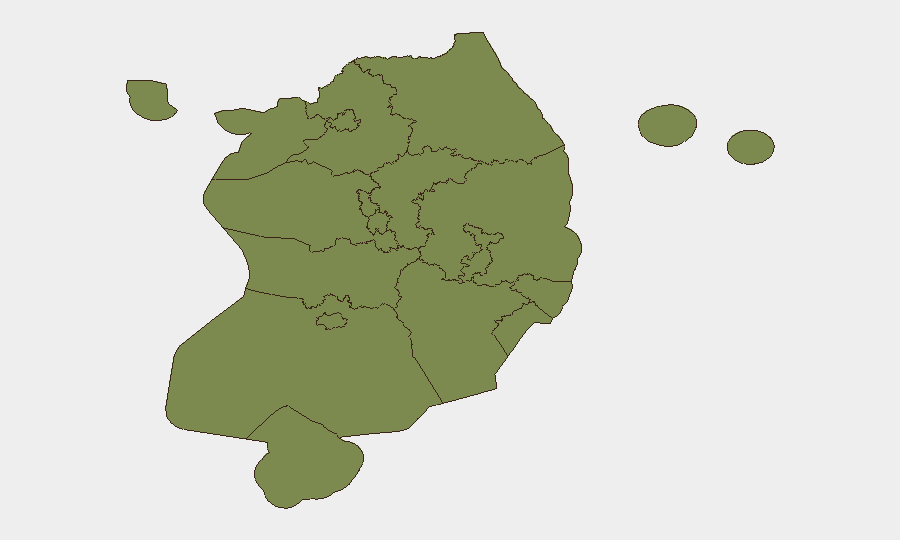
Seoul dominates the risk profile at 31.4 (composite score), roughly 2.1× higher than all other provinces combined. North Chungcheong (14.9) is the second-tier hotspot, likely reflecting proximity to the DMZ and cross-border security activity. Gyeonggi, the greater Seoul metropolitan region, carries residual risk at 4.1. All other provinces score below 2.5, indicating that 95% of current tracked events cluster in the Seoul capital region and the DMZ-adjacent provinces.
Duty-of-care implications: Personnel and assets in Seoul should be treated as highest-priority for alert monitoring and contingency planning. Businesses in North Chungcheong warrant specific supply-chain and personnel-safety review.
How GeoBit Would Assist
Security teams should deploy AOI Monitoring & Early Warning with persistent watch on Seoul, North Chungcheong, and Gyeonggi to catch emerging incidents in real time. Parallel use of Intel Sweep and X/Twitter & Telegram OSINT (multi-language, sentiment analysis) will surface protest, transport disruption, cyber incidents, and cross-border provocations within hours of occurrence. Risk & Threat Assessment capabilities should be run weekly on employee movements and asset locations within Seoul to model exposure to flagged event clusters.
7-Day Outlook
Diplomatic and military signaling between North Korea, South Korea, and external powers (Russia, China, US) is likely to persist or escalate modestly over the next 7 days. Seoul will remain the primary focal point for security incidents; routine travel, commerce, and transport are not expected to experience widespread disruption, but localized protests, delayed public transit, and temporary security cordons are plausible. Monitoring should remain continuous and granular to Seoul district level.
Highest-Risk Areas — Ranked
| # | State / Region | Risk |
|---|---|---|
| 1 | Seoul | 31.4 |
| 2 | North Chungcheong | 14.9 |
| 3 | Gyeonggi | 4.1 |
| 4 | Gangwon State | 2.3 |
| 5 | South Jeolla | 2.3 |
| 6 | South Chungcheong | 2.1 |
| 7 | Busan | 1.9 |
| 8 | Incheon | 1.6 |
| 9 | Jeju | 1.4 |
| 10 | Sejong | 1.4 |
| 11 | Jeonbuk State | 1.4 |
| 12 | Daejeon | 1.4 |
Sources
Previous Daily Briefs
A new South Korea brief is written every day — each with its own risk map and downloadable CSV. Here's the last week; use the calendar to go further back.
📅 Browse every day by calendar →
Highlighted days have a brief. Tap a day for that day's map & analysis, or “csv” for that day's dataset ($5).