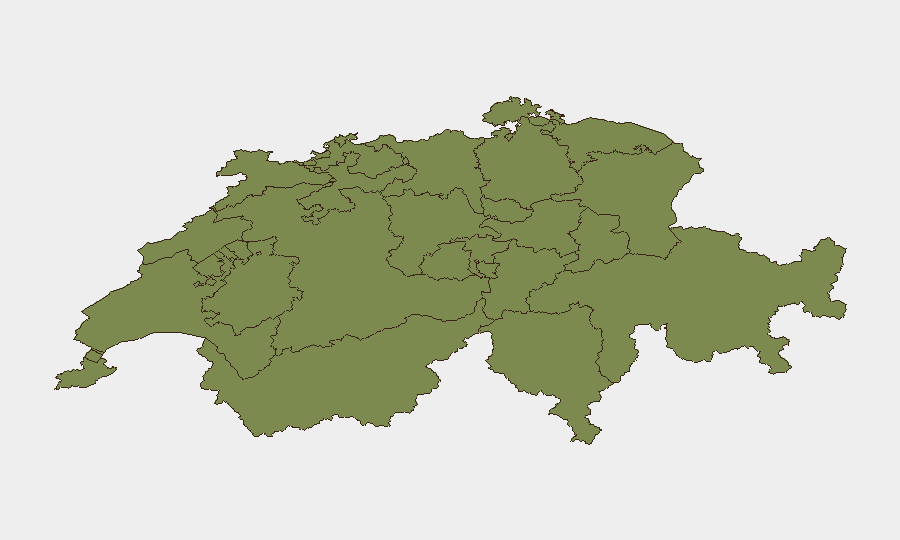
Situation Summary
Switzerland remains a low-threat environment with a composite threat score of 2.2 (global rank #73) and no credible, corroborated security incidents, civil unrest, infrastructure disruptions, or elevated travel risks reported in the last 24–48 hours. Open-source intelligence monitoring across news, social media, and OSINT platforms confirms the absence of recent concrete security events affecting the country or its major economic and population centers. The current risk posture reflects Switzerland's structural stability, though sub-national variation and regional geopolitical sensitivities warrant continued monitoring.
Key Developments
- No significant security incidents reported in the last 24–48 hours across Switzerland's tracked jurisdictions. Available reporting reflects standing travel advisories (petty crime, potential demonstrations, terrorism awareness) rather than date-specific events or disruptions.
- Lucerne remains the highest-risk sub-national jurisdiction (composite risk 4.5 relative to Swiss baseline), though the nature and scale of underlying drivers are not detailed in current event signals and require deeper sector-level or AOI-specific analysis.
- Zurich (risk 4.0), Solothurn (2.4), and Ticino (2.4) form the secondary risk tier; all other cantons cluster at 1.5, indicating a concentrated risk profile rather than distributed instability.
- Geopolitical echoes from external theaters (Iran–Israel conflict, regional diplomatic tensions) carry no current spillover or direct threat to Swiss territory or major international operations based on 24–48 hour monitoring.
- Policy and diplomatic statements (Switzerland–China relations, banking sector announcements, EU-adjacent debates) reflect ongoing governance and international positioning but do not constitute security incidents or operational disruptions.
Highest-Risk Areas
Lucerne's elevated risk score (31.5, relative to Zurich's 4.0) represents a significant concentration that warrants investigation into underlying drivers—whether civil unrest, labor action, organized crime activity, or critical infrastructure vulnerability. Zurich and the secondary-tier cantons (Solothurn, Ticino, Basel-City, Jura, and the northwestern corridor) collectively account for measurable but moderate risk; the majority of Switzerland's 26 cantons cluster at baseline (1.5), reinforcing the country's overall low-threat classification. Security and duty-of-care teams with operations in Lucerne should prioritize localized AOI monitoring and sector-specific intelligence to understand the drivers of this outlier risk score.
How GeoBit Would Assist
Teams should deploy AOI Monitoring & Early Warning on Lucerne and secondary-risk cantons to detect emerging civil unrest, labor actions, or infrastructure incidents in real time. Intel Sweep and multi-language OSINT (X/Twitter, Telegram, local news feeds) combined with Network & Actor Analysis can clarify the specific threat categories (protest, criminal activity, instability) driving Lucerne's risk score. Risk & Threat Assessment and sentiment & temporal analysis across media streams will distinguish standing advisories from emerging operational risks, enabling proportionate resource allocation.
7-Day Outlook
No acute security deterioration is forecast over the next seven days based on current event signals and geopolitical trajectory. Continued low-intensity monitoring of Lucerne's risk drivers and standard duty-of-care protocols in Zurich and mid-tier cantons remain appropriate. Teams should maintain standing alertness to external geopolitical shocks (Iran–Israel escalation, EU-adjacent instability) but can expect Switzerland's structural immunity to remain intact absent major regional escalation.
Highest-Risk Areas — Ranked
| # | State / Region | Risk |
|---|---|---|
| 1 | Lucerne | 31.5 |
| 2 | Zurich | 4 |
| 3 | Solothurn | 2.4 |
| 4 | Ticino | 2.4 |
| 5 | Basel-City | 1.5 |
| 6 | Jura | 1.5 |
| 7 | Basel-Landschaft | 1.5 |
| 8 | Aargau | 1.5 |
| 9 | Geneva | 1.5 |
| 10 | Vaud | 1.5 |
| 11 | Neuchâtel | 1.5 |
| 12 | Fribourg | 1.5 |
Sources
Previous Daily Briefs
A new Switzerland brief is written every day — each with its own risk map and downloadable CSV. Here's the last week; use the calendar to go further back.
📅 Browse every day by calendar →
Highlighted days have a brief. Tap a day for that day's map & analysis, or “csv” for that day's dataset ($5).
Atlas — our AI intelligence desk — emails them this snapshot personally. Nothing else, no list.