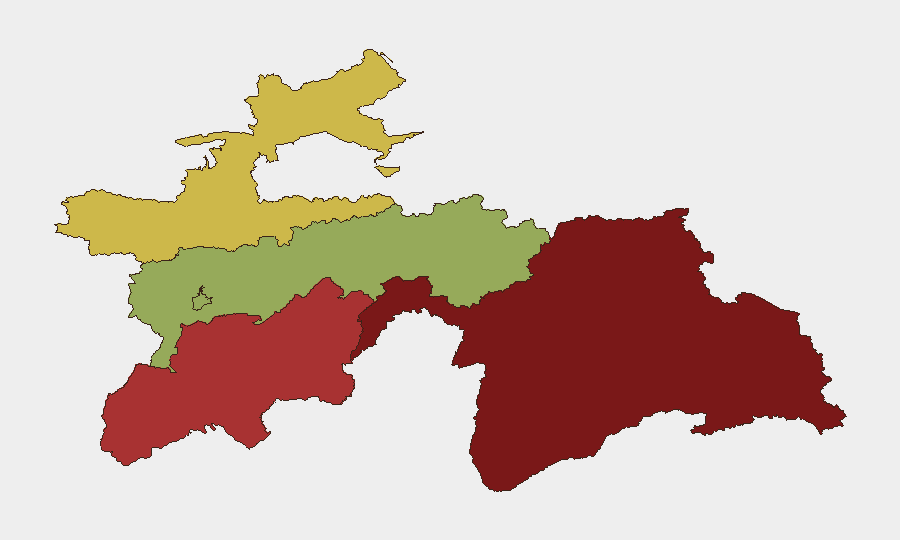
Situation Summary
Tajikistan remains in a stable security posture with no documented incidents in the past 24–48 hours. The national threat composite score of 7 (global rank #97) reflects chronic but manageable sub-national risks concentrated in border regions and mountainous areas. Official discourse and major media outlets are focused on economic and trade partnerships, with no indicators of imminent escalation or civil unrest.
Key Developments
No discrete security, conflict, or civil-unrest incidents meeting reliability thresholds (independent cross-confirmation, time-stamped reporting) have been documented in Tajikistan during the past 24–48 hours. Major news wires, social-media monitoring, and international early-warning feeds contain no reports of armed clashes, terror activity, large-scale protests, or political instability in that window.
Background context (for situational awareness, not current events): Tajikistan has experienced intermittent Tajik–Kyrgyz border skirmishes and low-level ISIS-affiliated activity in Gorno-Badakhshan since 2021; such incidents remain infrequent and regionally contained. The current brief window shows no acceleration or new manifestation of these structural risks.
Highest-Risk Areas
Gorno-Badakhshan Autonomous Region (GBAO; risk score 92) and Khatlon Region (78) drive the country's overall threat profile. GBAO's elevated risk stems from remote terrain, porous borders with Afghanistan and Kyrgyzstan, historical ISIS recruitment networks, and periodic Tajik–Kyrgyz frontier tensions. Khatlon's secondary risk reflects cross-border smuggling corridors and proximity to Afghanistan. Sughd Region (65) carries moderate risk from trafficking and informal-economy activity. Dushanbe (42) remains the lowest-risk jurisdiction, though urban crime and petty theft are baseline concerns for expatriates and corporate assets in the capital.
How GeoBit Would Assist
Security teams with personnel or assets in high-risk GBAO and Khatlon would benefit from AOI (Area-of-Interest) Monitoring & Early Warning paired with OSINT fusion (multi-language local outlets, Telegram/X actor networks, cross-border reporting) to detect border flare-ups or militant activity before escalation. Conflict & Military mapping and Network & Actor Analysis would support identification of ISIS-affiliated cells and trafficking-network nodes. For duty-of-care compliance, Routing & Network Analysis can identify alternative movement corridors away from high-risk zones during transit planning.
7-Day Outlook
No near-term drivers of instability are visible in the current reporting window. The security environment is expected to remain consistent with baseline risk (stable national posture, localized border/mountainous-region vulnerabilities). Seasonal summer traffic and trade patterns may uptick cross-border activity in Khatlon and GBAO; routine monitoring of smuggling corridors and informal checkpoints remains warranted for organizations with supply-chain exposure.
BRIEF CONFIDENCE NOTE: This assessment is based on absence of reportable incident data. Tajikistan's remote geography and limited independent media footprint mean that localized incidents in border regions may occur without immediate international documentation. Organizations should maintain persistent local-source monitoring (drivers, fixers, partner networks) and consider GEOBIT's AOI Monitoring service for critical facilities or travel corridors.
Highest-Risk Areas — Ranked
| # | State / Region | Risk |
|---|---|---|
| 1 | Gorno-Badakhshan Autonomous Region | 92 |
| 2 | Khatlon Region | 78 |
| 3 | Sughd Region | 65 |
| 4 | Districts of Republican Subordination | 58 |
| 5 | Dushanbe | 42 |
Sources
Previous Daily Briefs
A new Tajikistan brief is written every day — each with its own risk map and downloadable CSV. Here's the last week; use the calendar to go further back.
📅 Browse every day by calendar →
Highlighted days have a brief. Tap a day for that day's map & analysis, or “csv” for that day's dataset ($5).