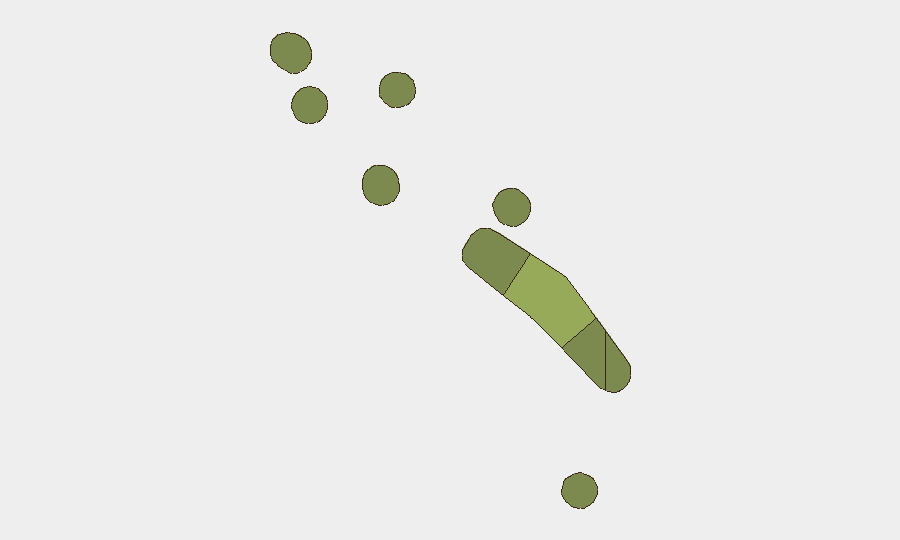
Situation Summary
Tuvalu remains a low-threat environment (global rank #177, composite score 3/5) with no verified security incidents, civil unrest, or infrastructure disruptions recorded in the last 24–48 hours. A cluster of public statements and one disapproval action were flagged in GeoBit's event feed on 16–17 July, but live web research has not corroborated any acute security event corresponding to these signals. The country's threat profile is stable; Funafuti, the capital, registers the highest sub-national risk score (45) and warrants proportionate duty-of-care attention from organizations with personnel or assets there.
Key Developments
- No verified new security incidents in last 24–48 hours. Live web research found no current reports of conflict, civil unrest, crime spikes, infrastructure failure, or political instability in Tuvalu as of 18 July 2026.
- Event signal cluster on 16–17 July (unconfirmed). GeoBit's event feed recorded one "Disapprove" action and six "Public Statement" entries between 16–17 July; source, subject matter, and corroboration status remain unverified pending deeper intelligence sweep.
- Regional context: Chinese SLBM test near EEZ (7–15 July, background). Multiple outlets reported a Chinese submarine-launched ballistic missile test with impact near Tuvalu's exclusive economic zone during 7–15 July; this was a regional military development story rather than a domestic Tuvalu incident and does not constitute a new threat to onshore personnel or assets.
- Australian Navy demining survey, Nanumea Lagoon (13 July, background). A Royal Australian Navy task unit conducted a survey of Nanumea Lagoon under Operation Render Safe; Tuvalu's prime minister welcomed the activity. This is a scheduled maritime operation, not a security incident.
Highest-Risk Areas
Funafuti (risk 45) accounts for the plurality of Tuvalu's composite risk and should be the primary focus of duty-of-care teams; as the capital and administrative hub, it hosts the greatest concentration of government, commercial, and expatriate presence. Vaitupu (28), Nui (25), and Nukufetau (22) follow as secondary risk zones, though the absolute threat levels across all islands remain modest. The risk gradient likely reflects population density, port activity, and administrative centrality rather than acute conflict or crime; teams should calibrate response posture accordingly and avoid over-indexing on Tuvalu's global ranking in isolation.
How GeoBit Would Assist
Security and risk teams should deploy AOI Monitoring & Early Warning on Funafuti and secondary islands to detect emerging civil unrest, maritime anomalies, or infrastructure disruptions with live alerting. OSINT fusion (X/Twitter, Telegram, regional media, and multi-language search) would corroborate or clarify the 16–17 July event signals and surface any localized labor, political, or environmental triggers affecting expatriate safety. Maritime & Aviation tracking combined with Economic & Trade data would provide continuous visibility into port activity, supply-chain interruptions, and regional geopolitical pressure that could cascade into Tuvalu.
7-Day Outlook
No acute deterioration is anticipated over the next seven days absent new information on the unconfirmed 16–17 July events. Tuvalu's stability remains underpinned by low internal conflict history and limited state fragility; watch for any escalation of public statements into labor actions or localized protests. Continued monitoring of regional developments (Chinese military activity, climate-related maritime incidents, or Australian strategic messaging) will be necessary to detect indirect pressure on Tuvalu's security posture.
Highest-Risk Areas — Ranked
| # | State / Region | Risk |
|---|---|---|
| 1 | Funafuti | 45 |
| 2 | Vaitupu | 28 |
| 3 | Nui | 25 |
| 4 | Nukufetau | 22 |
| 5 | Niutao | 20 |
| 6 | Nanumanga | 18 |
| 7 | Nanumea | 15 |
| 8 | Nukulaelae | 12 |
Sources
Previous Daily Briefs
A new Tuvalu brief is written every day — each with its own risk map and downloadable CSV. Here's the last week; use the calendar to go further back.
📅 Browse every day by calendar →
Highlighted days have a brief. Tap a day for that day's map & analysis, or “csv” for that day's dataset ($5).
Atlas — our AI intelligence desk — emails them this snapshot personally. Nothing else, no list.