Situation Summary
The United Kingdom remains at composite threat level 4 globally (rank #166), with England accounting for the majority of tracked risk. A cluster of violent street incidents—stabbings, a firearms discharge, and public-order disorder—occurred across major urban centres on 25 June, reflecting elevated baseline violence in city centres rather than organized or ideological threat. Cross-border friction at Dover and ongoing retailer cyber-disruption add operational friction; no terrorism nexus or state-level escalation is evident in current reporting.
Key Developments
- Bristol city centre, 25 June: Serious stabbing near Broadmead, ~20:00; one arrest made, no terrorism link. Victim condition not life-threatening.
- Islington, London, 25 June: Stabbing on Holloway Road, N7, late evening; male victim hospitalized with non-life-threatening injuries. No immediate arrests.
- Moss Side, Manchester, 25 June: Firearms discharge and serious assault on residential street late evening; one hospitalized, attempted-murder investigation opened. Armed police presence confirmed.
- Leeds city centre, 25 June: Street fight involving youth group near Briggate, evening; multiple arrests for affray and offensive-weapons possession. Dispersal powers deployed.
- Pollokshields, Glasgow, 25 June: Targeted vandalism against vehicles and business; hate-motivated investigation opened. Enhanced patrols deployed.
- Cardiff city centre, 25 June: Alcohol-fuelled disorder on St Mary Street, night; dispersal orders and arrests for public-order and assault offences.
- Port of Dover, 24–25 June: Multi-hour outbound delays due to intensified French border checks and UK screening; no specific threat reported, operational congestion only.
- UK cyber activity, 24–25 June: Major retailer online-ordering systems remain partially suspended following earlier cyber-attack; financially rather than politically motivated. Phishing risk noted.
Highest-Risk Areas
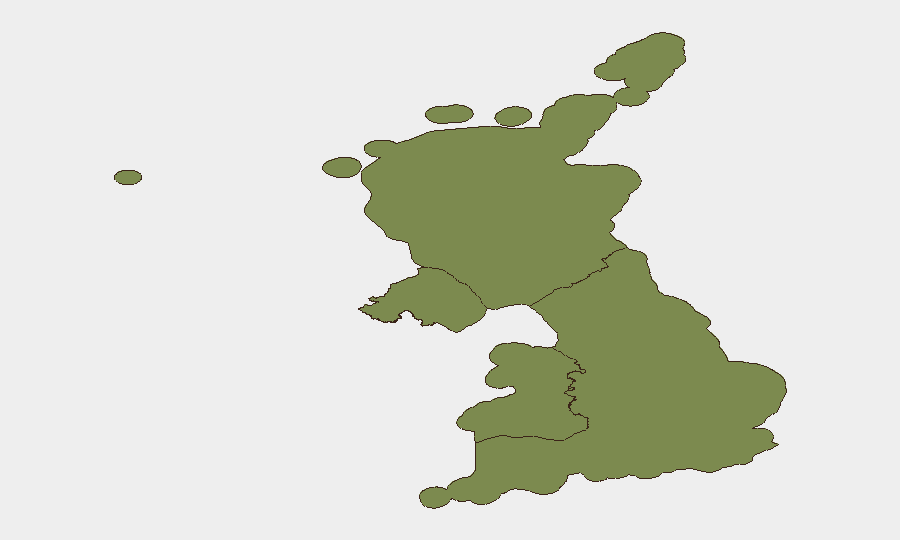
England (risk 32) dominates the sub-national profile, driven by concentrated violent street crime across London, Manchester, Bristol, and Leeds—all major commercial and transport hubs. Wales (9) and Northern Ireland (5.6) show significantly lower incident density, with isolated disorder and vandalism. Scotland (3.3) registers minimal current threat. The risk gradient reflects urban density, night-time economy activity, and routine violence clustering; no evidence of coordinated campaigns or escalation.
How GeoBit Would Assist
Intel Sweep and X/Twitter & Telegram OSINT enable real-time detection and corroboration of street-level incidents across UK cities, flagging emerging patterns before mainstream police announcements. AOI Monitoring & Early Warning on high-footfall districts (Broadmead, Briggate, St Mary Street) and transport nodes (Dover) provides persistent watch and alerting to duty-of-care teams with personnel in those zones. Cyber threat intelligence and Shodan tracking of retailer infrastructure and UK supply-chain vulnerabilities support asset-protection teams assessing downstream operational risk from the ongoing retail breach.
7-Day Outlook
Street violence and public-order incidents are expected to remain episodic and localized to English city centres, particularly during weekend night-time economy peaks. Port delays may persist if French security protocols remain elevated. Cyber recovery for the affected retailer is the primary operational variable; continued phishing and secondary exploitation risk through mid-July.
Highest-Risk Areas — Ranked
| # | State / Region | Risk |
|---|---|---|
| 1 | England | 32 |
| 2 | Wales | 9 |
| 3 | Northern Ireland | 5.6 |
| 4 | Scotland | 3.3 |
Previous Daily Briefs
A new United Kingdom brief is written every day — each with its own risk map and downloadable CSV. Here's the last week; use the calendar to go further back.
📅 Browse every day by calendar →
Highlighted days have a brief. Tap a day for that day's map & analysis, or “csv” for that day's dataset ($5).