Situation Summary
Uzbekistan remains at baseline security posture with no verified reports of civil unrest, terrorism, or major infrastructure disruptions as of 18–19 June 2026. The primary security activity over the past 48 hours reflects routine counter-narcotics enforcement along the Afghan border, particularly in Surxondaryo Region, where security forces seized approximately 39 kg of opiates in coordinated operations. Overall threat trajectory is stable; risk is geographically concentrated and operationally managed by state security services.
Key Developments
- Surxondaryo Region & Samarkand (17 June 2026): Uzbekistan's State Security Service reported seizure of ~38 kg of opium and hashish smuggled from Afghanistan. Four suspects (two Uzbek nationals, two foreign nationals) arrested in Samarkand following a controlled delivery operation; criminal cases opened under Articles 246 and 273 of the criminal code, all suspects in pre-trial detention.
- Termez International Trade Centre, Surxondaryo (17 June 2026): Two Afghan nationals detained attempting to sell ~1.07 kg of opium (estimated USD 5,000 value) using body concealment at the trade centre border crossing. Criminal proceedings initiated and pre-trial detention ordered.
- Tashkent–Samarkand trafficking network (17–18 June 2026): Follow-on investigation identified a broader narcotics distribution network moving drugs from Surxondaryo toward central urban centers; Uzbek security services signaling continued operations to locate additional accomplices, indicating active pursuit of network dismantlement.
- Surxondaryo border districts (17–18 June 2026): Uzbek security officials announced recent intensification of border controls in Surxondaryo due to repeated large narcotics seizures from Afghanistan, reflecting elevated but routine counter-smuggling activity rather than conflict or civil instability.
- Nationwide (18–19 June 2026): Cross-check of English/Russian newswires, regional security briefs, and social media sources confirms no verified protests, terrorist attacks, major civil unrest, or politically motivated violence; reporting dominated by law-enforcement activity.
- Transport & infrastructure (18–19 June 2026): No confirmed large-scale transport disruptions, airport closures, or critical infrastructure failures in major cities (Tashkent, Samarkand, regional centers); available reporting indicates normal operations with routine security screening.
Highest-Risk Areas
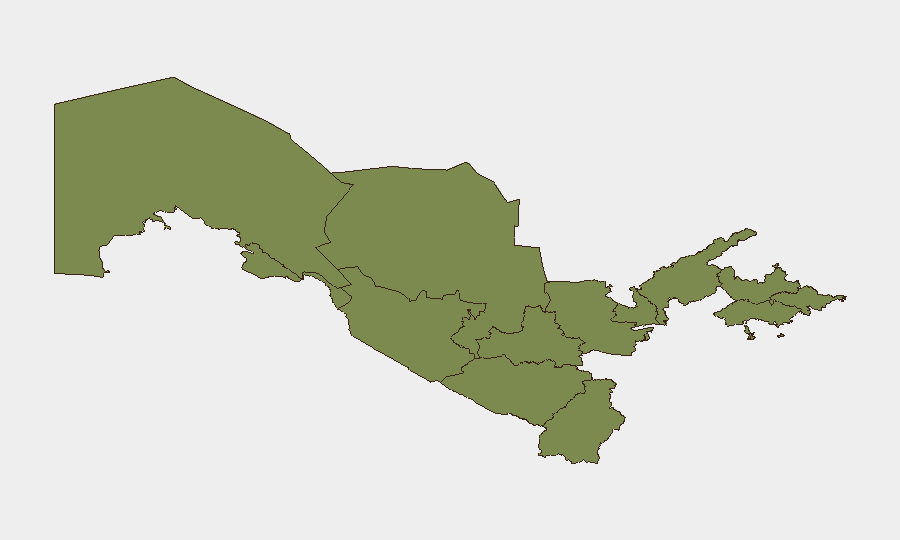
Tashkent dominates the sub-national risk ranking (31.3 vs. 1.3 for all other regions), reflecting its status as the capital and primary urban concentration of state institutions, commercial activity, and international presence. The remaining 11 regions cluster at equivalent low baseline risk (1.3), with Surxondaryo currently the focus of active counter-narcotics operations but no elevation in overall risk score. The gap between Tashkent and provincial areas reflects urbanization and institutional density rather than active conflict or instability; current threat activity is dispersed and operationally contained.
How GeoBit Would Assist
Security teams operating in Uzbekistan should employ Intel Sweep and OSINT fusion to monitor the evolving narcotics trafficking network in real time, particularly movements along the Tashkent–Samarkand axis and Afghan border corridors. AOI Monitoring & Early Warning on Surxondaryo border districts and Termez would provide persistent watch for escalation in cross-border activity or secondary security incidents. Network & Actor Analysis would map the distribution network identified in current investigations, enabling teams to identify exposure to criminal activity or secondary law-enforcement disruptions.
7-Day Outlook
Near-term outlook remains stable; counter-narcotics operations are expected to continue at elevated tempo in border regions without signaling broader instability. No indicators suggest imminent escalation to civil unrest, terrorism, or political crisis. Corporate and security teams should maintain standard operational posture with heightened awareness of border-area activity and potential secondary disruptions if narcotics investigations expand to major urban centers.
Highest-Risk Areas — Ranked
| # | State / Region | Risk |
|---|---|---|
| 1 | Tashkent | 31.3 |
| 2 | Qashqadaryo Region | 1.3 |
| 3 | Surxondaryo Region | 1.3 |
| 4 | Fergana Region | 1.3 |
| 5 | Republic of Karakalpakstan | 1.3 |
| 6 | Xorazm Region | 1.3 |
| 7 | Navoiy Region | 1.3 |
| 8 | Bukhara Region | 1.3 |
| 9 | Jizzakh Region | 1.3 |
| 10 | Tashkent Region | 1.3 |
| 11 | Namangan Region | 1.3 |
| 12 | Sirdaryo Region | 1.3 |
Sources
Previous Daily Briefs
A new Uzbekistan brief is written every day — each with its own risk map and downloadable CSV. Here's the last week; use the calendar to go further back.
📅 Browse every day by calendar →
Highlighted days have a brief. Tap a day for that day's map & analysis, or “csv” for that day's dataset ($5).