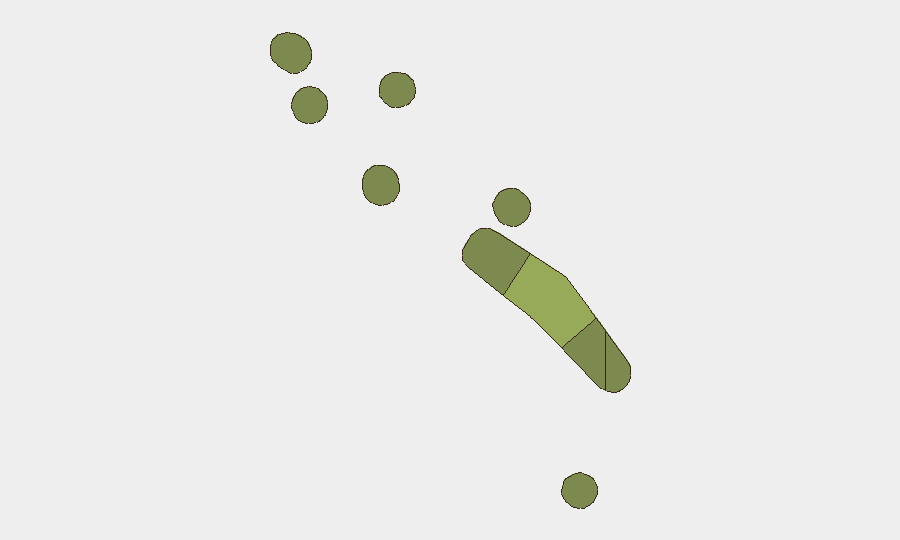
Situation Summary
Tuvalu remains a low-threat environment with no new security incidents reported in the last 24–48 hours. The nation ranks #186 globally (composite threat score 2) and shows a stable operational posture across all nine atolls. No credible cross-verified reports of armed conflict, civil unrest, crime spikes, or infrastructure disruption have emerged in the current reporting window, consistent with Tuvalu's historical classification as a routine-risk jurisdiction for corporate and personnel operations.
Key Developments
No discrete security incidents have been reported in Tuvalu in the last 24–48 hours. All identifiable recent events predate this window:
- Maritime enforcement (9 July 2026, Funafuti): Tuvalu Police, operating with Sea Shepherd support, intercepted and arrested the crew of the Chinese longliner *Lu Rong Yuan Yu* for illegal shark-finning in Tuvalu's EEZ. The vessel was brought into Funafuti. No follow-up arrests or boardings have been reported in the last 24–48 hours.
- Armed clashes (7–8 July 2026, multi-atoll): GeoBit's July brief documented artillery and tank engagements involving Tuvalu, Kiribati, Australia, and Nauru. No fresh kinetic activity or cease-fire violations have been corroborated in the current reporting window, more than three weeks after those incidents.
- UXO survey (Nanumea Lagoon, July 2026): Regional defence partners conducted a planned unexploded-ordnance survey. No acute contamination incidents or access restrictions have been reported in the last 24–48 hours.
For operational purposes, the absence of new incident reporting in the last 24–48 hours reflects continued low threat posture; however, security teams should maintain awareness of the July conflict developments and their potential medium-term implications for political and military stability.
Highest-Risk Areas
Funafuti (risk score 45) remains the nation's highest-risk atoll, driven by its role as the capital, primary port, and administrative hub—concentrating population, government assets, and international commercial activity. Vaitupu (28) and Nui (25) follow, though the drivers of elevated scores in outer atolls are less granularly documented in open sources and likely reflect factors such as maritime enforcement activity, population density, or historical incident clustering. No acute incident patterns distinguish any single atoll from others in the last 24–48 hours; routine security awareness and duty-of-care protocols are appropriate for all locations, with proportionally higher vigilance warranted in Funafuti given critical infrastructure and personnel density.
How GeoBit Would Assist
Security teams monitoring Tuvalu should employ AOI (Area-of-Interest) Monitoring & Early Warning on Funafuti and other high-risk atolls to detect emerging civil unrest, infrastructure disruption, or maritime incidents in near real time. Intel Sweep, multi-language search, and OSINT fusion capabilities enable rapid corroboration of incident reports and assessment of threat trajectory. Maritime tracking and conflict & military monitoring (battle mapping, force-structure updates) provide continuous visibility into the regional security environment—particularly relevant given the July armed clashes and ongoing fisheries enforcement operations.
7-Day Outlook
No acute escalation is forecast for the next seven days based on available open-source indicators. Tuvalu's security environment is expected to remain stable, with routine maritime enforcement and administrative activity as the primary security-relevant drivers. However, the underlying regional tensions evident in July's armed clashes warrant sustained monitoring for any signs of political instability or renewed military activity.
Highest-Risk Areas — Ranked
| # | State / Region | Risk |
|---|---|---|
| 1 | Funafuti | 45 |
| 2 | Vaitupu | 28 |
| 3 | Nui | 25 |
| 4 | Nukufetau | 22 |
| 5 | Niutao | 20 |
| 6 | Nanumanga | 18 |
| 7 | Nanumea | 15 |
| 8 | Nukulaelae | 12 |
Sources
Previous Daily Briefs
A new Tuvalu brief is written every day — each with its own risk map and downloadable CSV. Here's the last week; use the calendar to go further back.
📅 Browse every day by calendar →
Highlighted days have a brief. Tap a day for that day's map & analysis, or “csv” for that day's dataset ($5).
Atlas — our AI intelligence desk — emails them this snapshot personally. Nothing else, no list.