Situation Summary
Albania remains at low global threat rank (#106) but is experiencing sustained domestic political tension centered on a controversial coastal resort project linked to Jared Kushner and tied to an ongoing anti-corruption investigation. Police–protester clashes in central Tirana on 3–4 July 2026, involving water cannons and tear gas, signal elevated risk of disruption and confrontation in the capital. The protest movement (reportedly on Day 35 of consecutive demonstrations as of 3 July) is anchored in environmental and governance concerns, and concurrent political pressure over NATO defense spending commitments suggests the political climate will remain tense in the near term.
Key Developments
- Tirana, central government district – 3–4 July 2026: Police deployed riot lines, water cannons, and tear gas to disperse crowds protesting against Law No. 21/2024 and the coastal resort deal; heightened security cordons remain in place around key avenues and government buildings, with ongoing risk of crowd congestion and clashes.
- Southern coastal resort site (Sazan Island / Karaburun area) – 2–3 July 2026: Private security guards engaged in physical confrontations with protesters at the construction site; viral footage of security personnel dragging demonstrators escalated public outrage and fueled subsequent protest activity in Tirana.
- Tirana – 3–4 July 2026: Activist organizers reported Day 35 of consecutive daily demonstrations and sit-ins, indicating an organized, sustained campaign rather than episodic unrest; messaging emphasizes pressure for Law No. 21/2024 repeal and accountability around the resort project.
- National level – 3–4 July 2026: Opposition voices and commentators are citing Albania's uncertainty over hosting next year's NATO summit (due to unmet defense spending targets, confirmed by NATO on 1 July) as evidence of broader governance instability; this framing is amplifying political pressure on the government.
- National – through 3–4 July 2026: Ongoing SPAK (anti-corruption body) investigation into Artur Shehu, the land seller for the resort project, on charges including drug trafficking and money laundering, remains a focal point of protest messaging and reputational risk for authorities.
Highest-Risk Areas
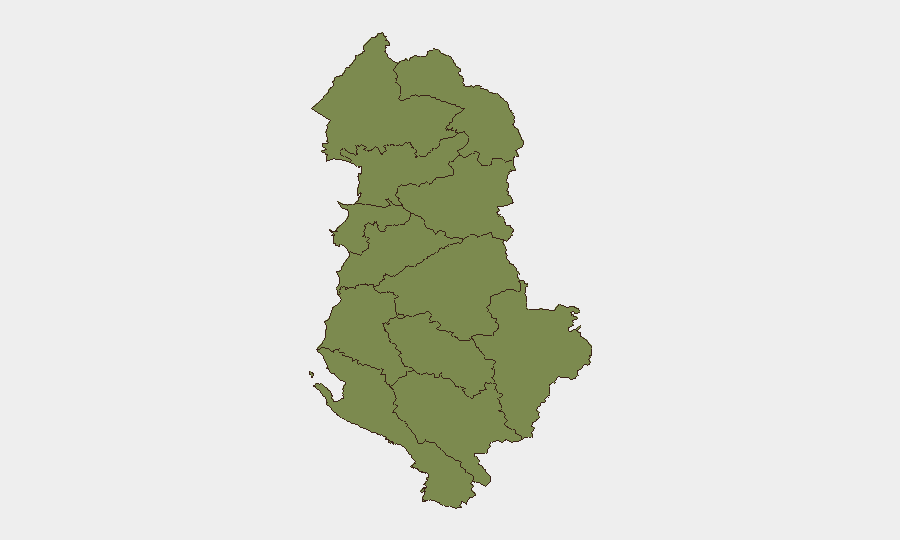
Tirana County and Elbasan County dominate the sub-national risk profile, with composite scores of 31.5 and 25.8 respectively, reflecting the concentration of protest activity, police operations, and political tension in and around the capital. Tirana's risk is driven by ongoing demonstrations, riot-police presence, and potential for continued clashes in the central government district and major public squares. Elbasan's elevated score likely reflects secondary protest coordination or activist networks. All other counties register substantially lower risk (≤4.4), indicating that security concerns are highly localized to the capital metropolitan area and do not represent nationwide instability.
How GeoBit Would Assist
Security teams can deploy AOI Monitoring & Early Warning on central Tirana government buildings and protest assembly points to detect crowd size, police deployment, and timing of demonstrations in real time. Intel Sweep and OSINT fusion (X/Twitter, Telegram, YouTube, sentiment analysis) would provide continuous feed of protest organizer messaging, activist timelines, and emerging flashpoints before they escalate to police response. GIS & Spatial Analysis can map historical and live protest routes and police cordons to support route planning and asset movement avoidance during peak disruption windows.
7-Day Outlook
Protest activity is expected to persist at current intensity through at least mid-July, with daily demonstrations and sit-ins likely to continue if Law No. 21/2024 is not repealed or the resort project is not suspended. Risk of renewed police clashes remains elevated during evening gatherings in central Tirana. No evidence of violence beyond crowd control or private-security confrontations has emerged; however, the combination of environmental activism, corruption narrative, and political instability could sustain tension and intermittent unrest.
Highest-Risk Areas — Ranked
| # | State / Region | Risk |
|---|---|---|
| 1 | Tirana County | 31.5 |
| 2 | Elbasan County | 25.8 |
| 3 | Vlorë County | 4.4 |
| 4 | Gjirokastër County | 4.4 |
| 5 | Durrës County | 1.5 |
| 6 | Shkodër County | 1.5 |
| 7 | Kukës County | 1.5 |
| 8 | Lezhë County | 1.5 |
| 9 | Dibër County | 1.5 |
| 10 | Fier County | 1.5 |
| 11 | Berat County | 1.5 |
| 12 | Korçë County | 1.5 |
Sources
Previous Daily Briefs
A new Albania brief is written every day — each with its own risk map and downloadable CSV. Here's the last week; use the calendar to go further back.
📅 Browse every day by calendar →
Highlighted days have a brief. Tap a day for that day's map & analysis, or “csv” for that day's dataset ($5).
Atlas — our AI intelligence desk — emails them this snapshot personally. Nothing else, no list.