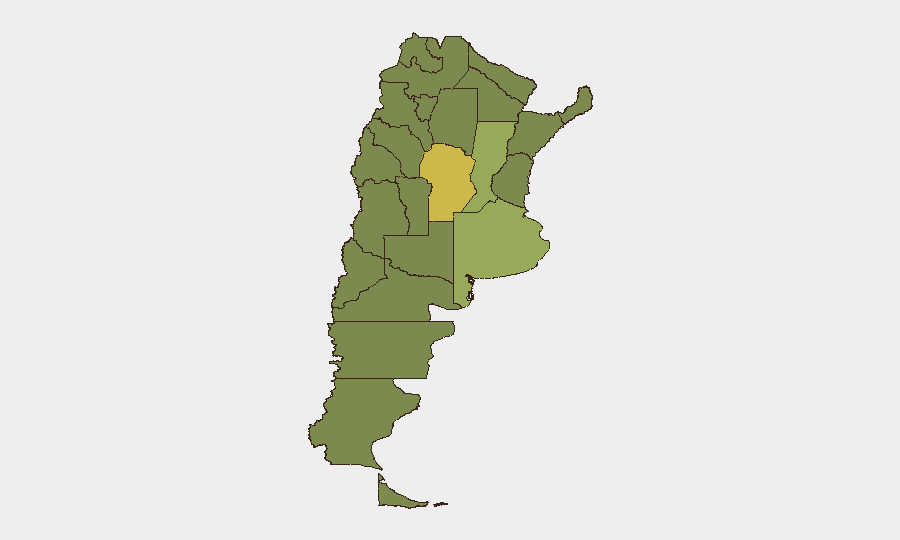
Situation Summary
Argentina remains a moderate-risk operating environment (global rank #43, composite score 50) with 205 tracked threat events. The past 48 hours have registered elevated signal activity across political, law-enforcement, and cross-border dimensions, including a small-arms confrontation with Bolivia, parliamentary disapproval actions, and investigative activity by national authorities into banking and governance matters. The security picture reflects underlying institutional and provincial fragmentation rather than systemic collapse, but concentrated risk zones—particularly Córdoba Province—warrant close monitoring by organizations with personnel or assets in those areas.
Key Developments
- 2026-06-22, Bolivia–Argentina Border: Small-arms combat reported between Bolivian and Argentine forces. Location and casualty details remain unconfirmed in accessible sources; cross-border tensions in the altiplano region require verification through military or diplomatic channels.
- 2026-06-22, National Level: Senate disapproval action logged against an unnamed senator; thematic and legislative context not yet clarified in available reporting.
- 2026-06-23, National Investigation (Banking): Argentine government initiated investigation into a financial institution. Scope (fraud, compliance, AML, or other) and affected sectors require confirmation.
- 2026-06-23, National Investigation (Governance): Separate investigative action by government authorities; target agency or individual not yet specified in public summaries.
- 2026-06-23, Diplomatic Tension: Austria issued a threat statement directed at Argentina. Nature of dispute (trade, sanctions, diplomatic) requires urgent clarification through official channels or premium intelligence feeds.
- 2026-06-23, Corporate/Economic Impact: Commercial entity announced reduction of relations with Argentina—sector and company identity not disclosed in open reporting; potential indicator of supply-chain, regulatory, or reputational risk.
- 2026-06-23, Executive-Level Demand: Cabinet member(s) issued demand to unnamed company leadership; context unavailable.
Note: All items above are drawn from signal summaries without independent verification in accessible web sources. Operational teams should cross-reference with live newswires (Clarín, La Nación, Infobea), official government/police X accounts, and diplomatic advisories before taking protective action.
Highest-Risk Areas
Córdoba Province (composite risk 64.9) is the single largest risk driver in Argentina, significantly exceeding the national average; Buenos Aires Province (49.2) and Santa Fe Province (42.6) form a secondary risk tier. These three provinces account for much of the event density and include Argentina's second- and third-largest metropolitan areas, major transport hubs, and financial centers. The top-ranked provinces are characterized by mixed drivers: criminal organization activity, provincial political instability, and labor/social unrest. Organizations with operations in Córdoba, greater Buenos Aires, or the Rosario corridor (Santa Fe) should maintain heightened situational awareness and pre-positioned contingency protocols.
How GeoBit Would Assist
Organizations should deploy AOI (Area-of-Interest) monitoring and alerting on Córdoba, Buenos Aires Province, and Santa Fe to receive real-time notification of protest, roadblock, armed engagement, or infrastructure disruption events. OSINT fusion and corroboration (X, Telegram, local news, police feeds, utility operator alerts) would allow security teams to triage unconfirmed signals and assess impact on specific facilities or supply chains. Conflict and network-actor analysis would clarify the organizational links between provincial unrest, national political moves, and any cross-border dimensions, enabling duty-of-care teams to differentiate between localized incidents and systemic instability.
7-Day Outlook
The convergence of political, investigative, and diplomatic signals over 48 hours suggests elevated institutional tension; however, no single event has triggered mass mobilization or transport shutdown. The upcoming week will likely clarify whether current investigations, diplomatic friction, and provincial risk represent temporary friction or the onset of broader political/economic strain. Monitoring of labor union calendars, legislative schedules, and provincial governor statements will be critical to early warning.
Highest-Risk Areas — Ranked
| # | State / Region | Risk |
|---|---|---|
| 1 | Córdoba | 64.9 |
| 2 | Buenos Aires Province | 49.2 |
| 3 | Santa Fe Province | 42.6 |
| 4 | Santa Cruz Province | 39.9 |
| 5 | Santiago del Estero Province | 39.3 |
| 6 | Jujuy Province | 37.1 |
| 7 | Mendoza Province | 36.6 |
| 8 | Salta Province | 36.6 |
| 9 | Catamarca Province | 36.6 |
| 10 | Tierra del Fuego Province | 36 |
| 11 | Chubut Province | 35.5 |
| 12 | Misiones | 35.5 |
Sources
Previous Daily Briefs
A new Argentina brief is written every day — each with its own risk map and downloadable CSV. Here's the last week; use the calendar to go further back.
📅 Browse every day by calendar →
Highlighted days have a brief. Tap a day for that day's map & analysis, or “csv” for that day's dataset ($5).