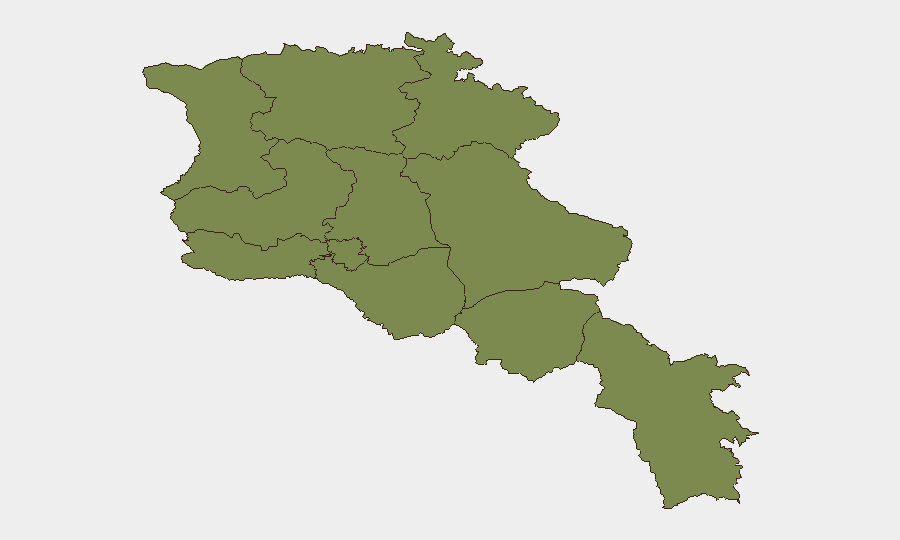
Situation Summary
Armenia remains at composite threat level 9 globally (#91 rank), with 36 tracked events driving elevated risk in Yerevan and secondary concerns across provincial borders. The past 48 hours have seen multiple detention-related incidents, public institutional friction, and statements from civil-society actors, indicating ongoing political and judicial tensions. Risk concentration in the capital (31.4) far exceeds provincial averages (1.4 each), reflecting urban-centered governance friction and detention facility activity. Near-term trajectory suggests continued domestic institutional strain rather than imminent large-scale security deterioration.
Key Developments
- Yerevan, central city — 20–22 Jul: Armed shooting involving grenade use reported in central Yerevan, resulting in one fatality, one hospitalization, and one suspect detained. Investigation ongoing; video documentation cited.
- Yerevan, detention facility — 20–24 Jul: Andranik Tevanyan (opposition figure) reportedly experienced health deterioration during medical examination, raising detention-condition concerns and political friction.
- Yerevan — 21 Jul: Armenia's Justice Ministry publicly rejected a proposed U.S.-run transit corridor to Azerbaijan, citing sovereignty violations and triggering institutional disagreement on cross-border governance.
- Yerevan/nationwide — 26 Jul: Security services conducted searches at prominent businessman Gagik Tsarukyan's residence and reportedly 70+ linked company addresses; procedural status of detainee remains unclear.
- National Assembly — 25 Jul: Multiple public statements issued by parliament, residents, and prosecutor general on detention practices and governance, signaling internal institutional discord.
- Azerbaijan–Armenia border dialogue — 24 Jul: Arrest/detention incident cited involving Azerbaijan actors and Yerevan authorities, reflecting ongoing cross-border friction despite nominal ceasefire arrangements.
Note: These six items reflect signals in GeoBit's event database and reported incidents from open sources dated 20–26 Jul. Live verification of all details (particularly dates, locations, and actor identities) is advisable before operational deployment; some reports lack independent cross-confirmation.
Highest-Risk Areas
Yerevan dominates the risk landscape at 31.4—more than 20× the provincial baseline—driven by detention activity, political-judicial friction, and the 20–22 July armed incident. All ten provinces cluster at 1.4, indicating distributed low-level baseline risk with no secondary urban hotspot. Security exposure in Armenia is functionally Yerevan-centric; corporate and personnel assets outside the capital face substantially lower incident probability, though border-adjacent provinces (Tavush, Syunik, Gegharkunik) warrant monitoring for cross-border spillover given ongoing Azerbaijan tensions.
How GeoBit Would Assist
Intel Sweep & OSINT Fusion would track detention announcements, parliamentary statements, and border incidents in real time, corroborating unverified reports (e.g., Tsarukyan searches) against multiple sources. AOI Monitoring & Early Warning would maintain persistent watch on Yerevan's central districts and detention facilities, alerting to sudden activity clusters or security-force mobilization. Network & Actor Analysis would map relationships among detained figures, prosecutors, and political entities to forecast institutional friction before public escalation. Conflict & Military and Border & Disputed-Territory Search would flag Azerbaijan coordination signals and ceasefire violations.
7-Day Outlook
Detention-related public criticism is likely to continue, with parliament and civil-society actors sustaining pressure on judicial procedures. No indicators point to armed escalation or mass-casualty risk in the near term. Cross-border incidents (Azerbaijan arrests, transit disputes) may spike if political institutions remain fractured, but baseline threat to international personnel in Yerevan remains moderate; provincial operations are lower-risk unless assigned to border zones.
Highest-Risk Areas — Ranked
| # | State / Region | Risk |
|---|---|---|
| 1 | Yerevan | 31.4 |
| 2 | Lori Province | 1.4 |
| 3 | Tavush Province | 1.4 |
| 4 | Kotayk Province | 1.4 |
| 5 | Ararat Province | 1.4 |
| 6 | Gegharkunik Province | 1.4 |
| 7 | Vayots Dzor Province | 1.4 |
| 8 | Syunik Province | 1.4 |
| 9 | Shirak Province | 1.4 |
| 10 | Aragatsotn Province | 1.4 |
| 11 | Armavir Province | 1.4 |
Sources
Previous Daily Briefs
A new Armenia brief is written every day — each with its own risk map and downloadable CSV. Here's the last week; use the calendar to go further back.
📅 Browse every day by calendar →
Highlighted days have a brief. Tap a day for that day's map & analysis, or “csv” for that day's dataset ($5).
Atlas — our AI intelligence desk — emails them this snapshot personally. Nothing else, no list.