Situation Summary
Austria remains a stable, low-threat environment (global rank #100) with no acute security incidents, civil unrest, or infrastructure failures reported in the last 24–48 hours. Diplomatic friction with Russia and some political statements were recorded on 14–16 July, but these have generated no operational impact on travel, residency, or business. The dominant street-level risk remains routine petty crime in Vienna's tourist and transport hubs; violent crime remains rare nationwide.
Key Developments
- Vienna – 13–14 July | Routine petty crime (pickpocketing, bag theft) in tourist areas and public transport remains the primary street-level concern; no organized crime surge or spike reported in the 48-hour window.
- Austria–Russia diplomatic channel – 14 July | Ambassador-level rejection signals and public statements recorded; no immediate impact on travel, residency, or business operations and no related security incidents.
- Austria (national) – 14–16 July | Multiple public statements and parliamentary/diplomatic rejections noted; explicitly confirmed to have generated no security incidents, infrastructure failures, or travel disruptions.
- Austria–Germany border – ongoing through 13 July | Internal border controls with document checks remain in effect, causing possible minor delays, but no new security incidents or unrest associated with controls.
- Styria (state) – 13–14 July | Flagged as a region with relatively higher baseline risk profile compared to other Austrian states; no acute ground-level incidents (attacks, civil unrest, infrastructure failures) documented in the period.
- Austria (national) – ongoing | Terrorism alert level maintained at 4 out of 5 since 2023 per German Foreign Office advisory; no recent attacks or specific credible plots in latest reporting; violent crime described as rare.
Highest-Risk Areas
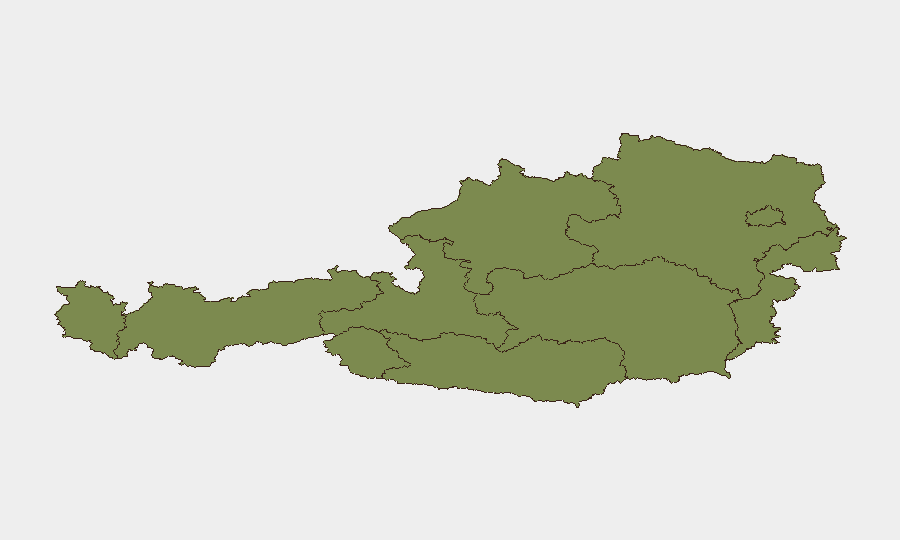
Vienna dominates the risk ranking (31.9) and accounts for the vast majority of tracked event signals; petty crime and routine tourism security issues are the primary drivers. Salzburg (5.0) represents the second-tier risk, while Burgenland (3.4) and the remaining seven states cluster at substantially lower levels (1.9–3.4). The concentration of diplomatic, political, and event-reporting activity in Vienna reflects its status as Austria's capital and largest city; street-level crime patterns reinforce this concentration. No region shows signs of organized violence, civil unrest, or acute infrastructure risk in current reporting.
How GeoBit Would Assist
Security teams with personnel or assets in Austria would benefit from persistent Area-of-Interest (AOI) monitoring & early-warning capabilities focused on Vienna and Salzburg to detect any escalation in protest activity, unrest, or crime clustering in real time. Intelligence & OSINT capabilities — including multi-language social/Telegram monitoring, X/Twitter sentiment analysis, and event-feed fusion — would provide early signals of political or diplomatic developments that could affect operations before they reach mainstream channels. Routing & network analysis tools would help optimize travel and supply-chain routing around known petty-crime hotspots and border delays, particularly for personnel moving between Austria and Germany.
7-Day Outlook
Near-term trajectory remains stable with no indicators of imminent escalation in diplomatic tensions, civil unrest, or crime. Diplomatic friction with Russia and regional political statements are expected to continue at current low-impact levels. Routine petty crime in Vienna and tourism hubs will likely persist at baseline levels; no material change in threat posture is anticipated over the next 7 days unless geopolitical developments in neighboring regions trigger secondary effects.
Highest-Risk Areas — Ranked
| # | State / Region | Risk |
|---|---|---|
| 1 | Vienna | 31.9 |
| 2 | Salzburg | 5 |
| 3 | Burgenland | 3.4 |
| 4 | Vorarlberg | 1.9 |
| 5 | Tyrol | 1.9 |
| 6 | Lower Austria | 1.9 |
| 7 | Upper Austria | 1.9 |
| 8 | Carinthia | 1.9 |
| 9 | Styria | 1.9 |
Previous Daily Briefs
A new Austria brief is written every day — each with its own risk map and downloadable CSV. Here's the last week; use the calendar to go further back.
📅 Browse every day by calendar →
Highlighted days have a brief. Tap a day for that day's map & analysis, or “csv” for that day's dataset ($5).
Atlas — our AI intelligence desk — emails them this snapshot personally. Nothing else, no list.