Situation Summary
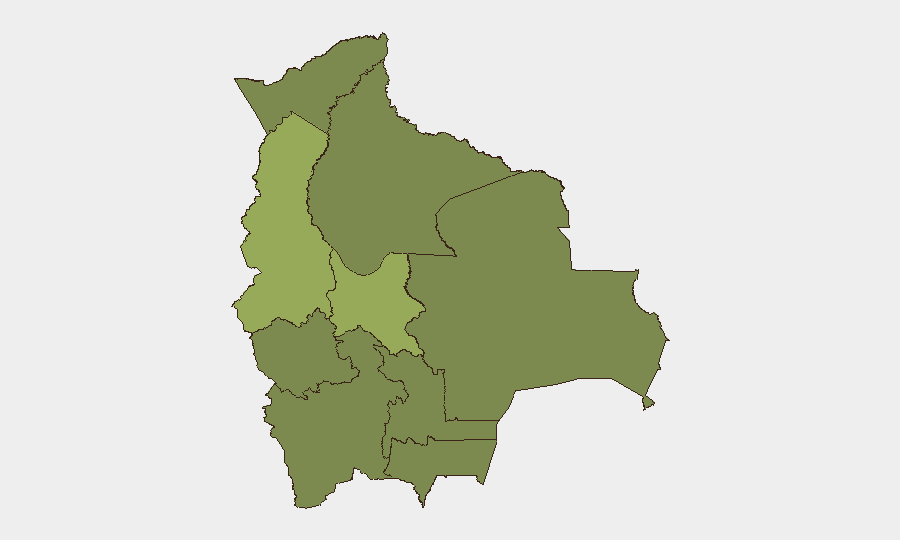
Bolivia remains in a state of elevated civil and institutional tension, with a composite threat score of 35 placing it at #56 globally. Multiple concurrent signals over the past 72 hours—including demands on authorities, threats, violent peasant-landlord clashes, arrests of attorneys, and military/criminal investigations—suggest fragmentation across security domains rather than a single dominant crisis. Western Bolivia, particularly La Paz and Cochabamba departments, show markedly higher risk than other regions, consistent with historical patterns of political volatility and resource-driven conflict.
Key Developments
- 2026-06-15 · Violent Protest/Riot (La Paz Department) — Peasant-versus-landlord confrontation reported; suggests agrarian dispute escalation and potential for property damage or injury. Location-specific incident type signals unrest in rural or peri-urban zones.
- 2026-06-15 · Public Statement (Reuters) — Major international news outlet coverage indicates Bolivia events have achieved transnational media attention; likely reflects severity or political significance of underlying tensions.
- 2026-06-14 · Public Statement (Bolivia vs. United States) — Diplomatic friction or public disagreement between Bolivian authorities and U.S. government; may signal international pressure or sanctions risk.
- 2026-06-13 · Demand (Bolivian vs. Authorities) — Organized pressure on state institutions; typical precursor to sustained protest cycles or institutional stress.
- 2026-06-13 · Investigation (Bolivia vs. Army) — Military-institutional investigation underway; indicates internal defense-sector tension or alleged misconduct requiring official scrutiny.
- 2026-06-13 · Arrest/Detention (Attorney vs. Bolivia) — Legal professional detained by state; suggests judicial pressure, political prosecution concerns, or rule-of-law deterioration.
- 2026-06-13 · Investigation (Criminal) — Active criminal inquiry; scope and target unclear from signal alone, but consistent with broader instability enabling criminal activity.
Highest-Risk Areas
La Paz (54.2) and Cochabamba (44.1) dominate Bolivia's risk profile and account for the majority of recent event density. Both departments are historic centers of labor activism, peasant organization, and political mobilization, and host major universities and government institutions vulnerable to disruption. The remaining seven departments cluster at 24.2, indicating either lower baseline risk or less consistent reporting. Security teams should prioritize La Paz (capital, commercial hub, diaspora density) and Cochabamba (mining/agrarian regions, protest history) for focused monitoring and contingency planning.
How GeoBit Would Assist
A corporate security team in Bolivia would benefit from persistent AOI (Area-of-Interest) Monitoring & Early Warning on La Paz and Cochabamba to detect protest mobilization, roadblocks, or security-force deployments in real time. OSINT fusion (X/Twitter, Telegram, local radio SIGINT, and multi-language event feeds) would correlate police, military, and civilian actor statements to clarify the nature and durability of current tensions. Network & Actor Analysis would map relationships among peasant organizations, landlord groups, military factions, and state agencies to anticipate flashpoints and negotiate or evacuate around them.
7-Day Outlook
Absent major de-escalatory intervention, current protest and institutional friction signals are likely to persist or intensify through mid-June. Agrarian conflicts in western Bolivia typically follow seasonal patterns and grievance cycles; international diplomatic pressure (evidenced by U.S. statements) may further polarize local authorities. Risk of localized transport disruption, roadblocks, and isolated violent clashes remains elevated; organized national strikes or constitutional crises are possible but not yet signaled.
Highest-Risk Areas — Ranked
| # | State / Region | Risk |
|---|---|---|
| 1 | La Paz | 54.2 |
| 2 | Cochabamba | 44.1 |
| 3 | Potosí | 24.2 |
| 4 | Tarija | 24.2 |
| 5 | Pando | 24.2 |
| 6 | Beni | 24.2 |
| 7 | Oruro | 24.2 |
| 8 | Chuquisaca | 24.2 |
| 9 | Santa Cruz | 24.2 |
Sources
Previous Daily Briefs
A new Bolivia brief is written every day — each with its own risk map and downloadable CSV. Here's the last week; use the calendar to go further back.
📅 Browse every day by calendar →
Highlighted days have a brief. Tap a day for that day's map & analysis, or “csv” for that day's dataset ($5).