Situation Summary
Cambodia remains a low-to-moderate threat environment (global rank #120, composite score 7.0) with 27 tracked events in the current cycle. The security picture is dominated by localized law-enforcement activity against transnational crime networks and ongoing border-zone tensions with Thailand rather than systemic instability. Health-sector alerts (avian influenza A(H5N1)) and periodic detentions indicate routine governance pressures, not acute political fracture. Overall trajectory remains stable with contained risk concentration in specific districts.
Key Developments
- Phnom Penh, Sen Sok district (16 July 2026): Police conducted raids on two suspected online-scam supply operations, detaining multiple Chinese nationals and seizing approximately 2,000 mobile phones and computer components. This reflects ongoing transnational cybercrime infrastructure tied to regional scam networks and suggests foreign-actor operational presence in the capital.
- Cambodia–Thailand border, Oddar Meanchey province (16–18 July 2026 reporting): Thai and Cambodian military units exchanged formal accusations regarding border engineering work, razor-wire placement, troop positioning, and unexplained explosions. Thai command issued a formal demand for investigation and called for a halt to Cambodian forward deployments, indicating elevated military-to-military friction in the frontier zone.
- Nationwide immigration enforcement (reported 16 July, covering H1 2026): Cambodian authorities reported deportation of more than 16,000 foreign online-scam suspects in the first six months of 2026, underscoring scale and persistence of transnational fraud networks operating from Cambodian territory.
- Avian influenza A(H5N1) activity (recent): Active H5N1 detection across Cambodia signals ongoing zoonotic risk and potential public-health disruption; recommend health-security monitoring and exposure protocols for personnel in contact with poultry or live-animal markets.
- Supreme Court detention actions (16 July 2026): Multiple arrest-and-detain events involving the Supreme Court, including actions against the Unification Church, suggest active domestic law-enforcement and religious-organization scrutiny; context and scope remain unclear from available reporting.
Highest-Risk Areas
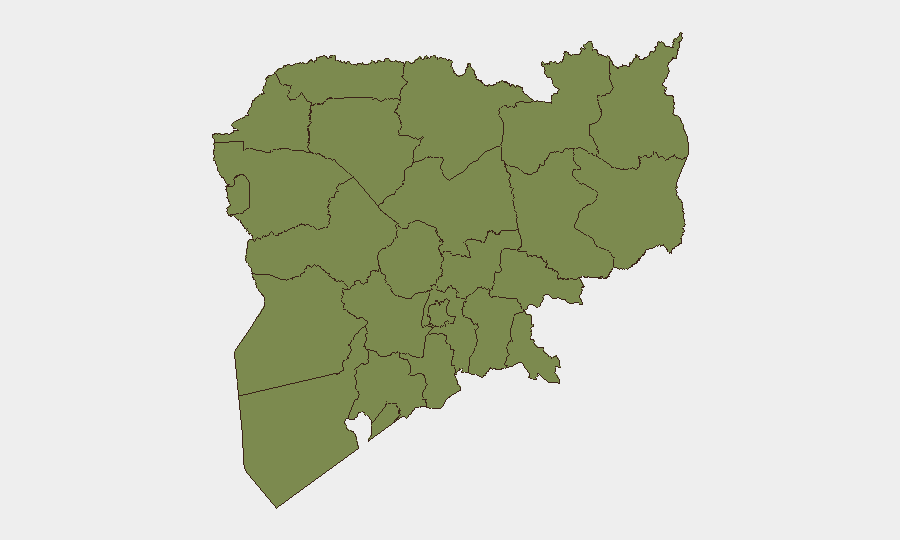
Kampong Thom province is the clear outlier, with a risk composite of 31.8—nearly eight times higher than the second-ranked area (Phnom Penh, 4.1). This extreme disparity warrants investigation into event concentration, reporting bias, or localized security drivers specific to that province. Phnom Penh, despite lower composite score, remains operationally significant due to capital status, foreign national density, scam-network infrastructure, and law-enforcement activity. Oddar Meanchey (western border with Thailand) poses secondary concern due to military friction and landmine risks documented in adjacent Thai territory. All other tracked provinces show uniform low-to-moderate risk (1.8), suggesting either genuine security stability or data sparsity outside major urban centers.
How GeoBit Would Assist
Security teams should employ persistent AOI monitoring and early warning on Kampong Thom and the Oddar Meanchey–Thai border corridor to detect escalation patterns or force movements in real time. Intel Sweep and multi-language OSINT fusion (X/Telegram, local news, military forums) will surface emerging law-enforcement or military developments before official statements. GIS and spatial analysis can map scam-network infrastructure and foreign-actor concentration in Phnom Penh to support duty-of-care risk assessments for expatriate personnel.
7-Day Outlook
No acute crisis indicators suggest imminent escalation in the near term. Border tensions with Thailand will likely persist at current low-intensity rhetorical level unless military posturing intensifies. Transnational crime enforcement and routine detentions will continue; organizations with supply-chain or personnel exposure in Phnom Penh or Oddar Meanchey should maintain operational awareness and contingency protocols.
Highest-Risk Areas — Ranked
| # | State / Region | Risk |
|---|---|---|
| 1 | Kampong Thom | 31.8 |
| 2 | Phnom Penh | 4.1 |
| 3 | Koh Kong | 1.8 |
| 4 | Kampong Speu | 1.8 |
| 5 | Kandal | 1.8 |
| 6 | Prey Veng | 1.8 |
| 7 | Khaet Preah Sihanouk | 1.8 |
| 8 | Kampot | 1.8 |
| 9 | Kep | 1.8 |
| 10 | Takeo | 1.8 |
| 11 | Svay Rieng | 1.8 |
| 12 | Oddar Meanchey | 1.8 |
Sources
Previous Daily Briefs
A new Cambodia brief is written every day — each with its own risk map and downloadable CSV. Here's the last week; use the calendar to go further back.
📅 Browse every day by calendar →
Highlighted days have a brief. Tap a day for that day's map & analysis, or “csv” for that day's dataset ($5).
Atlas — our AI intelligence desk — emails them this snapshot personally. Nothing else, no list.