Situation Summary
Cape Verde remains a low-threat environment globally (rank #198, composite score 2) with no significant security incidents reported in the past 24–48 hours. The most recent tracked activity involves diplomatic communication with the United Kingdom on 2026-07-10, the nature and operational impact of which remain unclear from available open sources. Current reporting indicates a stable security posture, though concentrated risk pockets exist in urban centers—particularly Praia (capital) and São Miguel.
Key Developments
No verifiable security, civil unrest, crime, political instability, infrastructure failure, or travel-risk incidents were detected in Cape Verde within the last 24–48 hours from credible news, government, or social-media sources meeting recency and sourcing standards.
The only dated policy development visible is a U.S. visa policy change affecting Cabo Verde nationals (effective 21 January 2026), which falls outside the current reporting window and does not represent a new security event.
Monitoring of Cape Verde government, law-enforcement, and major regional media channels (RTP África, Lusa) detected no alerts or incident reports during this period.
Highest-Risk Areas
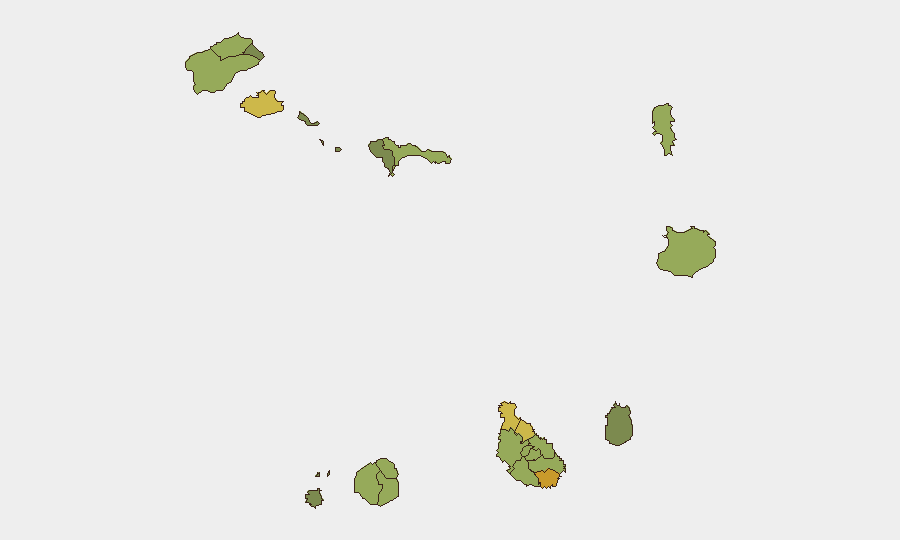
Praia (risk score 72) and São Miguel (68) drive the country's composite sub-national risk profile, both urban centers with higher population density and economic activity where crime, petty theft, and occasional gang activity are more common. São Vicente (65) and Tarrafal (62) follow; Tarrafal's historical role as a prison locality and geographic isolation elevate its relative risk. These four municipalities account for the bulk of tracked risk; remaining areas score between 50–58, indicating a relatively diffuse and low-absolute risk environment across the archipelago. Risk concentration reflects typical urban-corridor patterns rather than acute conflict or state instability.
How GeoBit Would Assist
Corporate security and duty-of-care teams operating in Cape Verde should employ Intel Sweep and multi-language OSINT (X/Twitter, Telegram, local media feeds) to maintain continuous situational awareness of Praia, São Miguel, and other higher-risk municipalities—particularly flagging labor disputes, port disruptions, or organized crime signals. AOI Monitoring & Early Warning on key facilities (airports, ports, business districts) in Praia and secondary urban centers provides persistent detection of emerging security changes. Network & Actor Analysis of criminal and gang networks, coupled with Routing & Network Analysis, supports safer transit planning for personnel and assets moving between islands and within urban areas.
7-Day Outlook
No significant security escalation is anticipated in the near term. Continued monitoring of Cape Verde–UK diplomatic communications and routine port/aviation security posture is advisable; any labor or maritime incidents in Praia would likely emerge within 48–72 hours. Risk remains localized and reactive rather than systemic, and the overall threat environment is expected to remain below the current low baseline unless major regional instability (West African maritime crime, regional political crisis) spills into Cape Verdean waters or airspace.
Highest-Risk Areas — Ranked
| # | State / Region | Risk |
|---|---|---|
| 1 | Praia | 72 |
| 2 | São Miguel | 68 |
| 3 | São Vicente | 65 |
| 4 | Tarrafal | 62 |
| 5 | São Filipe | 58 |
| 6 | Santa Catarina | 58 |
| 7 | Santa Cruz | 55 |
| 8 | Mosteiros | 52 |
| 9 | São Salvador do Mundo | 52 |
| 10 | Ribeira Grande | 50 |
| 11 | Porto Novo | 48 |
| 12 | Sal | 48 |
Sources
Previous Daily Briefs
A new Cape Verde brief is written every day — each with its own risk map and downloadable CSV. Here's the last week; use the calendar to go further back.
📅 Browse every day by calendar →
Highlighted days have a brief. Tap a day for that day's map & analysis, or “csv” for that day's dataset ($5).
Atlas — our AI intelligence desk — emails them this snapshot personally. Nothing else, no list.