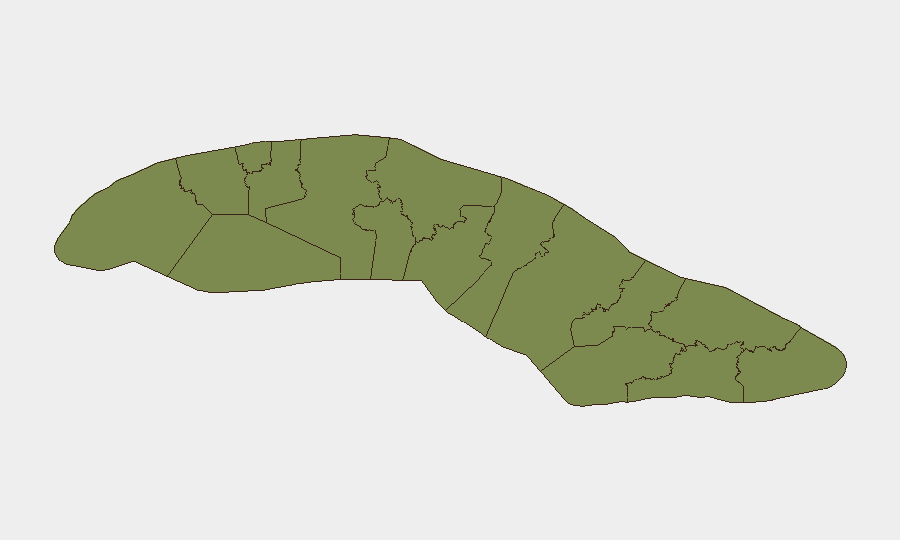
Situation Summary
Cuba remains a low-threat environment in absolute terms (global composite score 21, rank #null), with no credible reports of acute security incidents, civil unrest, or travel disruptions in the past 24–48 hours. The security picture is dominated by chronic structural challenges—prolonged power cuts, fuel shortages, and economic crisis—rather than discrete events or violence. Risk concentration is heavily skewed toward Sancti Spiritus (score 31.3), which accounts for a disproportionate share of tracked events; Havana, despite its size, ranks second at 14.3. The trajectory remains stable operationally but under sustained economic and infrastructure strain.
Key Developments
No verifiable, incident-level developments meeting the 24–48 hour criterion were identified in cross-checked open sources and OSINT feeds (June 21–23, 2026). Recent signals flagged by event feeds reflect ongoing political communication and historical tensions (e.g., university demonstrations on June 21, diplomatic exchanges June 21–23) rather than new discrete events with defined locations and timestamps.
Macro-level developments (structural, not acute) in the same window include:
- Havana, June 23, 2026: International media coverage of Cuba's economic-reform package (approved earlier in June), expanding private enterprise and foreign investment to address systemic energy and supply crises. This reflects policy response, not a new security incident.
- National grid, ongoing through June 23: Chronic blackouts (20–30+ hours) and fuel/food shortages persist. These are documented systemic failures, not newly emerged events.
- Diplomatic backdrop (mid-June through June 23): References to U.S. naval repositioning and currency instability in high-level statements. This is geopolitical context, not an acute incident.
Highest-Risk Areas
Sancti Spiritus dominates Cuba's sub-national risk profile (31.3), representing roughly 40 % of the country's composite risk despite representing a small fraction of the population. Havana (14.3) ranks second but at less than half Sancti Spiritus's score, indicating risk concentration in central Cuba rather than the capital. Artemisa and Villa Clara (both 5.6) are secondary concerns; all remaining provinces score below 3. The concentration suggests either genuine localized instability or event-reporting bias toward central regions; security teams should confirm operational ground truth for assets or personnel in Sancti Spiritus specifically.
How GeoBit Would Assist
Security teams monitoring Cuba should employ AOI (area-of-interest) monitoring & early warning on Sancti Spiritus and Havana to detect emerging protests, infrastructure failures, or crime clusters before they escalate. OSINT fusion (X/Twitter, YouTube, local news feeds, multi-language search) with sentiment & temporal analysis provides real-time signal on regime stability, economic discontent, and travel disruptions. Routing & network analysis supports contingency planning for personnel extraction or resupply if infrastructure or border access deteriorates.
7-Day Outlook
No acute destabilization is expected in the near term; however, cumulative economic pressure, fuel scarcity, and infrastructure fragility create conditions for sudden, localized unrest or mass migration surges. Sanctions enforcement and power-grid failures remain the primary operational risks to business continuity and personnel safety. Monitoring should remain passive and event-driven until intelligence indicates a threshold breach (e.g., large-scale protest, regime-security response, or cross-border migration flow).
Highest-Risk Areas — Ranked
| # | State / Region | Risk |
|---|---|---|
| 1 | Sancti Spiritus | 31.3 |
| 2 | Havana | 14.3 |
| 3 | Artemisa | 5.6 |
| 4 | Villa Clara | 5.6 |
| 5 | Las Tunas | 3.4 |
| 6 | Cienfuegos | 2 |
| 7 | Mayabeque | 1.6 |
| 8 | Matanzas | 1.6 |
| 9 | Guantánamo | 1.6 |
| 10 | Pinar del Rio | 1.3 |
| 11 | Isle of Youth | 1.3 |
| 12 | Ciego de Avila | 1.3 |
Sources
Previous Daily Briefs
A new Cuba brief is written every day — each with its own risk map and downloadable CSV. Here's the last week; use the calendar to go further back.
📅 Browse every day by calendar →
Highlighted days have a brief. Tap a day for that day's map & analysis, or “csv” for that day's dataset ($5).