Situation Summary
Djibouti remains a relatively stable country (global rank #127, composite threat score 6) with no verified security incidents, civil unrest, or direct threats to civilians reported in the last 24–48 hours. However, the country faces heightened *regional* maritime and military activity stemming from Houthi threats to the Bab el-Mandeb Strait and expanded foreign military operations on its soil. The signing of the EU–Djibouti Status of Forces Agreement on 16–17 July reflects growing geopolitical competition in the Red Sea, which carries indirect risks to port operations, shipping, and foreign personnel but does not currently translate to domestic instability.
Key Developments
- Djibouti City – 16–17 Jul 2026 – EU–Djibouti Status of Forces Agreement signed
Djibouti's government formalized a SOFA with the EU establishing the legal framework for Operation ASPIDES, a naval mission based in Djibouti to secure the Red Sea and approaches to the Bab el-Mandeb Strait. This increases the foreign military footprint in Djibouti City and its port but reflects diplomatic cooperation, not crisis.
- Red Sea / Bab el-Mandeb Strait – 16–17 Jul 2026 – EU warns of potential Houthi strait closure
EU officials publicly stated concern that Iran-backed Houthi forces may attempt to obstruct the Bab el-Mandeb Strait, a critical maritime gateway adjacent to Djibouti's coast. This warning prompted the EU to finalize its SOFA and bolster naval presence, raising regional maritime security risk and potential disruption to shipping traffic to Djibouti's port.
- Djibouti City – 16–17 Jul 2026 – Expanded EU security presence confirmed on ground
EU foreign policy chief Kaja Kallas visited Djibouti to confirm that European forces will operate from Djiboutian territory in support of Red Sea security operations. No protests, clashes, or public opposition to the visit or agreement have been reported.
Highest-Risk Areas
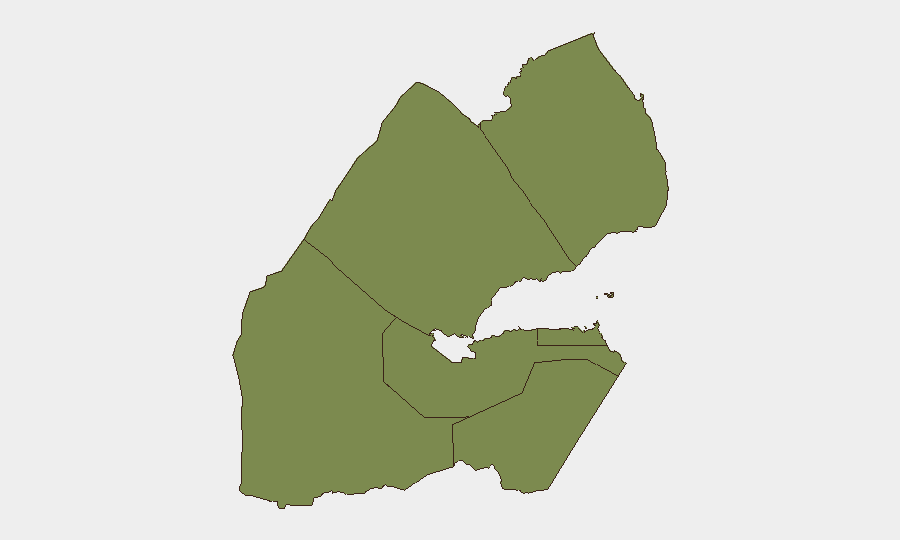
Arta (composite risk 31.9) is significantly higher-risk than all other regions and drives Djibouti's overall threat score. The remaining five regions—Dikhil, Ali Sabieh, Tadjourah, Obock, and Djibouti—have substantially lower and near-uniform risk scores (1.9 each). Arta's elevated risk reflects historical conflict and clan tensions in this inland, southern region; however, the absence of corroborated recent incidents suggests the signal reflects structural vulnerability rather than active, acute threat. Corporate teams with operations or personnel in Arta should maintain heightened situational awareness and liaison with local authorities, while those in Djibouti City and the port should monitor maritime security dynamics and foreign military activity.
How GeoBit Would Assist
Security teams would deploy AOI Monitoring & Early Warning on Arta and Djibouti City to detect emerging unrest, civil gatherings, or security force activity. Maritime & Aviation tracking combined with Intel Sweep and OSINT fusion would allow continuous watch on Red Sea shipping corridors, Houthi messaging and capability signals, and foreign military posture changes. Network & Actor Analysis would help identify key tribal, government, and foreign actors whose statements or movements signal shifts in political stability or port operational risk.
7-Day Outlook
No imminent domestic security crisis is forecast in Djibouti itself over the next seven days. However, maritime risk to shipping in the Bab el-Mandeb Strait and to Djibouti's port operations will remain elevated if Houthi rhetoric or incident rates in adjacent waters increase. Corporate duty-of-care protocols should remain in effect for Red Sea transit and port staffing; personnel in Arta should continue standard security precautions.
Highest-Risk Areas — Ranked
| # | State / Region | Risk |
|---|---|---|
| 1 | Arta | 31.9 |
| 2 | Dikhil | 1.9 |
| 3 | Ali Sabieh | 1.9 |
| 4 | Tadjourah | 1.9 |
| 5 | Obock | 1.9 |
| 6 | Djibouti | 1.9 |
Sources
Previous Daily Briefs
A new Djibouti brief is written every day — each with its own risk map and downloadable CSV. Here's the last week; use the calendar to go further back.
📅 Browse every day by calendar →
Highlighted days have a brief. Tap a day for that day's map & analysis, or “csv” for that day's dataset ($5).
Atlas — our AI intelligence desk — emails them this snapshot personally. Nothing else, no list.