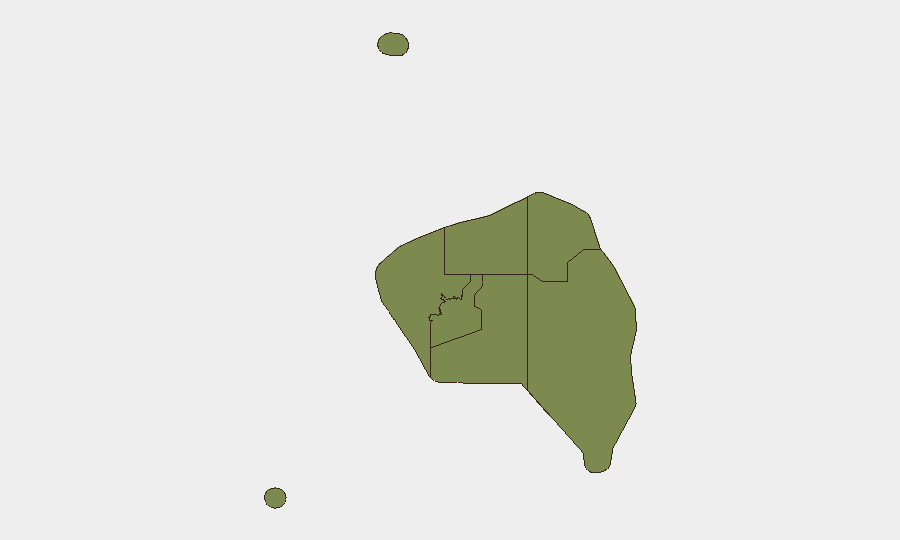
Situation Summary
Fiji faces a low domestic security threat as of 8 July 2026, with no verified reports of civil unrest, major crime, or infrastructure disruption in the past 24–48 hours. The country's composite threat score of 5 (rank #151 globally) reflects primarily regional geopolitical tension rather than internal instability. Current security developments centre on Fiji's role in Pacific-region diplomatic and defence partnerships, particularly in response to external military activity, rather than on direct threats to persons or assets within Fiji's territory.
Key Developments
- Suva, State House – 7 July 2026 (ceremony date)
Fiji hosted Australian Prime Minister Anthony Albanese for the signing of the Vuvale Union and "Ocean of Peace Alliance" defence agreement, formalizing a bilateral defence and security partnership framed by both governments as supporting regional stability.
- Suva, Ministry of Foreign Affairs – 6 July 2026 (activity), reported 7 July 2026
Fiji's government confirmed advance notification from China of a military training exercise conducted in the Pacific region on 6 July, with authorities explicitly stating no direct threat to Fiji or its territory.
- Pacific region near Tuvalu – 6 July 2026 (test date), reported 7 July 2026
Regional media noted a Chinese nuclear-capable missile test into the Pacific, landing near Tuvalu and sparking regional debate on security implications for neighbouring Pacific states including Fiji.
- Pacific-wide statement – 7 July 2026
A coalition of Pacific Elders issued a public warning that growing geopolitical competition and external military activity are reshaping regional security governance, calling for Pacific-led control of regional security frameworks.
- Fiji government – 8 July 2026
Fiji issued a public statement (content not yet detailed in open-source reporting) responding to recent regional developments; context suggests alignment with broader Pacific diplomatic positioning on external military activity.
Highest-Risk Areas
The Western Division carries significantly elevated risk (score 31.5), reflecting its historical vulnerability to organised crime, maritime smuggling, and gang-related activity—factors that persist but show no acute spike in the past 24–48 hours. The Central Division (score 5.1), which includes Suva and the capital region, registers moderate residual risk tied to urban crime patterns and occasional civil unrest, though current reporting shows no active incidents. The Eastern, Northern, and Rotuma divisions carry minimal threat scores (3.9, 1.5, and 1.5 respectively) and are not drivers of current concern. Overall, Fiji's sub-national risk profile is shaped by structural crime and social factors rather than by active conflict or political instability.
How GeoBit Would Assist
Security and duty-of-care teams operating in Fiji should leverage AOI Monitoring & Early Warning on the Western Division and Suva to detect emergent crime or civil unrest signals in real time. OSINT fusion and multi-language search across local media, social platforms, and official sources will provide early detection of protests, strikes, or security incidents before they affect operations. Routing & Network Analysis and Maritime & Aviation tracking support contingency planning and personnel movement in event of regional or domestic disruption.
7-Day Outlook
No acute domestic security deterioration is anticipated in the next seven days. Fiji's security environment will continue to be shaped primarily by regional geopolitical dynamics and its alignment with Australia and other Pacific partners, rather than by internal unrest. Routine monitoring for crime activity in the Western Division and Suva remains warranted as a precaution against longer-term structural risks.
Highest-Risk Areas — Ranked
| # | State / Region | Risk |
|---|---|---|
| 1 | Western | 31.5 |
| 2 | Central | 5.1 |
| 3 | Eastern | 3.9 |
| 4 | Northern | 1.5 |
| 5 | Rotuma | 1.5 |
Sources
Previous Daily Briefs
A new Fiji brief is written every day — each with its own risk map and downloadable CSV. Here's the last week; use the calendar to go further back.
📅 Browse every day by calendar →
Highlighted days have a brief. Tap a day for that day's map & analysis, or “csv” for that day's dataset ($5).
Atlas — our AI intelligence desk — emails them this snapshot personally. Nothing else, no list.