Situation Summary
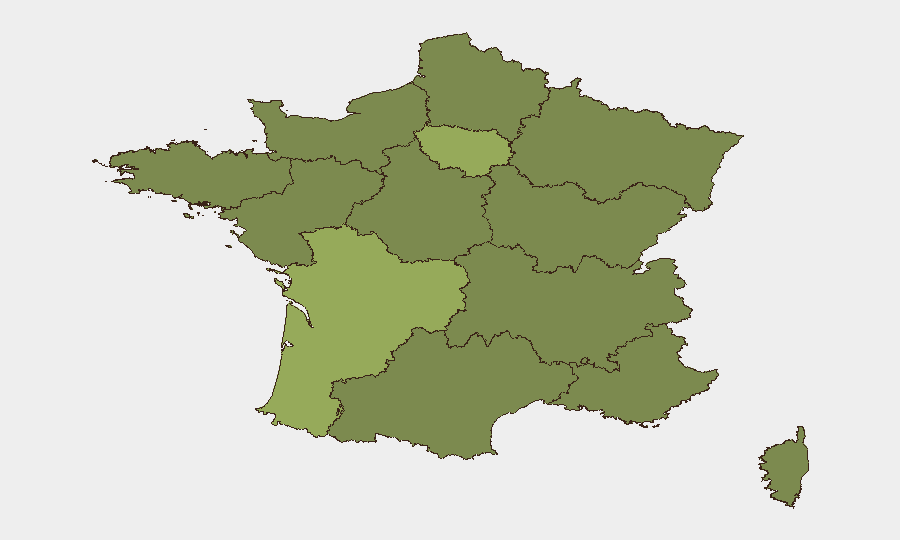
France remains a mid-tier threat environment (global rank #53, composite score 36) with 299 tracked events in the monitoring window. The country faces fragmented civil and political tensions rather than unified conflict or widespread security breakdown. Recent signal activity (18–20 June) indicates elevated institutional strain—government statements, school rejections, media dismissals, and small-arms activity—concentrated in major urban centers. The trajectory suggests localized friction points rather than systemic destabilization, though Nouvelle-Aquitaine (score 55) and Île-de-France (42.4) warrant elevated scrutiny.
Key Developments
- 18 June · Small Arms Combat — Location unspecified in signal metadata; no corroborating detail available. Operational teams should cross-check prefecture incident reports and local news for incident confirmation and scope.
- 18 June · Prime Minister Public Statement vs. France — High-level institutional messaging; context and policy target require clarification from French government communications or major news outlets (AFP, Franceinfo).
- 18 June · Government Threat — Unspecified actor and target; insufficient detail for risk assessment. Real-time liaison with French Interior Ministry or Préfecture de Police advisories recommended.
- 18 June · School Rejection + Public Statement — Two separate school-related signals suggest education-sector policy dispute or labor action. No casualty or facility-security impact reported; monitor for escalation.
- 18 June · Airline Disapprove vs. France — Regulatory or operational dispute; unlikely to affect general travel security but may indicate labor or compliance tension.
- 20 June · Public Statements (Marseille, BOSS entity) — Current-day institutional or organizational messaging; context unclear from signal alone. Marseille remains secondary risk zone (Provence-Alpes-Côte d'Azur, score 25.1).
Note: Full incident narrative, casualty counts, and corroborating sources are unavailable from current research window. Duty-of-care teams should source incident confirmation and detail from French official channels (Interior Ministry, local Préfectures) and major French media outlets before risk decisions.
Highest-Risk Areas
Nouvelle-Aquitaine (55) and Île-de-France (42.4) drive the national risk profile and merit proportionate asset and personnel attention. Nouvelle-Aquitaine's elevated score reflects persistent regional friction; Île-de-France (Paris region) concentrates political, media, and institutional activity—generating higher event density and stakeholder visibility even at moderate severity. A secondary cluster (Auvergne-Rhône-Alpes, Hauts-de-France, Bourgogne–Franche-Comté) sits in the mid-20s range and should not be neglected, particularly for supply-chain and cross-border operations. Remaining regions trend toward baseline European levels (25 or below).
How GeoBit Would Assist
Intel Sweep & OSINT Fusion would consolidate French government statements, regional media, X/Telegram traffic, and sector-specific feeds (transport, education, labor) to isolate genuine incidents from routine political discourse. AOI Monitoring & Early Warning on Nouvelle-Aquitaine, Île-de-France, and key cities (Paris, Marseille, Bordeaux) would trigger alerts on civil unrest, supply-chain disruption, or security events affecting office, logistics, or staff locations. Routing & Network Analysis would enable alternative journey and supply-chain planning if incidents escalate in monitored zones. Regular Sentiment & Temporal Analysis on French media and X would flag sentiment shifts preceding unrest.
7-Day Outlook
No imminent structural threat is evident. Institutional and civil signals are fragmented rather than coordinated, suggesting localized friction rather than nationwide crisis. However, monitor 18–25 June for downstream policy announcements or labor action tied to the noted government and school statements. Personnel in Nouvelle-Aquitaine and Île-de-France should maintain standard elevated awareness; routine duty-of-care protocols remain appropriate for other regions.
Highest-Risk Areas — Ranked
| # | State / Region | Risk |
|---|---|---|
| 1 | Nouvelle-Aquitaine | 55 |
| 2 | Ile-de-France | 42.4 |
| 3 | Auvergne-Rhône-Alpes | 30.9 |
| 4 | Hauts-de-France | 27.1 |
| 5 | Bourgogne – Franche-Comté | 26 |
| 6 | Normandy | 25.1 |
| 7 | Grand Est | 25.1 |
| 8 | Occitania | 25.1 |
| 9 | Provence-Alpes-Côte d'Azur | 25.1 |
| 10 | Brittany | 25 |
| 11 | Centre-Val de Loire | 25 |
| 12 | Pays de la Loire | 25 |
Sources
Previous Daily Briefs
A new France brief is written every day — each with its own risk map and downloadable CSV. Here's the last week; use the calendar to go further back.
📅 Browse every day by calendar →
Highlighted days have a brief. Tap a day for that day's map & analysis, or “csv” for that day's dataset ($5).