Situation Summary
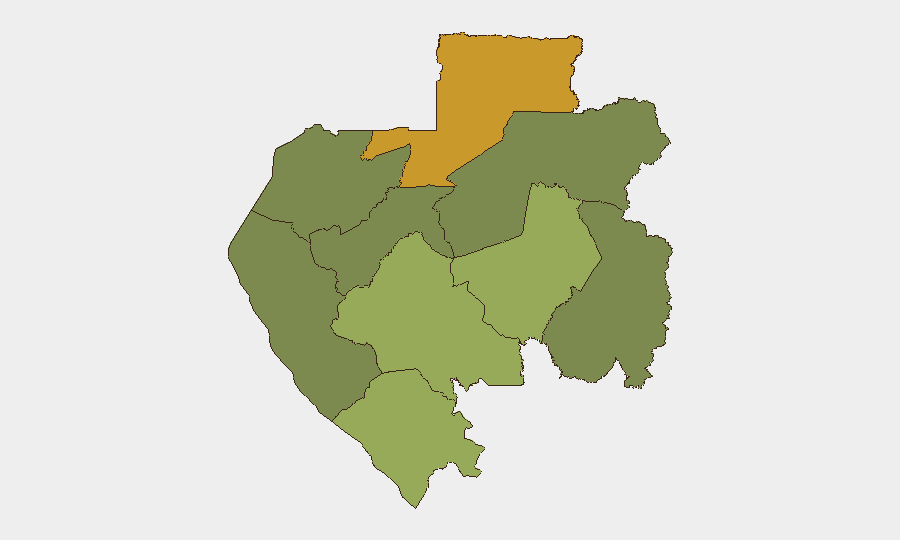
Gabon remains a low-threat environment globally (rank #69) with no confirmed security incidents in the past 24–48 hours. However, a significant sovereign credit downgrade on 25 June 2026—Moody's shift of Gabon's outlook from stable to negative—signals emerging fiscal stress and political-economic risk that could destabilize the operating environment over coming months. Northern and eastern provinces, particularly Woleu-Ntem and Ogooué-Lolo, carry substantially elevated composite risk scores and warrant enhanced monitoring. The country's overall security posture remains stable, but macroeconomic headwinds merit close attention from duty-of-care teams.
Key Developments
- 25 June 2026 – Nationwide (Libreville) – Sovereign Credit Downgrade: Moody's downgraded Gabon's sovereign outlook from stable to negative, citing fiscal imbalances, high debt-refinancing needs, restricted market access, and weak public-finance management. The agency also flagged ongoing audits of past borrowing that could reveal additional liabilities and further weaken debt sustainability. This is a macro-risk escalation, not a physical security incident, but signals rising political and economic strain.
- No confirmed security incidents, protests, civil unrest, or infrastructure disruptions reported in Gabon during 24–48 hours preceding 27 June 2026 across credible open sources, international news wires, and geo-tagged security reporting.
Highest-Risk Areas
Woleu-Ntem Province (risk score 72) and Ogooué-Lolo (58) are the dominant threat drivers, accounting for the country's elevated regional variance. Both are sparsely populated, remote forest regions with historically weaker state presence and limited real-time visibility—creating conditions favoring unreported criminal activity, trafficking, and informal cross-border movement. Ngounié Province (48) and Nyanga Province (42) represent a secondary tier of concern. By contrast, Estuaire Province—home to the capital Libreville and primary economic assets—carries minimal risk (15), and Ogooué-Ivindo registers zero tracked events. Risk concentration in the north and east aligns with geographic remoteness and limited institutional oversight rather than acute conflict or unrest.
How GeoBit Would Assist
Security teams should deploy AOI (Area-of-Interest) Monitoring & Early Warning on Woleu-Ntem and Ogooué-Lolo to establish persistent watch for emerging instability, trafficking, or criminal activity in these high-risk zones. OSINT Fusion (X/Twitter, Telegram, regional news feeds, multi-language search) would provide real-time signal of any escalation tied to the sovereign credit crisis or political stress. Routing & Network Analysis enables alternative journey planning for personnel transiting northern provinces, and Regime Stability Assessment tools will help flag early indicators of political fragmentation or institutional breakdown as fiscal pressures mount.
7-Day Outlook
No acute security threats are forecast for the immediate week. However, the credit downgrade introduces medium-term political and economic volatility; sustained fiscal strain could trigger labor unrest, civil-service strikes, or informal sector instability, particularly in Libreville and Gabon's urban centers, over the next 2–4 weeks. Teams should maintain standard duty-of-care monitoring and prepare contingency plans should macroeconomic stress translate into public discontent or security sector disruption.
Highest-Risk Areas — Ranked
| # | State / Region | Risk |
|---|---|---|
| 1 | Woleu-Ntem | 72 |
| 2 | Ogooué-Lolo Province | 58 |
| 3 | Ngounié Province | 48 |
| 4 | Nyanga Province | 42 |
| 5 | Haut-Ogooué Province | 35 |
| 6 | Moyen-Ogooué Province | 28 |
| 7 | Ogooué-Maritime Province | 25 |
| 8 | Estuaire Province | 15 |
| 9 | Ogooué-Ivindo | 0 |
Sources
Previous Daily Briefs
A new Gabon brief is written every day — each with its own risk map and downloadable CSV. Here's the last week; use the calendar to go further back.
📅 Browse every day by calendar →
Highlighted days have a brief. Tap a day for that day's map & analysis, or “csv” for that day's dataset ($5).