Résumé de la situation
Le Gabon reste à un niveau de menace global modéré à faible (classement mondial #63), sans incidents de sécurité enregistrés au cours de la semaine du 13-19 octobre. Le pays continue de naviguer les transitions politiques et institutionnelles suite à la prise de pouvoir militaire d'août 2023. Le risque à court terme est concentré dans les provinces septentrionales et orientales éloignées ; la capitale Libreville et les centres urbains occidentaux restent relativement stables, bien que des tensions factuelles politiques internes persistent au sein des structures de l'ancien parti au pouvoir.
Développements clés
- Libreville, 13 octobre : Les autorités ont déployé un système API-PNR (Informations avancées sur les passagers / Dossier passager) à l'aéroport international Léon-Mba pour renforcer le filtrage des crimes transnationaux, du trafic de drogue et du terrorisme. Le système renforce la capacité de détection des menaces aux frontières et transfrontalières.
- Libreville, 14 octobre : Le Parti démocratique gabonais (PDG)—l'ancien parti au pouvoir—a connu des tensions factuelles renouvelées lors d'un séminaire interne, les hauts responsables s'approchant de l'opposition au Président Brice Clotaire Oligui Nguema. L'incident signale une fragmentation politique interne persistante.
- Port-Gentil, 14 octobre : Le directeur de la prison centrale a annoncé des mesures d'application visant les activités liées à la drogue et les absences de détenus, indiquant des défis de sécurité interne continus au sein du système pénitentiaire.
- Port-Gentil / Légion de gendarmerie occidentale, 14 octobre : Le colonel Cyrille Moudoumounene a pris le commandement de la Légion de gendarmerie occidentale, représentant une transition dans le commandement de la sécurité dans la principale zone urbaine occidentale du Gabon.
Zones à plus haut risque
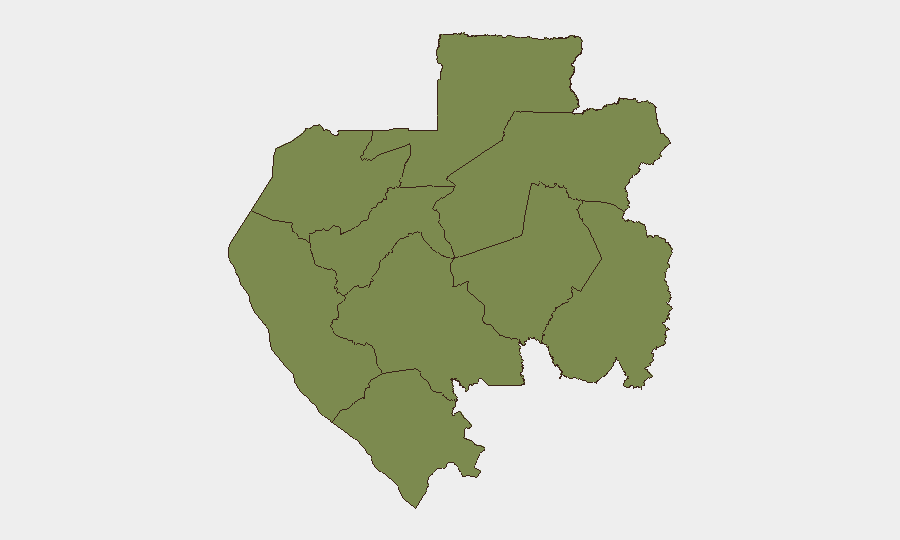
La province de Woleu-Ntem (score de risque 72) et la province de l'Ogooué-Lolo (risque 58) surpassent significativement toutes les autres régions et orientent le profil de risque national. Les deux sont des territoires septentrionaux et orientaux éloignés et peu densément peuplés, caractérisés par une capacité de l'État limitée et une présence policière réduite. Les provinces de la Ngounié et de la Nyanga (risques respectifs de 48 et 42) présentent un risque élevé mais secondaire. En contraste, la province de l'Estuaire—qui contient la capitale Libreville et les principaux centres économiques—affiche un score nettement inférieur (risque 15), reflétant un contrôle institutionnel plus fort et une infrastructure de sécurité robuste. Les organisations ayant des opérations ou des chaînes d'approvisionnement dans le nord doivent prioriser l'atténuation des risques ; les opérations basées à Libreville et côtières font face à des environnements de menaces comparativement plus gérables.
Comment GeoBit apporterait son assistance
Les équipes de sécurité gérant les opérations au Gabon devraient déployer la Surveillance des AOI et système d'alerte précoce sur les provinces de Woleu-Ntem et de l'Ogooué-Lolo pour détecter l'instabilité émergente, le trafic ou l'activité transfrontalière avant escalade. La fusion OSINT—combinant recherche multilingue, surveillance de X/Telegram et extraction d'entités—permet un suivi en temps réel de la dynamique politique factualisée et des changements de commandement des forces de sécurité. Pour la conformité aux obligations de diligence, l'analyse du routage et des réseaux soutient l'identification des couloirs de voyage sûrs et des voies logistiques alternatives autour des zones provinciales à haut risque, tandis que les capacités de recherche de stabilité du régime signalent les changements dans la capacité de l'État ou le contrôle institutionnel qui pourraient affecter les processus de permis, la prévisibilité de la chaîne d'approvisionnement ou les conditions opérationnelles des expatriés.
Perspective 7 jours
Aucun incident de sécurité imminent n'est signalé pour les sept prochains jours. Les tensions politiques au sein du PDG et les défis de gestion du système pénitentiaire justifient une surveillance continue mais n'indiquent pas une déstabilisation à court terme. Les organisations doivent maintenir une posture de vigilance standard, en accordant une attention particulière aux régions septentrionales éloignées et à tout signal d'activité transfrontalière ou de violence factualisée débordant dans les centres urbains.
Zones les Plus à Risque — Classées
| # | État / Région | Risque |
|---|---|---|
| 1 | Woleu-Ntem | 72 |
| 2 | Ogooué-Lolo Province | 58 |
| 3 | Ngounié Province | 48 |
| 4 | Nyanga Province | 42 |
| 5 | Haut-Ogooué Province | 35 |
| 6 | Moyen-Ogooué Province | 28 |
| 7 | Ogooué-Maritime Province | 25 |
| 8 | Estuaire Province | 15 |
| 9 | Ogooué-Ivindo | 0 |
Sources
Bulletins Hebdomadaires Précédents
Un nouveau bulletin Gabon est publié chaque lundi, couvrant la semaine — chacun avec sa carte de risque et son CSV téléchargeable. Voici la dernière semaine ; utilisez le calendrier pour remonter plus loin.
- October 12, 2026
- October 5, 2026
- September 28, 2026
- September 21, 2026
- September 14, 2026
- September 7, 2026
- September 1, 2026
📅 Browse past briefs by calendar →
Highlighted days have a brief. Tap a day for that day's map & analysis, or “csv” for that day's dataset ($5).
Atlas — our AI intelligence desk — emails them this snapshot personally. Nothing else, no list.