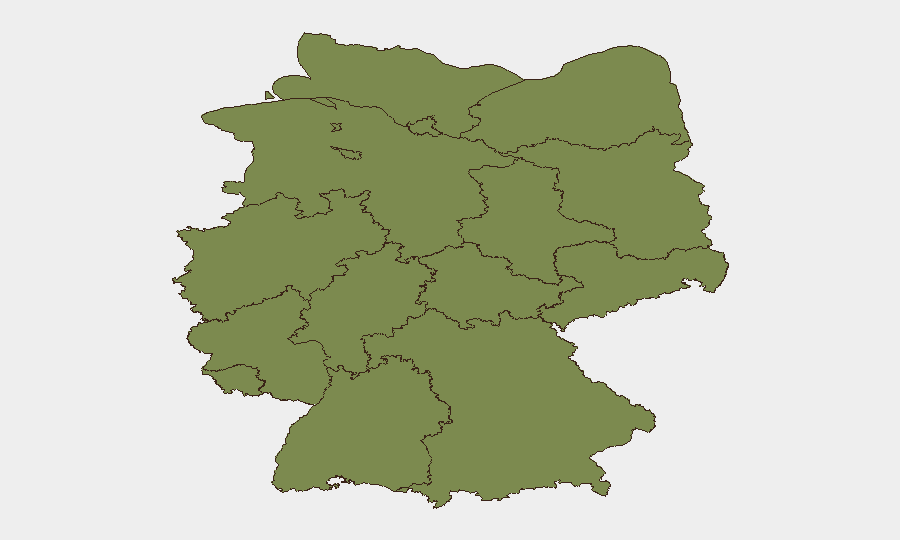
Situation Summary
Germany faces a composite threat level of 8/201, placing it at global rank #117, with elevated volatility driven by two mass-casualty shooting incidents in northern Germany within 48 hours, concurrent federal investigation of critical energy-infrastructure sabotage, and emerging potential for localized economic-friction protests. The security picture is marked by acute short-term public-safety risk concentrated in northern states, compounded by infrastructure-security implications and medium-term civil unrest potential tied to fiscal policy and fuel-price volatility. Thuringia's exceptionally elevated regional risk score (34.3) and Berlin's secondary elevation (16.5) indicate sustained underlying drivers beyond the current incident cluster.
Key Developments
- Stade, Lower Saxony – 2 July: Multiple fatalities reported in a family-related shooting; two suspects arrested; authorities assess no wider public threat. Initial casualty figures indicate at least 2–3 deaths.
- Elmshorn area (youth welfare facility), Schleswig-Holstein – 2 July: Mass shooting at a youth center near Hamburg resulted in at least six deaths; suspect in custody; police tactical response and security cordon established; motive under investigation.
- Germany (federal level) – 2 July: Federal prosecutors charged a Ukrainian national with coordinating the 2022 Nord Stream pipeline sabotage; case underscores ongoing critical infrastructure-security vulnerability and state-level investigative activity.
- Germany (nationwide) – 2 July: Fuel-price spike following end of temporary subsidy generated social-media calls for protests and petrol-station boycotts; risk of localized demonstrations in coming days.
- Germany (federal coalition) – 2 July: Governing coalition announced comprehensive tax, labour, and pension reforms; business and union commentary appears mixed; potential catalyst for organized protest activity in medium term.
Highest-Risk Areas
Thuringia's risk score of 34.3—more than double Berlin's 16.5—reflects sustained, concentrated driver(s) not immediately apparent from the current 48-hour incident set and warrants deeper analysis of underlying conditions (political extremism, organized crime, or border-region instability are typical correlates). The two northern mass shootings place Schleswig-Holstein (5.8) and Lower Saxony (7.5) in acute focus; however, their absolute scores remain comparatively modest, suggesting these incidents represent sudden spikes rather than endemic regional threat. Bavaria (7.6) and Hamburg (6.9) maintain secondary elevation, though current incident data do not isolate a clear single driver; routine monitoring is warranted. Analysts should prioritize assessment of whether the northern shooting cluster signals emerging copycat or contagion risk.
How GeoBit Would Assist
Security teams should employ Intel Sweep and multi-language OSINT (including X/Twitter and Telegram feeds) to track emerging protest messaging around fuel prices and pension reform, combined with sentiment & temporal analysis to predict flash-mob or demonstration timing in high-density urban areas (Berlin, Hamburg, Munich). AOI Monitoring & Early Warning on Thuringia and other highest-risk regions, coupled with conflict and crime-event search, would enable persistent detection of extremist or organized-crime activity signals before they escalate. Network & Actor Analysis applied to the Nord Stream investigation and to Stade/Elmshorn shooter networks would support attribution and copycat-risk forecasting.
7-Day Outlook
Short-term risk trajectory is elevated due to direct consequence of the mass shootings (security response, public anxiety, copycat risk) and fuel-price-driven protest potential (demonstrations likely within 3–7 days at fuel stations and city centers). Medium-term risk will depend on investigative findings into shooter motives and any indication of ideological or organized networks; absence of broader threat indicators may stabilize public perception by mid-week. Sustained monitoring of Thuringia and Berlin remains baseline priority regardless of incident developments.
Highest-Risk Areas — Ranked
| # | State / Region | Risk |
|---|---|---|
| 1 | Thuringia | 34.3 |
| 2 | Berlin | 16.5 |
| 3 | Bavaria | 7.6 |
| 4 | Lower Saxony | 7.5 |
| 5 | Hamburg | 6.9 |
| 6 | Schleswig-Holstein | 5.8 |
| 7 | Mecklenburg-Vorpommern | 5.8 |
| 8 | Baden-Württemberg | 4.5 |
| 9 | Saxony | 4.5 |
| 10 | Brandenburg | 4.4 |
| 11 | Rhineland-Palatinate | 4.3 |
| 12 | Saxony-Anhalt | 4.3 |
Sources
Previous Daily Briefs
A new Germany brief is written every day — each with its own risk map and downloadable CSV. Here's the last week; use the calendar to go further back.
📅 Browse every day by calendar →
Highlighted days have a brief. Tap a day for that day's map & analysis, or “csv” for that day's dataset ($5).