Situation Summary
Kazakhstan remains a low-threat environment with a composite national risk score of 1 and no major security incidents, civil unrest, or infrastructure failures recorded in the last 24–48 hours. However, indirect exposure to regional conflict has persisted through ongoing disruption to oil-export infrastructure stemming from drone attacks on tankers near Russia's Black Sea coast, constraining Kazakhstani crude flows and prompting government complaints. Domestic political activity is elevated ahead of August parliamentary elections, but poses minimal security risk; routine law enforcement continues against organized crime networks without public disturbance.
Key Developments
- Nationwide (July 27–28, 2026): No violent incidents, mass protests, terrorist activity, or major infrastructure disruptions reported within Kazakhstan's borders; routine transport, business, and daily operations remain normal, with only minor border friction and political campaigning ahead of August elections.
- Caspian Pipeline Consortium terminal / Black Sea (near Novorossiysk, ongoing through July 27–28): Kazakhstan's energy sector continues to face export delays and supply-chain reassessment following earlier coordinated drone attacks on civilian tankers carrying Kazakhstani crude; loading suspensions remain in effect, constraining oil flows and prompting diplomatic advisories.
- Kashagan oilfield (nationwide oil sector, July 27–28, ongoing): An escalated legal and regulatory confrontation between Kazakhstan and the multinational Kashagan consortium over a disputed environmental fine and potential criminal liability for the operator's CEO maintains heightened risk for investors, though it has not triggered physical unrest.
- Aktobe Region (approx. July 27–28, 2026): High winds toppled a communications tower, injuring three people and causing localized disruption to communications services; classified as a weather-related accident with no broader security or unrest indicators.
- Shymkent (recent, within current month): Joint Kazakhstan–Kyrgyzstan special operation detained two Kazakhstani citizens suspected of involvement in an international Afghan opium supply channel; reflects active cross-border organized crime enforcement without public violence.
- Nationwide organized crime (ongoing, multiple cases through July): Prosecutors and police report dozens of criminal cases opened against organized crime groups since the start of the year, including extraditions and anti-narcotics operations; reflects continued law-enforcement focus rather than emerging violence or insurgent activity.
Highest-Risk Areas
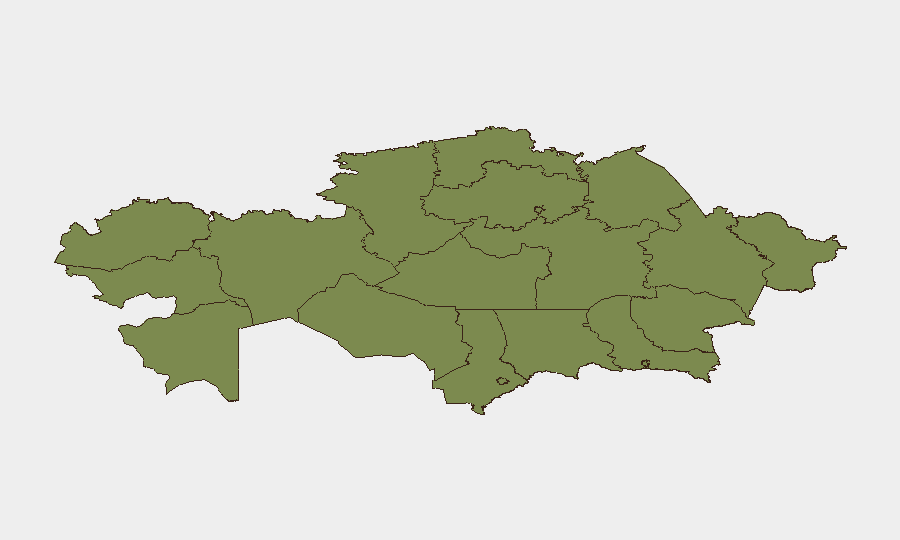
Atyrau Region (risk 31.3) and West Kazakhstan Region (risk 16.3) substantially exceed all other areas and dominate the national composite risk score. This disparity is driven by cumulative exposure to oil-sector infrastructure, maritime-adjacent export corridors (via the Caspian Pipeline Consortium), and organized crime networks tied to cross-border smuggling routes. The remaining ten regions cluster at risk 1.3, indicating a highly concentrated threat geography in the western hydrocarbons belt rather than nationwide instability.
How GeoBit Would Assist
Corporate security teams protecting energy and logistics assets in Atyrau and West Kazakhstan would employ Intel Sweep and OSINT fusion to monitor evolving sanctions, port disruptions, and organized crime enforcement; AOI Monitoring & Early Warning on the Caspian Pipeline Consortium terminal and regional border crossings to detect new supply-chain friction; and Economic & Trade analysis to track downstream impacts of export delays on contract performance and stakeholder communications. Satellite & Imagery analysis of key infrastructure and Routing & Network Analysis for alternative transport corridors would further reduce exposure to disruption.
7-Day Outlook
No imminent escalation of violence, unrest, or attacks within Kazakhstan itself is forecast; August parliamentary elections may generate localized political activity but carry low security risk. Continued constraint on oil exports via the Black Sea corridor and ongoing legal pressure on Kashagan operators will likely persist as slow-burn economic headwinds; watch for any resumption of attacks on tanker traffic or regulatory escalation affecting the energy sector.
Highest-Risk Areas — Ranked
| # | State / Region | Risk |
|---|---|---|
| 1 | Atyrau Region | 31.3 |
| 2 | West Kazakhstan Region | 16.3 |
| 3 | Turkistan Region | 1.3 |
| 4 | Almaty Region | 1.3 |
| 5 | East Kazakhstan Region | 1.3 |
| 6 | Abay Region | 1.3 |
| 7 | Jetisu Region | 1.3 |
| 8 | Mangystau Region | 1.3 |
| 9 | Aqtöbe region | 1.3 |
| 10 | Pavlodar Region | 1.3 |
| 11 | Kostanay Region | 1.3 |
| 12 | Kyzylorda Region | 1.3 |
Sources
Previous Daily Briefs
A new Kazakhstan brief is written every day — each with its own risk map and downloadable CSV. Here's the last week; use the calendar to go further back.
📅 Browse every day by calendar →
Highlighted days have a brief. Tap a day for that day's map & analysis, or “csv” for that day's dataset ($5).
Atlas — our AI intelligence desk — emails them this snapshot personally. Nothing else, no list.