Situation Summary
Libya remains at moderate composite risk (rank #27 globally, score 69) with 42 tracked security events in the assessment period. The threat profile is concentrated geographically: southwestern Fezzan and western Az Zawiya District dominate risk metrics, while Tripoli maintains persistent instability. Overall trajectory shows sustained low-to-moderate armed activity, infrastructure disruption, and elevated policing operations without immediate signs of major escalation, though fragmentation across multiple threat actors and regions limits predictability.
Key Developments
- Az Zawiya refinery closure following armed clashes (11–12 Jun, Az Zawiya District, west of Tripoli): Libya's National Oil Corporation confirmed shutdown of the Zawiya refinery following armed clashes in the vicinity. Road closures and crossfire risk are elevated; operational resumption timeline unknown.
- Expanded arrest and detention operations (11–12 Jun, multiple coastal urban centers): Security forces conducted multiple detention operations targeting migrants, citizens, and at least one lawyer. Pattern suggests tightened policing and heightened internal security sweeps across major population centers.
- Violent protest/riot reported (13 Jun, location not specified): A violent protest or riot event was recorded on 13 Jun. Specific location and scale have not been independently confirmed; social media chatter is sparse and poorly timestamped.
- Political statements and sovereignty disputes (12 Jun, national level): Multiple Libyan political actors and constituent groups issued formal rejections and public statements regarding UN engagement and sovereignty. Reflects escalating political friction between authorities and international actors.
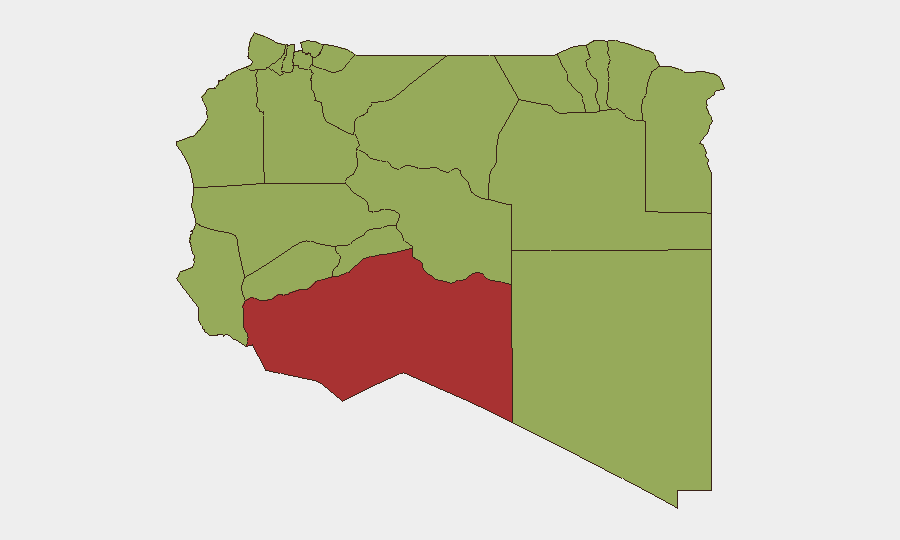
- Ongoing militia and trafficking activity in Murzuq (11–12 Jun, Murzuq, southwestern Libya): Murzuq continues to register as Libya's highest sub-national risk zone (78.5), driven by persistent militia presence, resource competition, and illicit trafficking movements. No single major incident timestamped, but aggregate monitoring indicates continued low-level armed activity.
- Security and infrastructure cooperation discussions with China (likely within 48 hours before 12 Jun, Tobruk, eastern Libya): Libyan and Chinese officials discussed expanded security cooperation, training, and infrastructure projects (refinery, rail) in Tobruk. While not an acute incident, signals increased foreign security presence in the east.
Highest-Risk Areas
Murzuq (risk 78.5) is the dominant driver of Libya's threat profile, characterized by militia fragmentation, trafficking networks, and resource-driven competition. Sirte and Tripoli (51.1 and 50.1, respectively) remain flashpoints for armed clashes and political volatility, with Tripoli additionally hosting government institutions and international presence. Az Zawiya District's recent refinery disruption reinforces its ranking among elevated-risk zones. Collectively, these southwestern and west-central regions account for the majority of recorded security events and infrastructure risk.
How GeoBit Would Assist
Intel Sweep and OSINT fusion would corroborate fragmentary local and social-media reporting to establish precise timing and scale of incidents such as the Zawiya refinery clashes and detention operations. Area-of-interest (AOI) monitoring with alerting on Murzuq, Tripoli, and Sirte would provide persistent early warning of escalation in militia activity, armed clashes, and trafficking movements. Conflict and military force-structure analysis combined with network and actor mapping would clarify factional positions and trigger-points around political statements and sovereignty disputes, enabling proactive risk mitigation for personnel and assets in high-risk zones.
7-Day Outlook
Near-term conditions are expected to remain volatile but contained: continued low-to-moderate armed clashes in southwestern and west-central regions, sporadic infrastructure disruptions (particularly energy sector), and elevated internal security operations. Risk of sudden localized escalation around Murzuq or Tripoli remains, but no indicators of imminent large-scale conflict or nationwide breakdown. Operations teams should maintain heightened vigilance on road access near Zawiya and monitor political rhetoric for signs of deeper factional breakdown.
Highest-Risk Areas — Ranked
| # | State / Region | Risk |
|---|---|---|
| 1 | Murzuq | 78.5 |
| 2 | Sirte | 51.1 |
| 3 | Tripoli | 50.1 |
| 4 | Nalut | 48.5 |
| 5 | Ghat | 48.5 |
| 6 | Baladiyah Surman | 48.5 |
| 7 | Az Zawiya District | 48.5 |
| 8 | Wadi al Shatii | 48.5 |
| 9 | Wadi al Hayaa | 48.5 |
| 10 | Kufra | 48.5 |
| 11 | Nuqat al Khams | 48.5 |
| 12 | Jafara | 48.5 |
Sources
Previous Daily Briefs
A new Libya brief is written every day — each with its own risk map and downloadable CSV. Here's the last week; use the calendar to go further back.
📅 Browse every day by calendar →
Highlighted days have a brief. Tap a day for that day's map & analysis, or “csv” for that day's dataset ($5).