Situation Summary
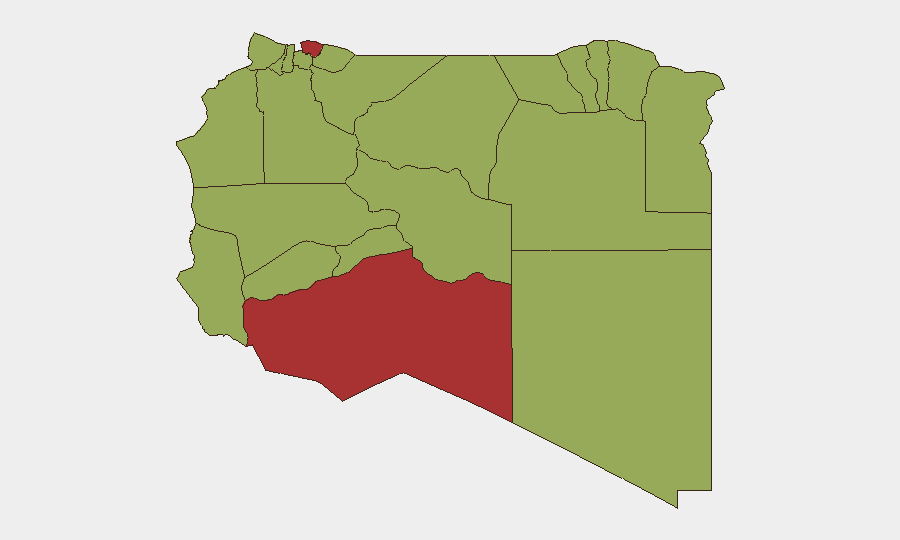
Libya remains at composite threat level #32 globally (risk score 66), with acute volatility concentrated in two critical zones: Murzuq and Tripoli, each scoring 76.5 on sub-national risk indices. Political progress—including agreement on an election roadmap on 18 June—has not yet translated into reduction of underlying armed-group activity, refinery disruptions, or migration-corridor instability. The security picture reflects persistent fragmentation across southern and western regions, with no corroborated acute incidents reported in the last 24–48 hours, but elevated baseline risk persisting from earlier June armed clashes and economic pressures.
Key Developments
No well-corroborated, clearly time-stamped security incidents with specific Libya locations have been independently verified for the 19–20 June window. Recent event signals in the GeoBit platform (arrests on 18 June, public statements on 19 June) relate to administrative and diplomatic actions rather than kinetic security events. Security teams should note that the most recent substantive armed clashes occurred on 13–14 June in southern Tripoli and triggered operational shutdown at Az Zawiya refinery; those incidents remain relevant for duty-of-care assessment but fall outside the current 24–48-hour reporting window. Political developments (election roadmap agreement, 18 June) represent process-level change but have not yet generated observable protest or violence responses in monitored channels. Migrant maritime incidents off eastern Libya (12 June sinking) continue to reflect broader trafficking and governance challenges but are not acute new events. Monitor for secondary effects (refinery restart timelines, political faction responses to election roadmap) over coming 72 hours.
Highest-Risk Areas
Murzuq (76.5) and Tripoli (76.5) drive the national risk profile and account for the highest concentration of tracked threat signals. Tripoli's elevated score reflects overlapping armed-group presence, government authority fragmentation, and proximity to critical infrastructure (refinery, ports, central bank facilities); recent armed clashes and refinery shutdowns underscore operational vulnerability. Murzuq, in the south, reflects persistent trafficking networks, resource-scarcity-driven armed activity, and limited state capacity. Ten additional regions score 46.5, spanning the western coastal belt (Az Zawiya, Jafara, Murqub, Baladiyah Surman), southern desert zones (Nalut, Ghat, Wadi al Shatii, Wadi al Hayaa, Kufra), and interior regions (Nuqat al Khams), indicating broad geographic dispersal of secondary-level threats rather than isolated pockets.
How GeoBit Would Assist
Security teams protecting personnel and assets in Libya should deploy Area-of-Interest (AOI) Monitoring & Early Warning on Tripoli, Az Zawiya, and Murzuq to detect incident escalation, movement of armed actors, or refinery operational changes; coupled with Conflict & Military battle mapping and Entity & Network Analysis, this enables early detection of clashes before they disrupt operations. Economic & Trade intelligence linked to Satellite & Imagery analysis should track refinery restart timelines, port activity, and goods movement—critical for supply-chain continuity and staffing decisions. Multi-language OSINT and Sentiment Analysis across Arabic-language channels and regional media provide early warning of political faction responses to the election roadmap, which may trigger secondary armed mobilization.
7-Day Outlook
No immediate escalation is forecast, but the gap between political dialogue (election roadmap) and ground-level armed activity remains unresolved. The next 7 days will test whether faction buy-in to electoral process translates to reduced armed clashes; failure to do so may reignite southern Tripoli and Az Zawiya volatility. Refinery restart and staffing decisions should remain contingent on real-time ground monitoring rather than political statements alone.
Highest-Risk Areas — Ranked
| # | State / Region | Risk |
|---|---|---|
| 1 | Murzuq | 76.5 |
| 2 | Tripoli | 76.5 |
| 3 | Nalut | 46.5 |
| 4 | Ghat | 46.5 |
| 5 | Baladiyah Surman | 46.5 |
| 6 | Az Zawiya District | 46.5 |
| 7 | Wadi al Shatii | 46.5 |
| 8 | Wadi al Hayaa | 46.5 |
| 9 | Kufra | 46.5 |
| 10 | Nuqat al Khams | 46.5 |
| 11 | Jafara | 46.5 |
| 12 | Murqub | 46.5 |
Previous Daily Briefs
A new Libya brief is written every day — each with its own risk map and downloadable CSV. Here's the last week; use the calendar to go further back.
📅 Browse every day by calendar →
Highlighted days have a brief. Tap a day for that day's map & analysis, or “csv” for that day's dataset ($5).